

Pest Library
Australian Cockroach Control in South Florida
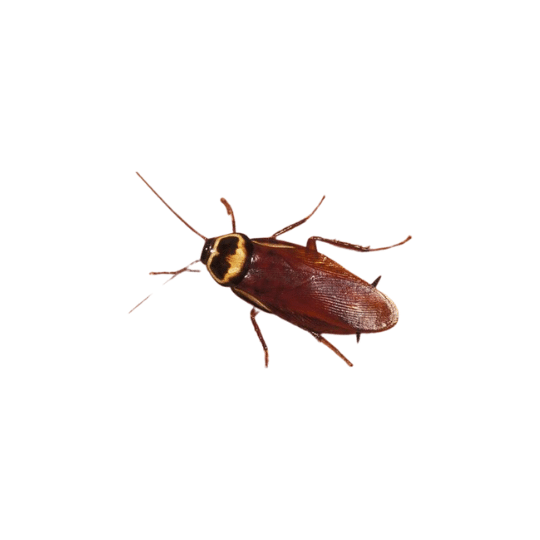
Australian Cockroach Quick Facts
Size
Approximately 1 1/4 to 1 3/8 inches long
Color
Reddish-brown to dark brown with pale yellow markings
How to Identify
Yellow band along the outer edge of each forewing and a pale-edged marking behind the head
Active Season
Active year-round in South Florida, with greater movement during warm, humid, and rainy periods
Indoor or Outdoor
Primarily outdoors, but may enter homes, businesses, greenhouses, and other warm, humid structures
Day or Night
Mostly active at night, although disturbed cockroaches may be seen during the day.
Diet
Decaying plant material, food scraps, pet food, organic debris, and tender greenhouse or landscape plants.
About Australian Cockroaches
These two large cockroaches are easy to confuse, especially when one moves quickly or is seen in low light. Australian cockroaches are usually somewhat smaller than American cockroaches and have a noticeable pale yellow band along the outer edge of each forewing. Their pronotal shield—the plate directly behind the head—also has contrasting pale and dark markings. Nymphs may show yellow spots on the upper abdomen. Habitat provides another clue: Australian cockroaches are strongly associated with trees, mulch, greenhouses, leaf litter, and ornamental plants. Because both species may enter buildings and are sometimes called “palmetto bugs,” a close inspection is often needed before deciding where control should be focused.
Australian Cockroach or American Cockroach?
Why DIY Australian Cockroach Control May Fall Short
Do-it-yourself measures may reduce the cockroaches that are visible without correcting the outdoor harborages, moisture conditions, and entry routes that support recurring activity. A professional inspection is practical when cockroaches repeatedly return, nymphs or egg cases are found indoors, activity involves food-handling areas, or the species cannot be confidently identified.
Lower-Impact Options
When appropriate, Pest Busterzz may prioritize targeted baiting, precise crack-and-crevice placement, monitoring, exclusion, sanitation guidance, and habitat modification to reduce unnecessary product use.
The Pest Busterzz Australian Cockroach Treatment Approach
Pest Busterzz builds each Australian cockroach plan around the species, property conditions, activity level, and findings from the inspection.
Inspection
We confirm the cockroach species, evaluate the extent of activity, and inspect mulch, vegetation, rooflines, soffits, wall voids, drains, utility areas, food sources, moisture conditions, and likely entry points.
Targeted Treatment
Based on the inspection, the plan may include localized treatment, baiting, crack-and-crevice or void applications, exterior management, trapping, sanitation recommendations, harborages reduction, and exclusion. The selected methods depend on where cockroaches are living and entering.
Monitoring & Follow-Up
We evaluate changes in activity, inspect monitoring points, adjust placement when necessary, and address newly discovered harborages or entry routes. Follow-up timing depends on the population and conditions found.
Prevention
Recommendations may include repairing leaks, reducing mulch and leaf litter near the foundation, trimming vegetation away from the building, screening vents, sealing gaps, improving food storage, removing clutter, and correcting drainage problems.
faqs