

Pest Library
Bottle Fly
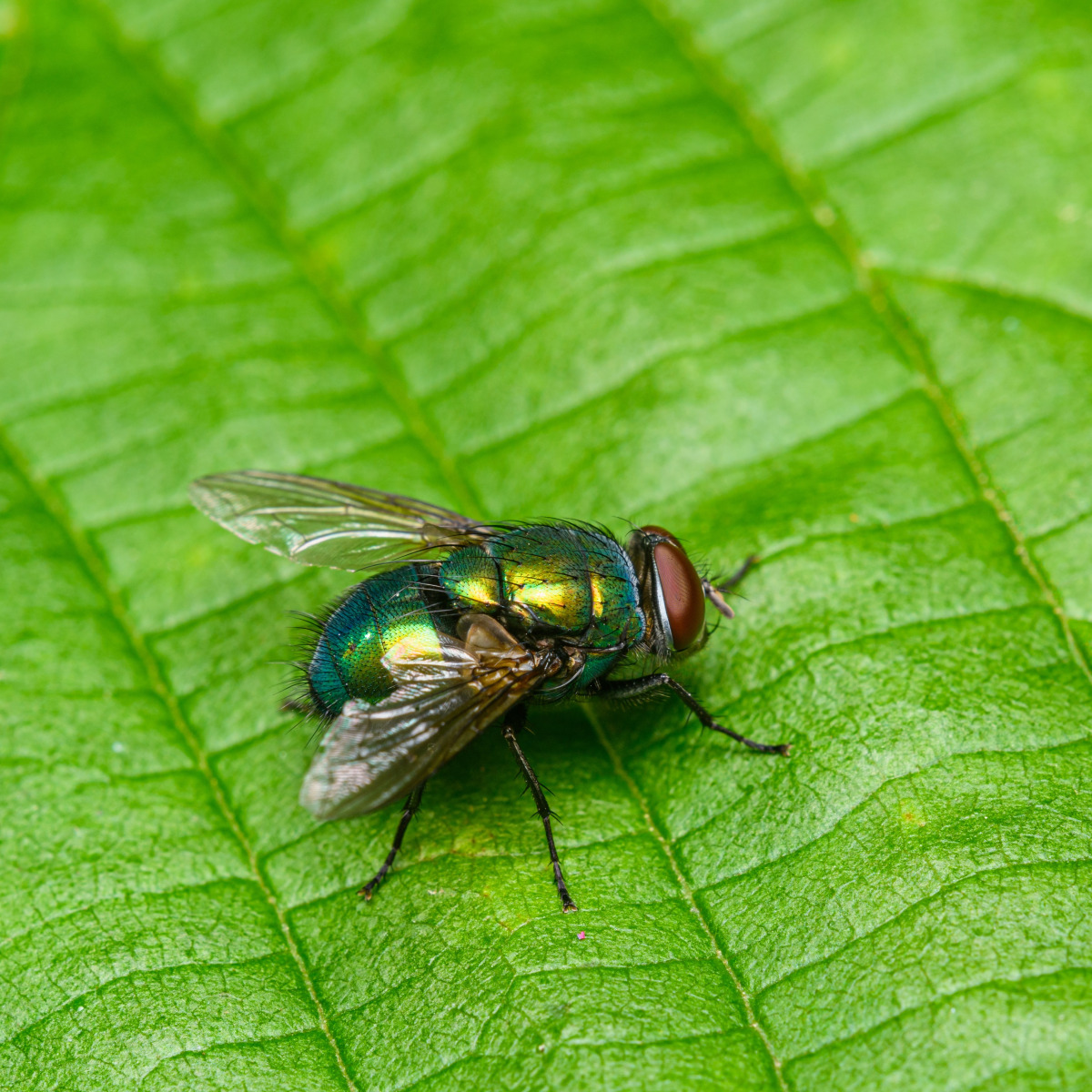
Bottle Fly Quick Facts
Size
Adults typically measure 1/4 to 1/2 inch long, while mature larvae (maggots) grow up to 1/2 inch in length.
Color
Metallic green, blue, bronze, or copper with a distinct shiny, jewel-like sheen across the body.
How to Identify
Recognized by their bright metallic luster, stocky bodies, fast erratic flight, and loud buzzing sound when flying indoors.
Active Season
Active year-round in South Florida, with noticeable population surges during warm, humid spring and summer months.
Indoor or Outdoor
Primarily outdoors near breeding sites, but frequently enter homes and businesses through open doors, windows, or structural gaps.
Day or Night
Mostly active during the day, especially in bright sunlight, and inactive on elevated surfaces at night.
Diet
Adults feed on nectar, flower sap, and liquid decaying matter, while larvae consume decomposing organic matter, carrion, and animal waste.
About Bottle Flies
Why DIY Bottle Fly Control Fails
Attempting to resolve a bottle fly issue using over-the-counter space sprays or fly swatters rarely yields lasting relief. Professional inspection and service become the practical next step when flies repeatedly return, appear near windows, or originate from inaccessible wall cavities or drain systems.

Lower-Impact Options
Where appropriate, Pest Busterzz prioritizes mechanical trapping, physical exclusion, biological drain treatments, targeted baits, and habitat modification to reduce unnecessary product applications.
The Pest Busterzz Bottle Fly Treatment Approach
Pest Busterzz focuses on finding the underlying breeding source, eliminating active populations, and addressing environmental factors to keep bottle flies from returning.
Inspection
We evaluate active fly patterns, locate concealed larval breeding sources such as dead rodents or waste deposits, and check for structural entry points around doors, windows, and utility lines.
Targeted Treatment
Based on inspection results, treatments may include localized void applications, bio-enzymatic drain cleaning, targeted fly baits, mechanical trapping, and physical removal of breeding materials.
Monitoring & Follow-Up
We evaluate trap captures, monitor sanitation progress, adjust control protocols as required, and confirm that the larval breeding cycle is entirely eliminated.
Prevention
Recommendations may include securing trash bin lids, scheduling regular container washdowns, repairing door sweeps and screens, sealing utility penetrations, and improving drain sanitation.
faqs