

Pest Library
Carpenter Bee Control in South Florida
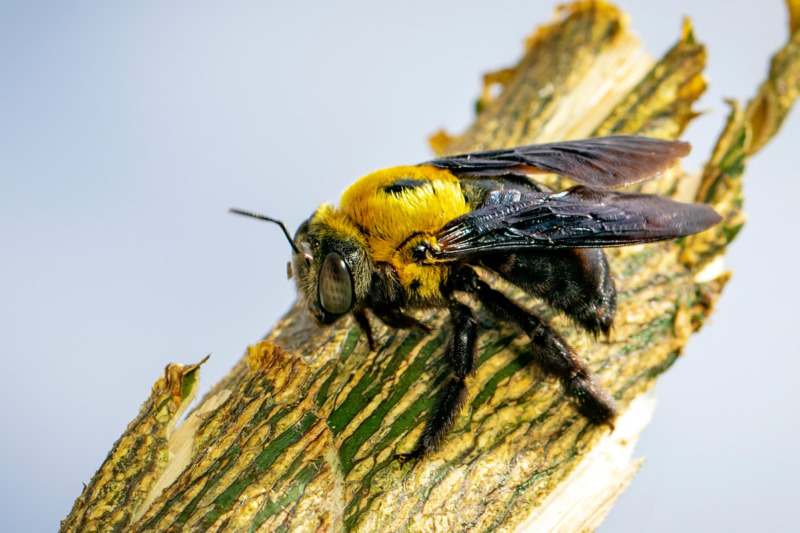
Carpenter Bee Quick Facts
Size
Approximately 1/2 to 1 inch long
Color
Usually black or blue-black, often with yellow or pale hairs on the thorax
How to Identify
Large bee with a fuzzy thorax, smooth shiny abdomen, and nearly round entrance holes in wood
Active Season
May be active through much of the year in South Florida, with activity often increasing during warm, sunny periods in spring and early summer
Indoor or Outdoor
Primarily outdoors around exposed wood, including eaves, decks, fences, pergolas, and exterior trim
Day or Night
Mostly active during daylight, especially in warm, sunny weather.
Diet
Adults feed on flower nectar and pollen; larvae develop on stored pollen and nectar inside the nest.
About Carpenter Bees
Why DIY Carpenter Bee Control May Not Work
DIY efforts may reduce visible carpenter bee activity without resolving the nesting conditions that allow the problem to continue. Professional service is a practical next step when bees repeatedly return, several holes are present, nests are high or inaccessible, the insect cannot be reliably identified, or the wood shows signs of damage.

Lower-Impact Options
When appropriate, we emphasize precise placement, localized nest treatment, monitoring, exclusion, repairs, and habitat modification to reduce unnecessary product use.
The Pest Busterzz Approach to Carpenter Bee Treatment
Pest Busterzz focuses on confirming carpenter bee activity, locating active galleries, and addressing the wood conditions that may allow nesting to return.
Inspection
We confirm the bee species and inspect fascia, soffits, eaves, railings, siding, fences, pergolas, and other exposed wood for active entrances, older galleries, staining, wood debris, and repeated nesting.
Targeted Treatment
Based on the inspection, the plan may include precise treatment of active nesting areas, localized applications, exterior management, exclusion measures, or recommendations for repairing and refinishing vulnerable wood. The appropriate methods depend on nest location, accessibility, and activity level.
Monitoring & Follow-Up
We monitor flight and nest activity, evaluate results, adjust the plan when needed, and address newly discovered galleries or vulnerable sections of wood.
Prevention
Recommendations may include repairing damaged wood, sealing inactive holes at the appropriate time, painting or finishing exposed surfaces, and replacing heavily used sections with less attractive materials where practical.
faqs