

Pest Library
Centipede Control in South Florida
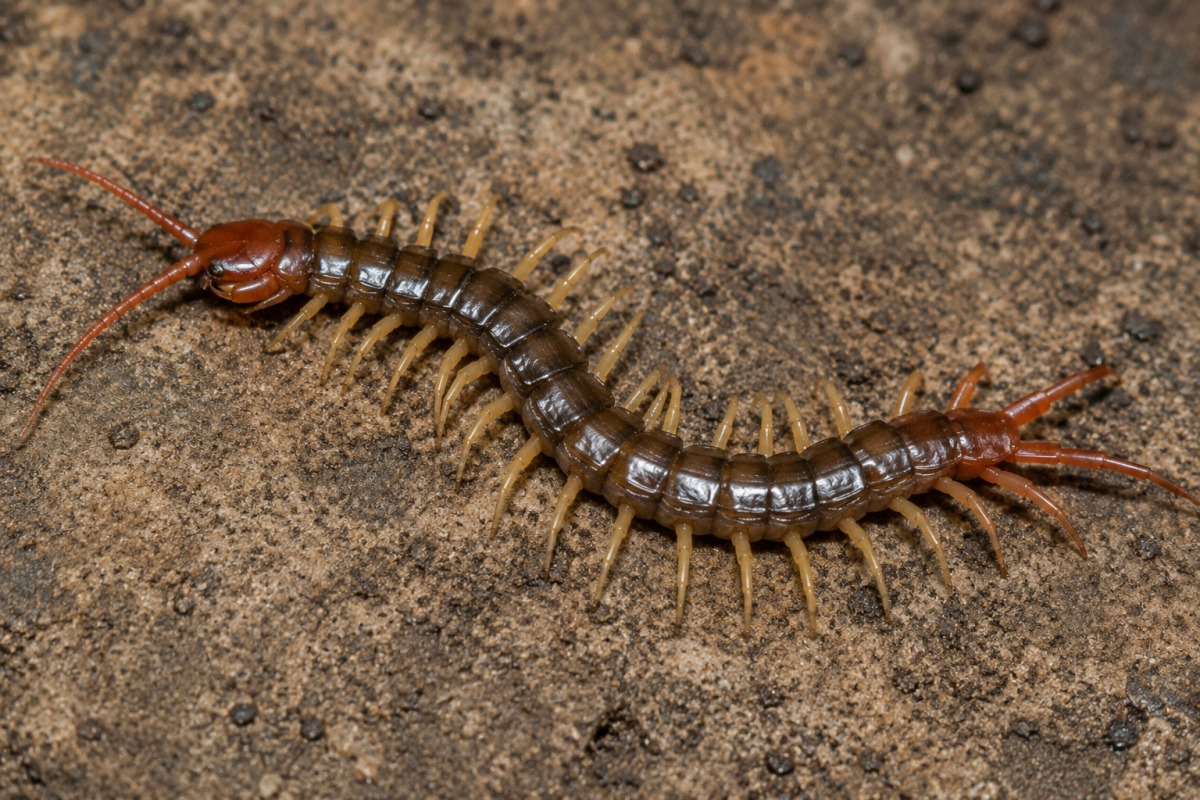
Centipede Quick Facts
Size
Usually 1 to 6 inches long, depending on the species; house centipedes are commonly about 1 to 1 1/2 inches long excluding their longest legs and antennae
Color
Commonly brown, reddish-brown, or yellowish-gray; house centipedes often have three dark lengthwise stripes and banded legs
How to Identify
A flattened, segmented body with one pair of legs per body segment; house centipedes have 15 pairs of very long legs and move quickly
Active Season
Active year-round in South Florida, with encounters often increasing during warm, humid, rainy weather or when outdoor habitats are disturbed
Indoor or Outdoor
Primarily outdoor predators, although house centipedes and wandering species may enter damp bathrooms, closets, garages, utility areas, and other sheltered spaces
Day or Night
Mostly active at night and typically hidden during the day in dark, protected places
Diet
Predatory; centipedes feed on insects, spiders, silverfish, cockroaches, and other small arthropods
About Centipedes
Why Centipedes May Signal Another Pest Problem
Centipedes are predators, so a property that repeatedly supports them usually offers more than shelter alone. House centipedes commonly hunt silverfish, cockroaches, spiders, beetle larvae, and other small arthropods. When several centipedes are seen indoors, the more important question may be what prey is allowing them to remain active. Monitoring damp bathrooms, utility rooms, closets, garages, wall edges, and storage areas can help reveal both centipede travel routes and the insects they are following. Reducing humidity and correcting entry points may limit new arrivals, but managing the underlying prey population is often necessary when sightings continue. A professional inspection can separate an occasional outdoor invader from indoor house-centipede activity tied to a broader pest or moisture issue.
Why DIY Centipede Control May Fall Short
Seeing an occasional centipede does not always require extensive treatment, but repeated sightings can be difficult to resolve when the underlying moisture, shelter, entry points, or prey population is not addressed. A professional inspection is practical when centipedes appear frequently, are found throughout the building, cannot be confidently distinguished from millipedes, or include a larger species that occupants should avoid handling.

Lower-Impact Options
When appropriate, Pest Busterzz may prioritize monitoring, precise crack-and-crevice placement, exclusion, moisture and habitat recommendations, and management of the prey pests supporting centipede activity to reduce unnecessary product use.
The Pest Busterzz Centipede Treatment Approach
Pest Busterzz builds centipede control around proper identification, inspection findings, and the conditions contributing to activity at each property.
Inspection
We identify the centipede or similar arthropod, evaluate where activity is occurring, and inspect damp indoor areas, slab and wall openings, drains, plumbing penetrations, door gaps, mulch, leaf litter, stored materials, and other likely shelter. We also look for insects and spiders that may be serving as prey.
Targeted Treatment
Based on the inspection, the plan may include localized crack-and-crevice treatment, targeted exterior management, exclusion, habitat modification, moisture recommendations, and treatment of relevant prey pests. The appropriate methods and placement depend on the species, activity level, and property conditions.
Monitoring & Follow-Up
We evaluate whether sightings decline, review monitoring results, and adjust the plan if activity continues or additional entry points, moisture sources, harborages, or prey populations are discovered. The need and timing for follow-up depend on what is found.
Prevention
Recommendations may include reducing excess mulch and leaf litter near the foundation, improving drainage, repairing leaks, lowering indoor humidity, moving wood and stored items away from walls, sealing exterior openings, improving door sweeps, and addressing the insects and spiders centipedes feed on.
faqs