

Pest Library
Cigarette Beetle
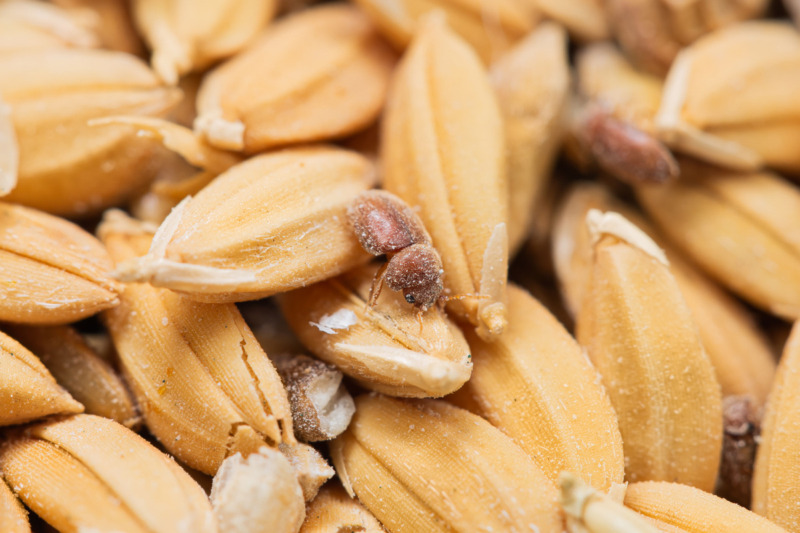
Cigarette Beetle Quick Facts
Size
Adults measure about 1/8 inch long
Color
Reddish-brown to yellowish-brown
Shape
Oval, rounded body with the head tucked downward
Legs
Six
Antennae
Serrated, saw-like along their length
Wings
Present; adults are strong fliers
Distinctive Traits
Smooth wing covers; humpbacked appearance when viewed from the side
About Cigarette Beetles
Why DIY Cigarette Beetle Control Fails
Home efforts can reduce numbers when the infestation is limited to a few packages, but several factors often allow activity to continue. Professional service becomes the more practical next step when activity keeps returning, the source remains hidden, identification is uncertain, or the infestation involves multiple packages or commercial storage.

Lower-Impact Options
When conditions allow, Pest Busterzz emphasizes precise placement, thorough sanitation, exclusion of entry points, monitoring with traps, and removal of breeding materials to limit unnecessary product use while still addressing the infestation.
The Pest Busterzz Cigarette Beetle Treatment Approach
Pest Busterzz focuses on confirming the pest, locating breeding materials, and reducing the conditions that allow activity to continue.
Inspection
Pest Busterzz begins by confirming the insect is a cigarette beetle and locating the breeding sites. Technicians examine pantry shelves, spice containers, pet-food storage, dried-flower arrangements, and other dried goods. They look for frass, exit holes, cocoons, and adult beetles, and they evaluate humidity, package condition, and nearby food sources that could support continued activity.
Targeted Treatment
The treatment plan is based on the inspection findings, the extent of activity, and the specific products involved. Approaches may include removal and proper disposal of heavily infested materials, localized crack-and-crevice applications in storage areas, trapping to monitor adult activity, sanitation recommendations, and habitat modification such as improved storage practices. Exterior management is considered when outdoor sources or entry points contribute to the problem.
Monitoring & Follow-Up
After initial work, activity is checked to confirm that breeding sites have been addressed. Follow-up visits are scheduled according to the level of infestation and conditions found on the property. Newly discovered packages or residual adults can be handled as needed until activity declines.
Prevention
Store dry goods in airtight containers, rotate older packages to the front, and discard products that show signs of damage. Keep pantry shelves clean and free of spills. Inspect new purchases, especially spices, pet food, and bulk dried items, before placing them in storage. Reduce clutter that hides packages and maintain moderate humidity where possible.
faqs