

Pest Library
Little Fire Ant Control in South Florida
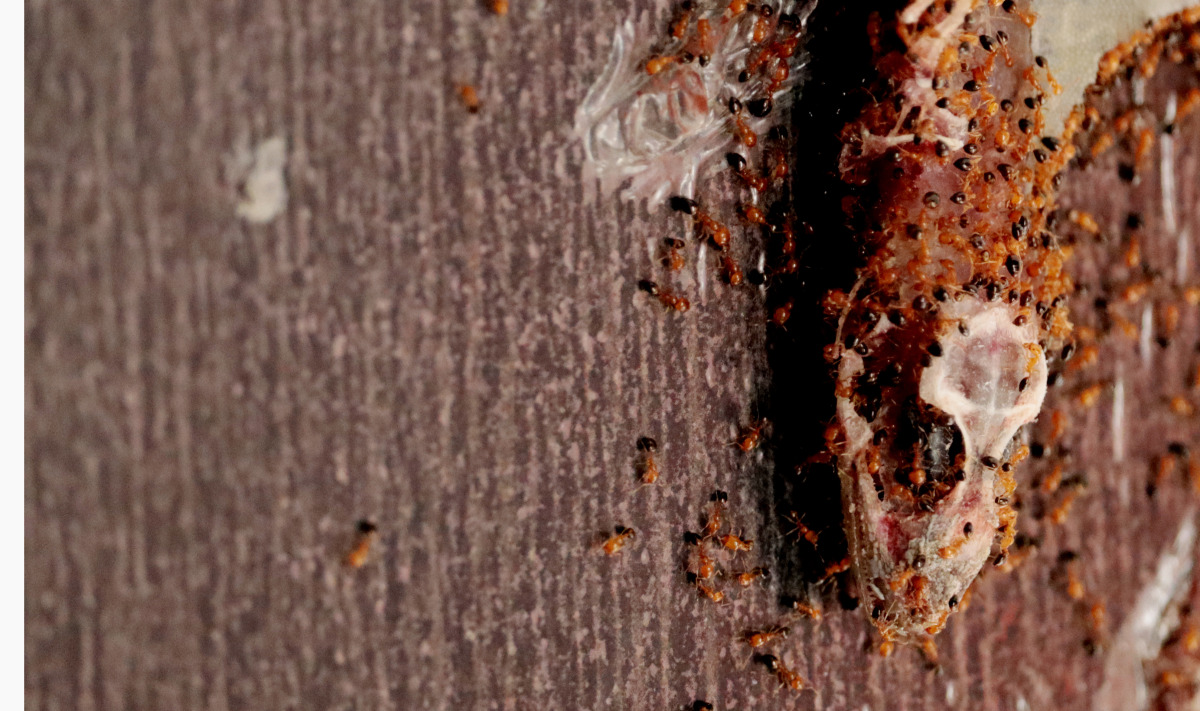
Little Fire Ant Quick Facts
Size
Approximately 1/16 inch long
Color
Dark brown head and middle body with pale, nearly translucent legs and abdomen
How to Identify
Tiny ants with a dark front body and nearly transparent rear body that can be difficult to see on light surfaces
Active Season
Active year-round in South Florida, with activity often increasing during warm, humid conditions
Indoor or Outdoor
Found indoors and outdoors, especially in landscaping, trees, mulch, wall voids, furniture, and other sheltered spaces
Day or Night
Little fire ants may forage during the day or at night, depending on temperature, moisture, food, and nest location.
Diet
Little fire ants feed on oily foods, honeydew, dead arthropods, and small live insects.
About Little Fire Ants
Why DIY Pest Control for Little Fire Ants May Fall Short
DIY efforts may reduce ants in one location while leaving connected nests, queens, and brood elsewhere on the property. Professional inspection may be the more practical next step when painful stings continue, ants occur across multiple indoor or outdoor areas, nests are inaccessible, or the species cannot be confidently identified.

Lower-Impact Options
When appropriate, we may prioritize precise bait placement, monitoring, sanitation, moisture correction, exclusion, and habitat modification to reduce unnecessary product use.
The Pest Busterzz Little Fire Ant Treatment Approach
Pest Busterzz focuses on confirming little fire ant activity, determining how widely colonies are distributed, and addressing the nesting, movement, and habitat conditions that help them persist.
Inspection
We identify the ant species and inspect leaf litter, mulch, palms, tree trunks, potted plants, landscape materials, foundations, furniture, wall voids, baseboards, carpet edges, and areas where people or pets have experienced stings.
Targeted Treatment
Based on the inspection, treatment may include baiting, localized nest treatment, exterior management, treatment of accessible cracks or voids, and recommendations for handling infested plants, soil, furniture, or other movable materials.
Monitoring & Follow-Up
We monitor established trails, evaluate bait response, and check for activity in newly discovered locations. Follow-up needs depend on how widely the colony is distributed and whether outdoor sources remain active.
Prevention
Recommendations may include repairing leaks, drying condensation-prone areas, sealing food, cleaning sweet spills, checking potted plants, trimming vegetation, sealing small openings, and addressing honeydew-producing insects.
faqs