

Pest Library
Longhorn Crazy Ant Control in South Florida
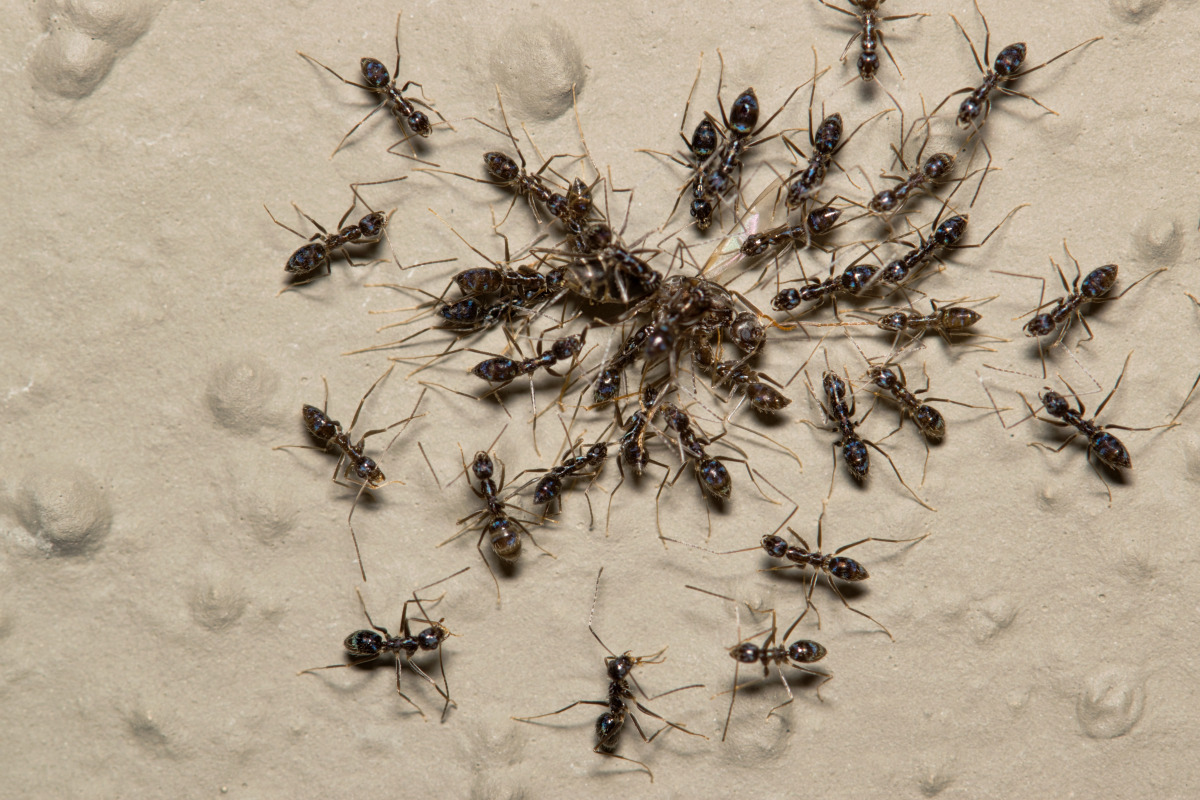
Longhorn Crazy Ant Quick Facts
Size
About 1/8 inch long
Color
Dark brown to blackish brown, sometimes with a faint bluish or gray sheen
How to Identify
Very long antennae and legs with fast, erratic movement instead of a neat trail
Active Season
Active year-round in South Florida, with greater activity during warm, humid conditions
Indoor or Outdoor
Found indoors and outdoors in landscaping, debris, wall voids, kitchens, bathrooms, and utility areas
Day or Night
May forage during the day or at night depending on temperature, moisture, food, and disturbance.
Diet
Insects, honeydew, plant secretions, sweets, grease, meat, crumbs, and other accessible foods.
About Longhorn Crazy Ants
Why DIY Longhorn Crazy Ant Control Falls Short
Longhorn crazy ants can be difficult to manage because workers may travel far from the nest and several nesting sites may be active at once. Professional service becomes a practical next step when ants repeatedly return, appear in multiple rooms, spread across a large outdoor area, or cannot be traced to a clear source.

Lower-Impact Options
When appropriate, we prioritize precise bait placement, monitoring, sanitation, exclusion, moisture correction, and removal of nesting materials to reduce unnecessary product use.
The Pest Busterzz Approach to Longhorn Crazy Ant Treatment
Pest Busterzz focuses on identifying longhorn crazy ants, tracing their wide-ranging activity, addressing nests, and reducing the conditions that help them return.
Inspection
We identify the ant species, map activity across indoor and outdoor areas, and inspect wall openings, utility penetrations, kitchens, bathrooms, potted plants, mulch, trees, debris, irrigation areas, and foundations.
Targeted Treatment
Based on the inspection, treatment may include baiting, localized nest treatment, crack-and-crevice applications, accessible void treatment, exterior management, exclusion, and habitat recommendations. Selection and placement depend on where ants are nesting and feeding.
Monitoring & Follow-Up
We monitor active routes, evaluate bait response, adjust the plan when needed, and address newly discovered nesting areas or entry routes.
Prevention
Recommendations may include sealing utility and foundation gaps, repairing leaks, reducing condensation, trimming vegetation, removing leaf litter and unused materials, storing food securely, and addressing honeydew-producing insects.
faqs