

Maize Weevil

Pest Busterzz Home Icon

Pest Library

Maize Weevil
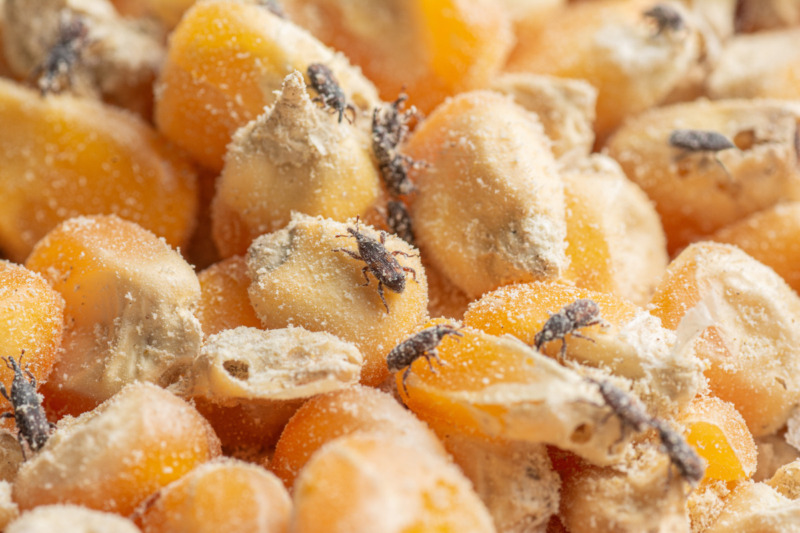
Maize Weevil Quick Facts

Size

Adults typically measure about 1/8 to 3/16 inch long

Color

Reddish-brown to nearly black, often with four lighter reddish or yellowish spots on the wing covers

How to Identify

Distinctive elongated snout and four pale spots on the wing covers; adults can fly and leave small round exit holes in grain kernels. Professional identification may be needed to separate it from the similar rice weevil.

Active Season

May remain active year-round in South Florida’s warm, humid conditions

Indoor or Outdoor

Primarily associated with stored grains and dry goods indoors; can also infest standing corn outdoors before harvest

Day or Night

Active at varying times; adults often move about stored products and surfaces whenever conditions allow

Diet

Whole cereal grains (especially corn), rice, wheat, sorghum, pasta, and similar stored products

About Maize Weevils

The maize weevil, Sitophilus zeamais, is a small snout beetle that belongs to the family of true weevils. Homeowners and business owners in South Florida most often notice it as tiny reddish-brown to black beetles with a long snout crawling in pantries, food-storage areas, or near packages of grain, cornmeal, rice, or pasta.

This pest can arrive in already-infested packages from the store or, less commonly, fly in from nearby outdoor sources such as field corn. Because both the adults and the hidden immature stages feed inside individual kernels, an infestation can quietly damage stored food supplies. The main concern for property owners is the contamination and waste of dry goods rather than any direct health threat to people or pets.

Where Are Maize Weevils Commonly Found?

Indoor Storage Areas

Maize weevils live and develop inside whole-grain kernels and similar dry commodities. Indoors they are most often found in:

  • Pantries and kitchen cabinets
  • Bulk-food bins and dry-storage rooms
  • Pet-food and birdseed containers
  • Warehouse or restaurant dry-storage areas
  • Packages of corn, rice, wheat, pasta, and other cereal products

High-risk spots include packages that have been stored for extended periods, especially if the packaging is damaged or the moisture content is elevated.

Outdoor and Field Sources

Outdoors in agricultural settings they may begin on standing corn ears before harvest and then move into storage. Adults are capable of flight and can travel short distances from field sources to storage areas.

South Florida Conditions That Support Activity

South Florida’s consistently warm temperatures and humidity favor continuous development once weevils find suitable food. Risk may increase when a property has:

  • Long-term storage of open or poorly sealed dry goods
  • Spilled grain or crumbs in pantries and storage rooms
  • Bulk bins or older packages of whole grains
  • Birdseed, pet food, or corn-based products kept in warm areas
  • Proximity to agricultural fields or storage facilities

Maize Weevil Behavior and Attractants

Feeding and Reproduction

Adult females chew a small hole into a grain kernel, deposit a single egg, and seal the opening with a gelatinous plug. The larva feeds and develops entirely inside the kernel, pupates there, and emerges as an adult through a round exit hole.

Adults feed on the same grains and prefer whole kernels over finely milled products. They are strongly attracted to food sources with adequate moisture.

Movement and Spread

Adults can fly, allowing them to move between packages or, outdoors, between fields and storage. Infestations often start from a single contaminated package brought into the home or business. Once established, adults may crawl onto shelves, counters, and packaging while searching for new food.

Disturbance can cause them to play dead briefly. Reproduction continues as long as temperatures stay favorable and suitable grain is available.

Peak Activity

Activity often becomes more noticeable when stored products warm or when packages are moved. Warm temperatures and higher humidity accelerate development, so populations may build more quickly during the hotter, wetter months in South Florida.

Damage and Concerns

Food Contamination and Waste

Maize weevils primarily contaminate and damage stored dry goods. Infested kernels become hollowed out, lose weight and quality, and may show small round exit holes and powdery residue. Packages of corn, rice, pasta, and similar items can become unfit for use, leading to food waste and the need to discard affected products.

Commercial and Sanitation Issues

In commercial settings such as restaurants, grocery stores, or food warehouses, visible weevils or damaged product can create sanitation and reputation concerns.

Health and Structural Impact

These weevils do not bite, sting, transmit disease, or damage structural wood. They are a nuisance and food-contamination pest rather than a health or structural threat. Correct identification helps rule out other stored-product insects that may require different management.

When Are Maize Weevils Active in South Florida?

In South Florida’s subtropical climate, maize weevils can remain active throughout the year. Warm temperatures and higher humidity accelerate development, so populations may build more quickly during the hotter, wetter months.

Activity may increase during:

  • Warm spring and summer weather
  • Periods of high humidity
  • Times when stored products warm or are disturbed
  • After bringing home new packages of grain-based foods

Outdoor flight activity can increase during periods of warm weather, allowing limited movement from field sources into storage areas. Cooler indoor air-conditioning can slow but not always stop development if food and moisture remain available. Sudden indoor sightings often follow the purchase of an already-infested package or the disturbance of long-stored grain products.

Why DIY Maize Weevil Control Often Falls Short

Home efforts often miss the full extent of a maize weevil problem. Treating only the visible adults leaves eggs and larvae protected inside kernels. Discarding one package while overlooking others allows the infestation to continue. Professional service becomes the more practical next step when activity keeps returning, identification is uncertain, or multiple packages and rooms are involved.

  • Treating Only Visible Adults | Spraying or discarding a few beetles leaves eggs and larvae protected inside kernels. New adults can continue emerging from untreated packages.
  • Missing Hidden Sources | Infestations often begin in one package and spread to nearby items. Overlooking birdseed, pet food, bulk bins, or older packages allows the problem to persist.
  • Incomplete Sanitation | Spilled grain, crumbs, and residue in cabinets or storage rooms can support remaining populations even after visible packages are removed.
  • Reintroduction from New Purchases | Newly purchased dry goods can introduce more weevils. Without inspecting and properly storing incoming products, activity can return quickly.
  • Limited Reach in Larger Storage Areas | In commercial kitchens, warehouses, or extensive pantries, weevils can hide in cracks, equipment, or bulk bins that are difficult to inspect and treat thoroughly without professional equipment and experience.
maize weevil treatment in South Florida

Lower-Impact Options

When appropriate, Pest Busterzz emphasizes sanitation, source removal, monitoring, and precise placement of treatments to limit unnecessary product use while addressing the specific conditions found.

The Pest Busterzz Maize Weevil Treatment Approach

Pest Busterzz focuses on identifying the source of maize weevil activity, removing or isolating infested material, and correcting the conditions that allow these insects to persist.

01

Inspection

We identify the pest, evaluate which stored products are affected, locate breeding material, and check for conditions that support continued activity, such as spilled grain or poorly sealed containers.

02

Targeted Treatment

The plan is based on inspection findings and may include removal or isolation of infested material, localized treatments in storage areas, sanitation recommendations, and exclusion steps to reduce re-entry of adults.

03

Monitoring & Follow-Up

Activity is checked after initial steps. The plan is adjusted if new sources are found, and timing of any follow-up depends on the level of activity and conditions present at the property.

04

Prevention

Recommendations focus on inspecting new dry goods, storing susceptible products in airtight containers, rotating stock, cleaning spills promptly, and reducing long-term storage of open packages of grain-based foods.

Both are small snout beetles with similar coloration and spots. Maize weevils tend to be slightly larger and stronger fliers, but reliable separation often requires close examination. Professional identification confirms the species when needed.

They most often arrive inside already-infested packages of grain, rice, pasta, or similar products. South Florida’s warm, humid climate allows them to continue developing once they find suitable food indoors.

They primarily develop in stored grains indoors, but adults can also infest standing corn outdoors in agricultural settings and may fly short distances.

They hollow out individual kernels from the inside, reducing food quality and creating waste. They do not damage structures, bite, or transmit disease.

Not necessarily, but it often indicates that eggs or larvae are already present in nearby packages. Inspecting all susceptible dry goods is the practical next step.

Temperature extremes can kill insects inside packages, yet success depends on thorough treatment of every affected item and prevention of reintroduction. Incomplete coverage allows survivors to continue.

New packages may introduce more weevils, or residual material and spills may support remaining populations. Addressing every source and improving storage practices is usually required for lasting results.

Schedule an inspection if activity continues after discarding suspect packages, if multiple storage areas are involved, or if identification and source location remain uncertain.

Pest Busterzz Home Icon

faqs

Maize Weevil FAQs