

Pest Library
Mealybugs
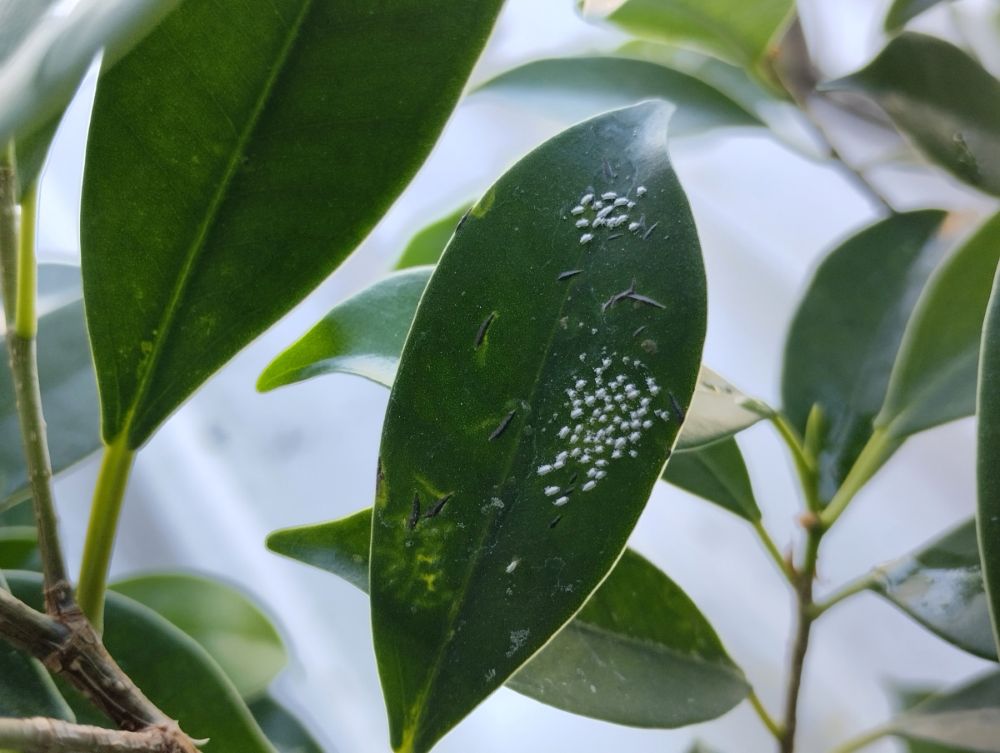
Mealybugs Quick Facts
Size
Adult females typically measure about 1/16 to 1/4 inch long; males are smaller.
Color
Soft bodies appear white or grayish from a powdery, cottony wax coating; underlying color is often pinkish, yellowish, or light brown depending on the species.
How to Identify
Oval, segmented bodies with short to long waxy filaments around the margins; look for cottony white clusters or egg masses in plant crevices, leaf axils, or on stems.
Active Season
Year-round in South Florida’s warm climate, with populations often building during warmer, humid periods.
Indoor or Outdoor
Both; commonly found on landscape plants, ornamentals, and houseplants.
Day or Night
Mostly active during daylight hours, though they remain settled and feeding for long periods once established.
Diet
Plant sap drawn from leaves, stems, buds, fruit, and sometimes roots.
About Mealybugs
Why DIY Mealybug Control May Fall Short
Spot treatments that only remove visible adults often leave eggs, crawlers, and hidden individuals in crevices or on roots. The protective wax covering reduces the effectiveness of many contact sprays if coverage is incomplete. Treating one plant while nearby hosts or ants continue to move mealybugs allows reinfestation. Houseplant treatments may miss individuals on the undersides of leaves or in dense foliage. Landscape applications that fail to address dense plantings, poor air flow, or new plant introductions provide only temporary relief. When activity returns after home efforts or when plants show progressive decline, a professional inspection can identify the species involved, locate protected colonies, and evaluate contributing site conditions.

Lower-Impact Options
When conditions allow, Pest Busterzz prioritizes precise placement of treatments, exclusion of new introductions, monitoring, sanitation, and habitat modifications that reduce reliance on broader applications.
The Pest Busterzz Mealybugs Treatment Approach
Pest Busterzz focuses on accurate identification, locating protected colonies, and reducing the plant and site conditions that allow mealybug activity to continue.
Inspection
Pest Busterzz technicians examine affected plants for mealybugs at various life stages, map the extent of activity, check common sheltered sites on leaves, stems, and nearby hosts, and note honeydew, sooty mold, ant activity, and environmental factors that support colonies.
Targeted Treatment
The plan is tailored to the species present, plant types, indoor versus outdoor locations, and level of activity found during inspection. Approaches may include localized applications to colonies, habitat adjustments, sanitation recommendations, and exterior or plant-focused management suited to the situation.
Monitoring & Follow-Up
Follow-up visits assess remaining activity, check for new crawlers or spread to additional plants, and allow adjustments based on results and seasonal conditions. Timing depends on the findings and the biology of the mealybugs involved.
Prevention
Inspect new plants carefully before introducing them to the landscape or home. Improve air circulation around dense plantings, manage ant populations that tend mealybugs, avoid over-fertilizing that produces excessive tender growth, and promptly remove heavily infested plant material when practical.
faqs