

Pest Library
Mediterranean Flour Moth
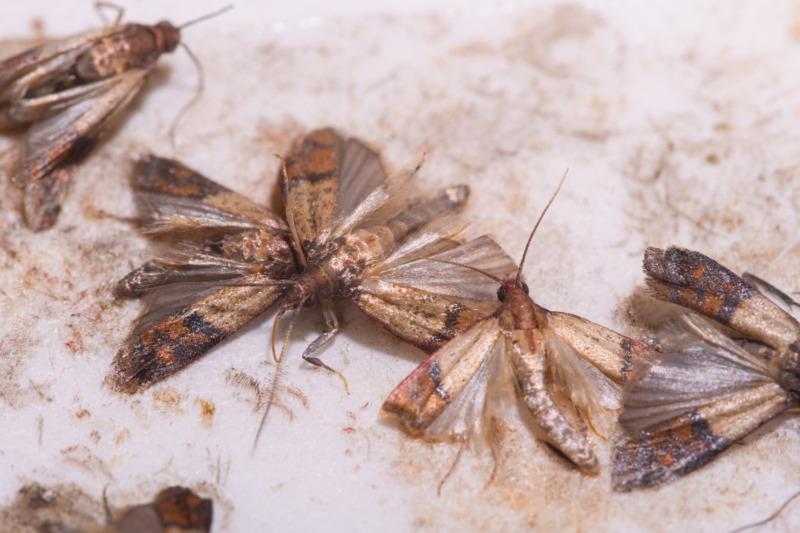
Mediterranean Flour Moth Quick Facts
Size
Adults typically measure about ¼ to ½ inch long with a wingspan of roughly ¾ to 1 inch; mature larvae reach about ½ to ⅝ inch.
Color
Pale gray forewings marked with darker zigzag lines; hindwings are dirty white. Larvae range from whitish to pinkish with a dark head and small dark spots.
How to Identify
Distinctive resting posture with the head raised and body sloping downward; larvae produce noticeable silken webbing that mats food particles together.
Active Season
May remain active year-round in South Florida’s warm indoor environments, with multiple generations possible under favorable conditions.
Indoor or Outdoor
Primarily an indoor stored-product pest found in pantries, kitchens, and food-storage areas; rarely established outdoors.
Day or Night
Adults are most often noticed flying in the evening or when disturbed; activity can occur at various times near food sources.
Diet
Larvae feed on flour, cereals, bran, meal, dried grains, nuts, seeds, chocolate, dried fruits, biscuits, pet food, and similar dry goods.
About Mediterranean Flour Moths
Why DIY Mediterranean Flour Moth Control May Fail
Home treatments frequently miss the full scope of an infestation. Professional service becomes the more practical next step when moths keep appearing after products have been discarded and shelves cleaned, when activity is found in multiple storage locations, or when the source cannot be confidently located.

Lower-Impact Options
When appropriate, Pest Busterzz prioritizes precise placement, thorough sanitation, exclusion of residual food sources, trapping, and monitoring to reduce unnecessary product use.
The Pest Busterzz Mediterranean Flour Moth Treatment Approach
Pest Busterzz focuses on confirming the pest, locating breeding and pupation sites, and reducing the food sources and residual conditions that allow activity to continue.
Inspection
We identify the moth species, map the extent of activity, examine pantry and storage areas for webbing, larvae, and contaminated products, and locate potential pupation sites and residual food debris that support continued breeding.
Targeted Treatment
The plan depends on the inspection findings and may include localized applications in cracks and crevices, trapping, thorough sanitation guidance, and recommendations for removing or isolating infested materials. Treatment focuses on the specific locations and life stages present.
Monitoring & Follow-Up
Follow-up visits assess remaining activity, confirm that previously treated areas remain free of new webbing or adults, and adjust the approach if additional sources are discovered. Timing depends on the level of infestation and the conditions found on the property.
Prevention
Recommendations typically center on transferring dry goods into airtight containers, rotating stock so older products are used first, vacuuming shelf edges and corners regularly, discarding packages that show any signs of webbing, and inspecting new purchases before they enter long-term storage.
faqs