

Mud Dauber

Pest Busterzz Home Icon

Pest Library

Mud Dauber Control in South Florida
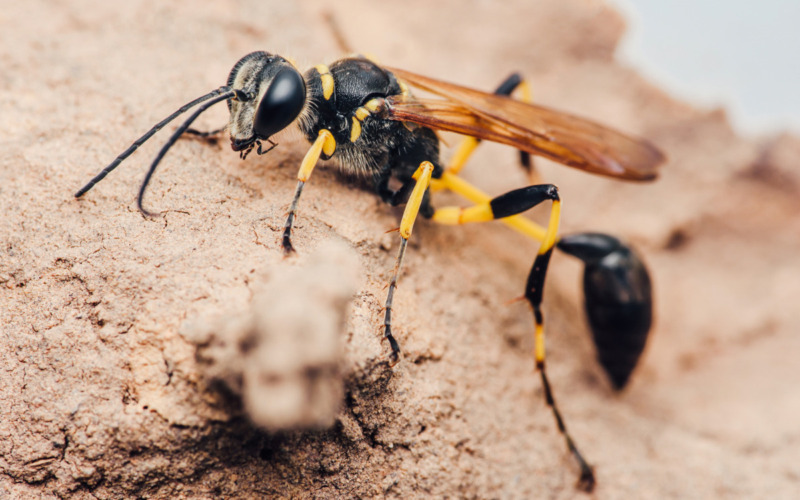
Mud Dauber Quick Facts

Size

Most adults are about 3/4 to 1 inch long, although size varies by species.

Color

Common species may be black and yellow, solid black, or metallic blue-black.

How to Identify

A slender wasp with a narrow, threadlike waist and hardened mud tubes or lumpy mud cells on sheltered surfaces.

Active Season

May remain active for much of the year in South Florida, with activity often increasing during warm, humid, and rainy periods.

Indoor or Outdoor

Primarily outdoors, but nests may be built in garages, sheds, attics, warehouses, and other sheltered parts of buildings.

Day or Night

Mostly active during daylight, when females gather mud and hunt for spiders.

Diet

Adults may feed on flower nectar, while developing larvae eat spiders placed inside their nest cells.

About Mud Daubers

Mud daubers are solitary wasps known for building nests from small portions of wet soil. The name applies to several species, including black-and-yellow mud daubers in the genus Sceliphron, organ pipe mud daubers such as Trypoxylon politum, and metallic blue mud daubers in the genus Chalybion. Unlike yellowjackets and other social wasps, each female generally builds and provisions her own nest rather than living in a large colony.

Around South Florida properties, mud daubers are commonly noticed beneath roof overhangs, on porch ceilings, inside garages, and in other locations protected from heavy rain. Their nests are primarily a cosmetic or nuisance concern, although nests in equipment, frequently used work areas, or sensitive locations may require professional attention.

Where Are Mud Daubers Commonly Found?

Protected Outdoor Nesting Sites

Mud daubers choose dry, sheltered surfaces where their nests are less likely to be damaged by rain. Common locations include:

  • Eaves, soffits, and roof overhangs
  • Porch and patio ceilings
  • Carports, sheds, barns, and detached structures
  • Exterior walls, recessed doorways, and window areas
  • Bridges, utility structures, and protected equipment

Indoor and Semi-Enclosed Areas

Open garages, warehouses, attics, storage rooms, and similar spaces can provide suitable nesting surfaces. Damaged screens, unscreened vents, soffit gaps, and doors that remain open may allow females to enter. Mud daubers do not eat wood or normally infest structural materials, but they may attach nests to masonry, stucco, wood, metal, or equipment.

South Florida Conditions That Support Activity

Properties that provide both damp soil and protected construction surfaces can be especially attractive. Females may gather mud near irrigated landscaping, drainage areas, pond edges, leaking exterior faucets, air-conditioning runoff, or persistent puddles. Spider activity around landscaping and structures also provides prey for developing larvae.

Mud Dauber Behavior and Nesting

Solitary Nest Building

Mud daubers are solitary hunters rather than colony-forming wasps. A female gathers small balls of wet soil and uses them to build one or more enclosed cells. She works independently, although several females may select the same favorable structure.

Spider Hunting and Larval Food

The female captures spiders, paralyzes them with her sting, and places them inside each nest cell. She lays an egg with the stored prey and seals the chamber. After hatching, the larva feeds on the spiders, develops inside the protected cell, pupates, and eventually cuts a round exit hole through the dried mud.

Nest Shapes

Nest appearance varies by species. Organ pipe mud daubers build parallel tubes that resemble a small pipe organ. Black-and-yellow mud daubers usually create shorter, rounded or block-shaped clusters. Metallic blue mud daubers may renovate and reuse nests originally built by other species.

Daily Activity

Adults are most often seen during daylight while traveling between nest sites, wet soil, flowers, and areas where spiders are abundant. They are generally less defensive than social wasps because they do not have a large worker colony to protect.

Mud Dauber Nuisance and Property Concerns

Cosmetic Residue

Mud daubers are usually considered nuisance or beneficial predatory insects rather than major structural pests. Their nests do not normally damage the material beneath them, but dried mud may stain or mar painted walls, stucco, siding, ceilings, outdoor furnishings, and other visible surfaces.

Equipment and Work Areas

Nests can be more concerning when built inside electrical panels, machinery, vents, vehicles, stored equipment, or components where accumulated mud could interfere with operation or maintenance. Employees, residents, and technicians may also be uncomfortable working near active wasps.

Sting Risk

Mud daubers can sting, but stings are considered uncommon. A sting is more likely if a wasp is grabbed, trapped against the skin, or handled. Anyone with a history of serious reactions to insect venom should avoid approaching or disturbing active nests and should seek appropriate medical guidance after a concerning reaction.

When Are Mud Daubers Active in South Florida?

South Florida’s warm climate may support mud dauber activity during much of the year. They are often most noticeable when warm temperatures coincide with moist soil, active spider populations, and suitable sheltered nesting surfaces.

Activity may increase during:

  • Warm, humid weather
  • Rainy periods that create accessible mud
  • Times of regular landscape irrigation
  • Periods of increased spider activity
  • Calm weather that supports nest construction and hunting

Heavy storms may damage exposed nests, while cool fronts can temporarily reduce visible flight activity. Indoor or semi-enclosed nesting sites may remain favorable despite outdoor weather changes.

A sudden increase in wasps does not necessarily indicate a large colony. Several solitary females may independently use the same protected structure, and newly matured adults may emerge from older nests through round exit holes.

Why DIY Mud Dauber Control Can Fall Short

Removing visible mud does not always address the conditions that attracted the wasps. Professional inspection may be the more practical next step when nests repeatedly return, occur in inaccessible roof or attic areas, are built inside equipment, or cannot be confidently distinguished from the nests of more defensive wasps.

  • Removing Only Visible Mud | Scraping away an exposed nest may leave other nests hidden above ceiling panels, behind stored materials, inside equipment, or along upper rooflines.
  • Misreading Nest Activity | A sealed cell may still contain a developing wasp, while a round exit hole often indicates that an adult has already emerged. Correctly judging nest status can be difficult.
  • Missing the Conditions That Attract Them | Protected ledges, damp soil, irrigation runoff, exterior leaks, and abundant spider prey can continue drawing new females after a nest is removed.
  • Overlooking Enclosed Nesting Areas | Mud daubers may enter garages, attics, warehouses, sheds, and utility spaces through damaged screens, open doors, soffit gaps, or unscreened vents.
  • Using Unnecessary or Poorly Placed Sprays | A contact spray may be unnecessary for an inactive nest and can create avoidable exposure or surface contamination when used incorrectly.
  • Working Near Elevated or Sensitive Sites | Nests near electrical components, machinery, occupied work areas, or high rooflines may be difficult to inspect and remove safely without the right equipment and identification.
mud dauber treatment in South Florida

Lower-Impact Options

Where conditions allow, we may emphasize accurate identification, nest removal, exclusion, monitoring, and modification of attractive nesting conditions. Precise treatment placement may be considered for active nests in sensitive or high-use areas.

The Pest Busterzz Approach to Mud Dauber Treatment

Pest Busterzz focuses on confirming the wasp species, locating active and inactive nests, and addressing the access points and environmental conditions that may allow mud dauber activity to return.

01

Inspection

We identify the wasp and nest type, evaluate the extent of activity, and inspect eaves, soffits, porches, garages, attics, sheds, utility areas, equipment spaces, and other protected surfaces. We also look for entry routes, fresh mud, emergence holes, damp soil sources, and surrounding spider activity.

02

Targeted Treatment

Based on the inspection, the plan may include localized nest management, careful removal of inactive mud, exterior management, exclusion, or habitat changes. Treatment around occupied cells, electrical components, elevated areas, or sensitive surfaces depends on the conditions found.

03

Monitoring & Follow-Up

We check for new mud cells, continued entry into enclosed areas, and nesting sites that were not visible during the initial visit. Follow-up timing depends on the number of nests, accessibility, surrounding habitat, and continued outdoor pressure.

04

Prevention

Recommendations may include repairing damaged screens, screening appropriate vents, sealing soffit and roofline gaps, keeping garage or warehouse doors closed when practical, correcting exterior leaks, and reducing persistent muddy areas beside structures.

South Florida’s warm climate, irrigated landscapes, spider populations, and abundance of covered architectural surfaces can support mud dauber activity for much of the year. They may be especially noticeable during warm, humid, and rainy periods when damp soil is readily available for nest construction.

The name refers to the way females collect wet soil and apply, or “daub,” it onto sheltered surfaces to form enclosed nest cells. Depending on the species, the finished nest may look like parallel organ pipes, rounded mud lumps, or a compact cluster of cells.

Mud daubers do not eat wood or normally weaken structural materials. Most concerns are cosmetic, including dried mud and staining on stucco, siding, ceilings, or painted surfaces. Nests inside machinery, vents, electrical panels, or other equipment may require more careful attention.

Mud daubers usually have an extremely narrow waist and build enclosed nests from hardened mud. Paper wasps build open, papery combs with visible hexagonal cells and are generally more defensive around an active nest. Professional identification is helpful when the wasp or nest cannot be viewed clearly.

The property likely offers sheltered surfaces, nearby damp soil, and enough spider prey for developing larvae. Roof overhangs, porch ceilings, garages, sheds, and similar locations protect nests from direct rainfall, while irrigation runoff or exterior leaks may provide convenient mud.

Mud daubers are generally not aggressive and do not defend nests with the coordinated response seen in social wasps. They can sting if grabbed, crushed, or trapped against the skin. People with known venom allergies should avoid approaching or disturbing active nests.

A spray may affect an exposed adult but may not address sealed nest cells, hidden nests, entry routes, or the conditions attracting new females. It may also be unnecessary for an inactive nest. Product labels and site restrictions must always be followed.

Not necessarily. Mud daubers are solitary, so one nest may be the work of a single female rather than a colony. Several females can independently select the same favorable structure, however, and numerous or recurring nests indicate that suitable nesting conditions remain nearby.

Nest removal does not change the features that made the location attractive. Protected ledges, open access to garages or attics, damp soil, irrigation runoff, exterior leaks, and plentiful spider prey may continue drawing new females to the same area.

Schedule an inspection when nests repeatedly return, occur near entrances or occupied work areas, are high above the ground, or appear inside equipment, attics, warehouses, or electrical spaces. Professional identification is also useful when you are unsure whether the wasps are mud daubers or a more defensive species.

Pest Busterzz Home Icon

faqs

Mud Dauber FAQs