

Pest Library
Scorpion Control in South Florida
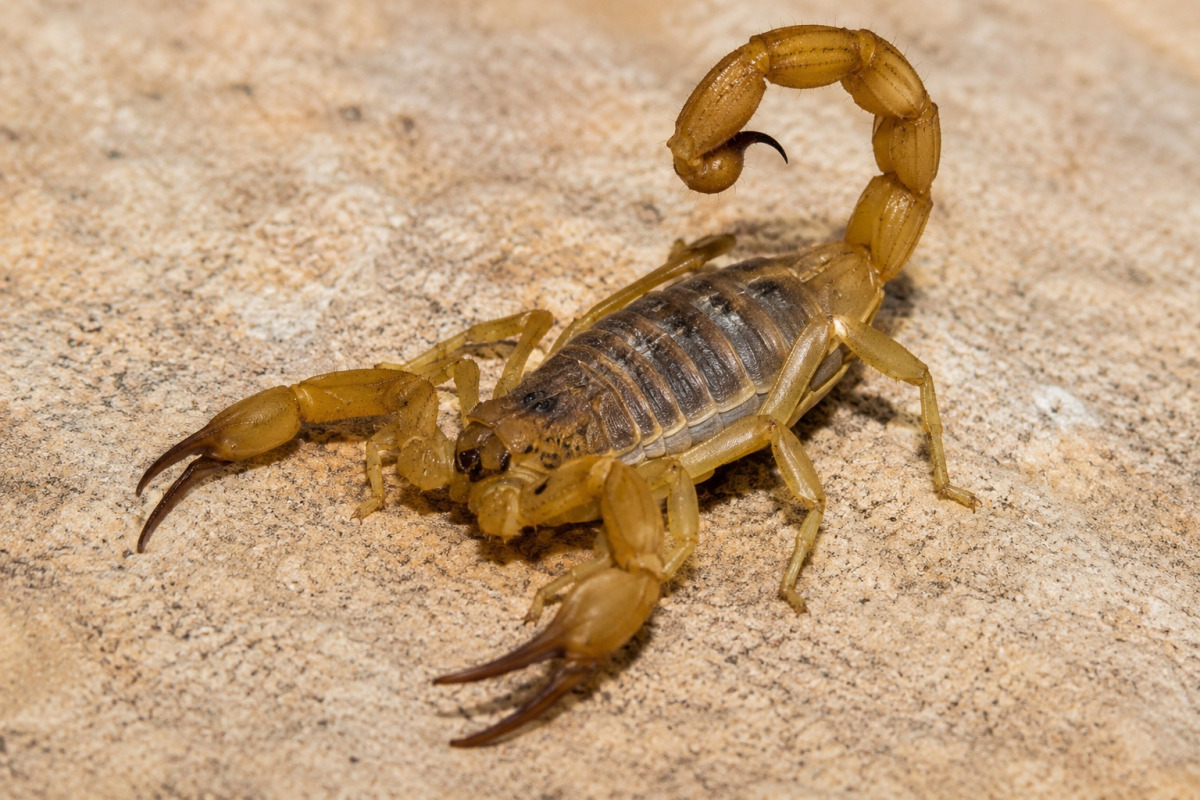
Scorpion Quick Facts
Size
Approximately 1 to 4 inches long, depending on the species
Color
Tan, yellowish-brown, reddish-brown, or dark brown, often with darker striping or markings
How to Identify
Eight legs, two prominent pincers, and a segmented tail that curves over the body and ends in a stinger
Active Season
May remain active year-round in South Florida, with sightings often increasing during warm weather and after heavy rain or habitat disturbance
Indoor or Outdoor
Primarily outdoors, but individuals may enter homes, garages, attics, sheds, and other sheltered spaces
Day or Night
Mostly active at night; they shelter during the day beneath debris, bark, boards, stones, or inside protected building areas.
Diet
Predatory; they feed mainly on insects, spiders, and other small arthropods.
About Scorpions
Why Do Scorpions Glow Under UV Light?
Scorpions contain compounds in the outer layer of their exoskeleton that fluoresce under ultraviolet light, causing them to appear blue-green in darkness. Pest professionals may use a UV flashlight during nighttime inspections to help locate exposed scorpions around foundations, landscape edges, storage areas, garages, and other likely travel zones. Fluorescence can make an individual easier to spot, but it does not reveal every hidden scorpion or identify the exact species by itself. A thorough inspection still needs to evaluate daytime shelter, exterior entry points, moisture, clutter, and the insect activity that provides food.
Why DIY Scorpion Control May Fall Short
Scorpion sightings can continue when control focuses only on the individual that was found. Professional service may be the more practical next step when scorpions repeatedly appear indoors, are found near sleeping or work areas, cannot be safely reached, or are associated with widespread exterior shelter and prey activity.

Lower-Impact Options
When appropriate, Pest Busterzz may prioritize precise placement, monitoring, physical removal, exclusion, prey reduction, and habitat modification to limit unnecessary product use. Not every option is suitable for every property.
The Pest Busterzz Scorpion Treatment Approach
Pest Busterzz bases scorpion service on the species or pest group identified, where activity is occurring, and the shelter, prey, moisture, and entry conditions found during inspection.
Inspection
We confirm that the pest is a scorpion, evaluate the extent and location of activity, and inspect likely shelter such as landscaping, debris, storage, garages, attics, utility areas, foundation gaps, and roofline openings.
Targeted Treatment
Based on inspection findings, the plan may include localized crack-and-crevice or void treatment, exterior management, trapping or removal where appropriate, exclusion, and habitat changes. Placement depends on where scorpions are hiding, traveling, and entering.
Monitoring & Follow-Up
We review new sightings, evaluate whether activity is declining, and adjust the plan when newly discovered hiding places, prey sources, or entry routes require attention. Follow-up timing depends on the property and conditions found.
Prevention
Recommendations may include sealing door and utility gaps, repairing screens, reducing clutter and debris, moving wood or stored materials away from the structure, managing moisture, trimming dense vegetation, and reducing insects that serve as prey.
faqs
Scorpion FAQs
Schedule a South Florida Scorpion Inspection
Scorpion activity can be difficult to evaluate when the animals remain hidden during the day. Pest Busterzz can inspect your South Florida home or business, confirm the pest, develop a treatment plan based on what is found, and recommend practical changes that may reduce future shelter, prey, and entry opportunities.