

Pharaoh Ant

Pest Busterzz Home Icon

Pest Library

Pharaoh Ant Control in South Florida
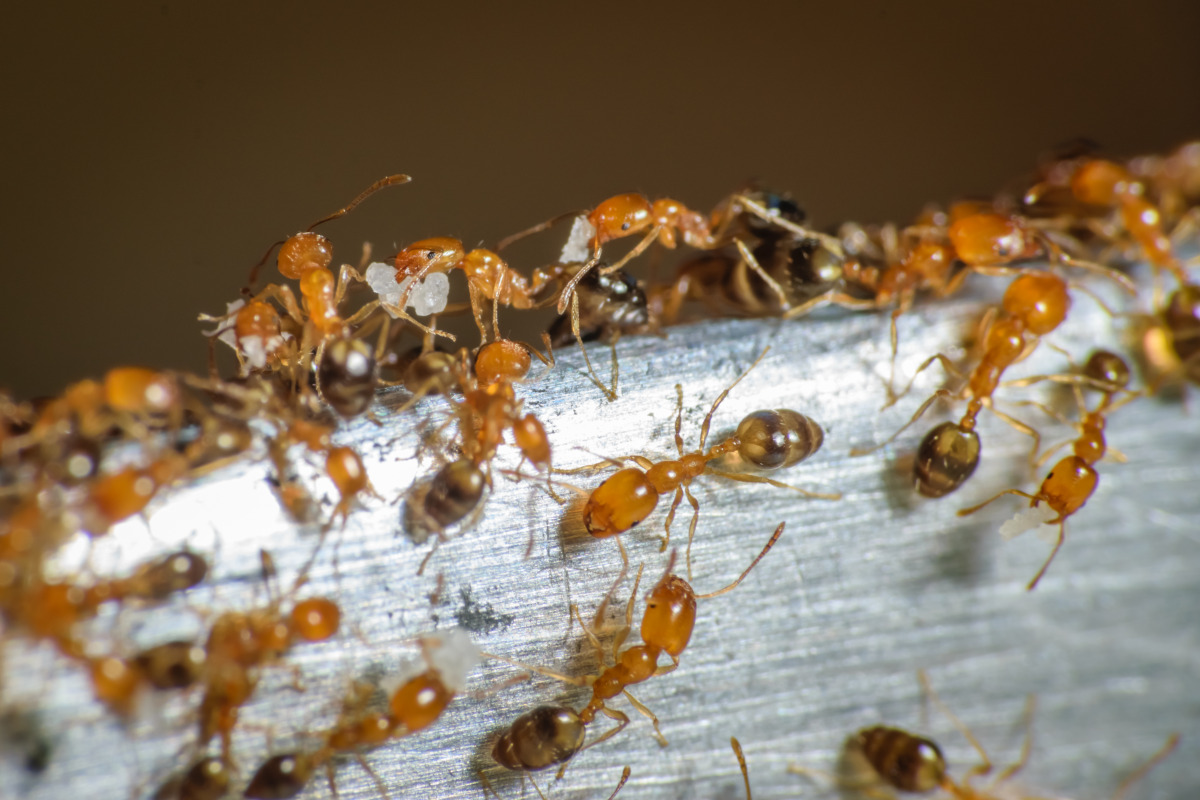
Pharaoh Ant Quick Facts

Size

Approximately 1/8 inch long

Color

Yellowish-brown, reddish-brown, dark brown, or black

How to Identify

Heart-shaped abdomen that may be raised over the body when the ant is disturbed

Active Season

Active throughout much of the year in South Florida, with increased activity during warm, humid, and rainy conditions

Indoor or Outdoor

Primarily an outdoor ant, but colonies may establish indoors in damp wood and structural voids

Day or Night

Pharaoh ants may forage during the day or at night. Activity can vary with temperature, moisture, food availability, and colony location.

Diet

Pharaoh ants eat a broad range of foods, including sweets, proteins, insects, and honeydew produced by aphids, scale insects, and other plant-feeding pests.

About Pharaoh Ants

Pharaoh ants are small, moisture-associated ants commonly found around trees, decaying wood, landscaping, wall voids, and other protected spaces. They get their name from their unusual defensive posture: when disturbed, they raise their heart-shaped abdomen above the rest of their body.

Although pharaoh ants are not considered a major structural threat, their presence indoors can point to damp or deteriorating wood, plumbing leaks, roof problems, or openings that allow ants to enter from outdoor nesting sites. Effective control depends on finding the colony, correcting the conditions supporting it, and using treatments appropriate for the ants’ location.

Pharaoh ants, Monomorium pharaonis, are extremely small indoor ants that establish colonies in warm, concealed parts of buildings. Workers are usually pale yellow to light brown, making them difficult to notice on cabinets, counters, flooring, and light-colored walls.

South Florida buildings can provide the steady warmth and humidity these ants need throughout the year. Colonies may occupy wall voids, cabinets, appliances, plumbing areas, and other spaces that are difficult to inspect. They often contain multiple queens and can divide into additional nests when disturbed. Pharaoh ants do not damage structural wood or sting, but their presence in kitchens, food-storage spaces, healthcare environments, apartments, and commercial facilities can create persistent sanitation concerns.

Where Are Pharaoh Ants Commonly Found?

Indoor Nesting Areas

Pharaoh ants are strongly associated with heated buildings. Their colonies usually occupy narrow, protected spaces that provide warmth, moisture, and nearby food. Common nesting locations include:

  • Wall and ceiling voids
  • Cabinets, drawers, and hollow furniture
  • Spaces behind baseboards and beneath flooring
  • Areas around plumbing pipes and utility penetrations
  • Electrical outlets, wiring routes, and equipment spaces
  • Appliances, water heaters, and other warm equipment
  • Insulation, folded materials, and stored items
  • Kitchens, bathrooms, laundry rooms, and break rooms

Buildings at Higher Risk

Apartment communities, hotels, hospitals, assisted-living facilities, restaurants, offices, and other connected structures can be especially challenging because ants may travel through shared walls, plumbing chases, wiring, and adjoining rooms.

South Florida Conditions That Support Activity

Air-conditioned buildings still contain warm microclimates around appliances, motors, pipes, wall voids, and utility rooms. Leaks, condensation, food residue, cluttered storage, and unsealed openings can help colonies remain established throughout the year.

Pharaoh Ant Behavior and Colony Spread

Feeding Habits

Pharaoh ants feed on many materials, including sweets, syrups, baked goods, oils, grease, meat, dairy products, pet food, dead insects, and other protein-rich foods. Their preferences may change with colony needs, so a food source or bait that attracts workers at one time may later receive little attention.

Multiple Queens and Budding

Colonies may contain many queens and can spread through budding. During this process, queens, workers, and developing ants leave an established colony and form another nest nearby. One building may therefore contain numerous connected nesting sites rather than a single central colony.

Disturbance can encourage this division. Repellent treatments or disruption of a nest may cause ants to relocate through walls or establish additional colonies in adjoining rooms or units.

Foraging Routes

Workers form trails along baseboards, countertops, cabinet edges, plumbing lines, electrical conduits, and carpeting. Their trails may be difficult to notice because the workers are so small. Warmth and moisture often concentrate activity near kitchens, bathrooms, laundry areas, water heaters, and equipment rooms.

Sanitation and Building Concerns

Food and Sensitive Areas

Pharaoh ants do not eat wood and are not considered structural pests. Their main concern is their ability to move through concealed building spaces and forage in kitchens, pantries, food containers, preparation areas, pet bowls, stored supplies, and medical environments.

In hospitals and similar facilities, workers can travel between unsanitary locations and patient-care or food areas. This does not mean every ant carries or transmits a pathogen, but their movement makes prompt identification and careful management important in sensitive settings.

Multi-Unit Properties

In apartments, condominiums, hotels, and other connected buildings, colonies may spread through shared walls, plumbing routes, and utility spaces. Treating one room or unit without considering connected areas may shift visible activity elsewhere.

Bites and Stings

Pharaoh ants do not have a functional stinger and are not generally considered a significant biting pest. Their importance comes from indoor nesting, recurring trails, and activity in sanitation-sensitive locations.

Why DIY Pharaoh Ant Control Falls Short

Pharaoh ants can be difficult to eliminate because the ants seen indoors may represent only a small portion of a colony located elsewhere. Professional service becomes the better next step when ants repeatedly return, appear in several rooms, emerge from ceilings or walls, are associated with damaged wood, or cannot be reliably identified.

  • Treating Only the Visible Ants | Spraying the ants on a countertop or windowsill may kill exposed workers without reaching the nest. New workers can continue entering from a wall void, tree, roofline, or moisture-damaged area.
  • Using the Wrong Bait | Ant food preferences vary by species and can shift between sugar, grease, and protein. Baits are only effective when workers accept them and carry the material back to the colony. Not every bait is attractive to every ant population.
  • Spraying Near Bait Placements | Repellent sprays can interfere with baiting by killing workers too quickly, contaminating the bait, or causing ants to avoid the area. Effective baiting requires workers to remain alive long enough to share the bait with other colony members.
  • Missing the Outdoor Colony | Indoor trails may originate from a tree cavity, branch, stump, fence, wood pile, or landscape feature several feet away. Treating only inside the building may provide temporary relief while the main colony remains active outdoors.
  • Ignoring Moisture and Damaged Wood | Control may be temporary when roof leaks, plumbing problems, rotted window frames, wet fascia, or other moisture conditions remain uncorrected.
  • Sealing Entry Points Too Soon | Sealing an opening before locating and addressing the colony may cause ants to find another route into the structure. Exclusion is most effective when coordinated with inspection and colony management.
pharaoh ant treatment in South Florida

Lower-Impact Options

When appropriate, we use targeted baits, crack-and-crevice treatments, localized applications, exclusion, and habitat modification to reduce unnecessary product use.

The Pest Busterzz Approach to Pharaoh Ant Treatment

Pest Busterzz focuses on finding the source of pharaoh ant activity, treating the colony, and correcting the conditions that help ants return.

01

Inspection

We identify the ant species, trace active trails, and inspect common nesting and entry areas, including trees, rooflines, wall voids, windows, plumbing areas, and moisture-damaged wood.

02

Targeted Treatment

Based on the inspection, treatment may include baiting, direct nest treatment, void applications, exterior treatments, and attention to trails and entry points. Product selection and placement depend on where the ants are nesting and feeding.

03

Monitoring & Follow-Up

We monitor activity, check bait response, adjust treatment when needed, and address newly discovered nesting areas or entry routes.

04

Prevention

Recommendations may include repairing leaks, removing decaying wood, trimming vegetation away from the building, sealing openings, improving drainage, and reducing food or moisture sources.

When Are Pharaoh Ants Active in South Florida?

Pharaoh ants can remain active throughout the year inside South Florida buildings. Indoor colonies depend more on building conditions than on outdoor seasons, so activity may continue during rain, drought, cold fronts, and other weather changes.

Warm indoor locations support continuous nesting and foraging. During cooler weather, workers may concentrate near warm pipes, motors, water heaters, and appliances. During hot weather, they may appear near moisture sources or cooler air-conditioned spaces.

Sudden activity in a new room may follow cleaning, renovations, repairs, pesticide applications, or changes in food and moisture. Ants may also move between adjoining apartments, hotel rooms, offices, or treatment areas through shared walls and service lines.

A trail may disappear from one counter and emerge later near a sink, cabinet, outlet, or neighboring room. This shift does not necessarily mean the infestation has ended.

Pharaoh ants occur in warm buildings throughout Florida and other tropical or subtropical regions. South Florida’s climate and year-round indoor warmth can support continuous activity, especially in large or connected buildings where colonies move through walls and utility routes.

Workers are about 1/16 inch long and usually yellow or light brown with a somewhat darker abdomen. All workers are similar in size. Because thief ants and other tiny species may look nearly identical without magnification, a collected specimen is often needed for reliable identification.

Nests may be inside wall voids, cabinets, furniture, appliances, baseboard gaps, electrical spaces, insulation, and plumbing chases. They do not usually create an obvious mound, and several small connected nests may be present in the same building.

They may be traveling through wall cavities, pipes, wiring, or other concealed routes. Colonies can also divide through budding, allowing queens and workers to establish additional nests in adjoining rooms or units.

Repellent sprays or other disturbances may cause a pharaoh ant colony to divide and relocate. The visible workers may disappear while queens and brood establish additional nests deeper inside the building or in nearby rooms.

Pharaoh ants do not have a functional stinger and are not generally considered a significant biting pest. Their primary importance comes from indoor nesting and movement into food, healthcare, and sanitation-sensitive areas.

They are considered a sanitation concern in hospitals and similar facilities because workers may move between contaminated and sensitive areas. This does not mean every ant carries disease, but their presence should be addressed carefully where food, medical care, or vulnerable occupants are involved.

Bait can be useful when it matches the ants’ current feeding preferences and is placed along active routes. Competing food, poor placement, or repellent sprays can reduce acceptance and interfere with colony management.

Schedule an inspection when tiny yellow ants return after treatment, appear in several rooms or units, or occur around food, plumbing, appliances, healthcare areas, or commercial kitchens. Correct identification is especially important before applying products that could spread the colonies.

Pest Busterzz Home Icon

faqs

Pharaoh Ant FAQs