

Pest Library
Powderpost Termite
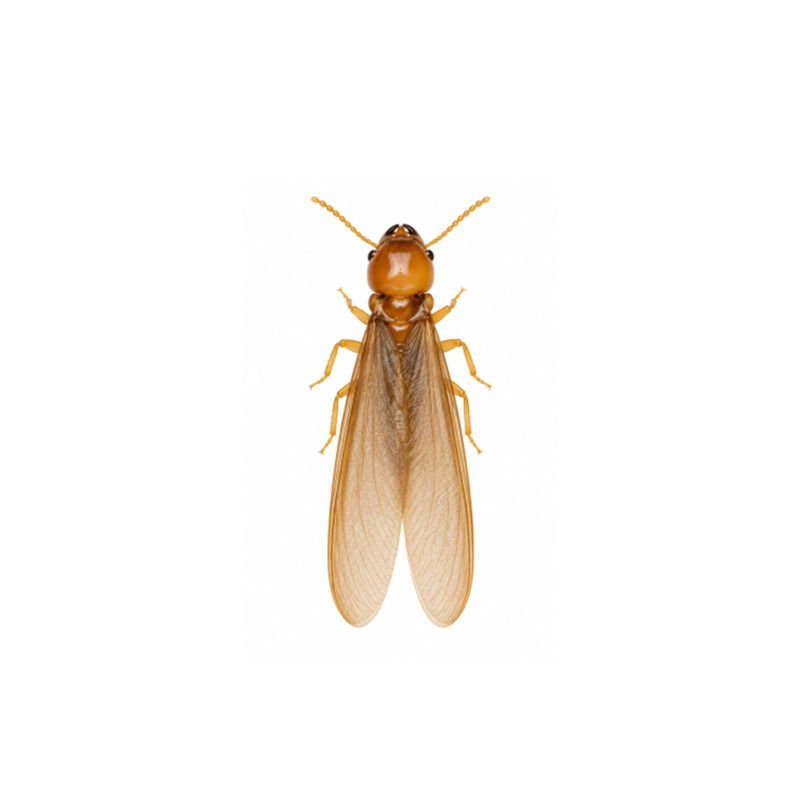
Powderpost Termite Quick Facts
Size
Soldiers measure about 1/6 to 1/5 inch long; winged swarmers reach roughly 2/5 inch including wings.
Color
Creamy-white soft-bodied colony members; soldiers have nearly black, deeply wrinkled heads and pale bodies; swarmers are medium brown.
How to Identify
Tiny six-sided fecal pellets pushed from 1–2 mm kick-out holes, plus possible blistered or paper-thin wood surfaces and discarded wings after flights.
Active Season
Year-round in South Florida, with most noticeable swarming typically from April through June.
Indoor or Outdoor
Almost exclusively associated with structures, furniture, and wooden articles indoors or under cover; rarely found in natural outdoor settings.
Day or Night
Colonies remain active inside wood at any hour; swarmers usually fly at night.
Diet
Dry, sound wood (both softwoods and hardwoods), especially sapwood.
About Powderpost Termites
Why DIY Powderpost Termite Control May Fail
Surface sprays or store-bought products typically contact only exposed swarmers or a few pellets and leave the hidden colony untouched. Colonies live deep inside wood galleries that ordinary household treatments cannot reach. Multiple independent colonies can occupy the same structure, so treating one visible area may leave others active. Misidentification with powderpost beetles or other drywood species can lead to ineffective methods. Replacing a single piece of furniture may miss structural wood that is also infested. When activity returns, pellets continue to appear, or swarmers emerge repeatedly, a professional inspection that locates the full extent of galleries becomes the more practical next step.

Lower-Impact Options
When appropriate, Pest Busterzz may prioritize precise placement, exclusion, monitoring, sanitation, or habitat modification to reduce unnecessary product use.
The Pest Busterzz Powderpost Termite Treatment Approach
Pest Busterzz identifies the pest, evaluates the extent of activity, looks for entry points or breeding and nesting areas, and checks the environmental conditions supporting the problem.
Inspection
We identify the species, map pellet deposits and kick-out holes, probe accessible wood, check furniture and structural members, and evaluate conditions that allow colonies to persist.
Targeted Treatment
The treatment plan depends on the pest, property, activity level, and inspection findings and may include localized wood treatments, void applications, or whole-structure approaches when multiple colonies or inaccessible galleries are present.
Monitoring & Follow-Up
Activity is rechecked after treatment, new pellet deposits or swarmers are noted, and adjustments are made if additional colonies are discovered. Timing depends on the size and location of the infestation.
Prevention
Recommendations focus on sealing entry cracks in wood, reducing unnecessary wooden clutter, inspecting second-hand furniture before bringing it indoors, and addressing any moisture issues that could encourage other wood-destroying organisms.
faqs