

Pest Library
Yellow Fever Mosquito Control in South Florida
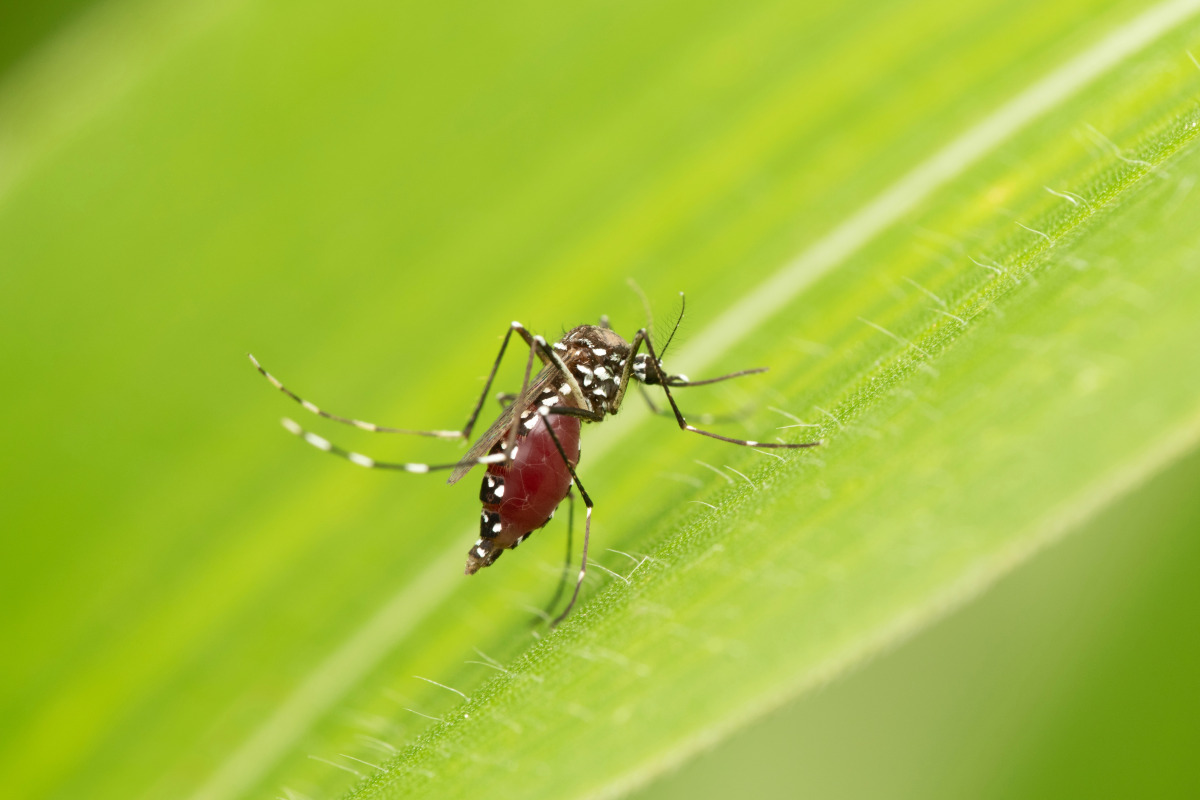
Yellow Fever Mosquito Quick Facts
Size
Usually about 1/8 to 1/4 inch long
Color
Dark brown to black with distinct white markings on the legs and upper body
How to Identify
Look for a small, dark mosquito with white-banded legs and a pale lyre-shaped pattern on the thorax
Active Season
Active year-round in South Florida, with populations often increasing during warm, rainy periods
Indoor or Outdoor
Primarily outdoors, but adults may enter homes and businesses through open doors, windows, and damaged screens
Day or Night
Females are aggressive daytime biters, especially during the morning and late afternoon
Diet
Females take blood meals to produce eggs; both males and females also feed on plant sugars and nectar
About Yellow Fever Mosquitoes
Why Tiny Containers Can Produce a Large Mosquito Problem
Yellow fever mosquitoes do not need a pond, ditch, or large pool of water. Females commonly use small artificial containers close to people, and several separate containers may be active at the same time. Because eggs are placed on damp surfaces above the waterline, simply finding a dry container does not always mean the breeding cycle has ended. Eggs may remain until rain, irrigation, or refilling raises the water level.
Regularly emptying, scrubbing, covering, or removing water-holding items is more effective than waiting until larvae are visible. On larger residential and commercial properties, a systematic inspection helps identify overlooked sources in gutters, planters, storage areas, landscaping, equipment, and shared outdoor spaces.
Why DIY Yellow Fever Mosquito Control Falls Short
Do-it-yourself efforts may reduce adult mosquitoes temporarily, but lasting improvement usually requires finding small breeding containers and addressing repeated sources across the property. Professional service may be appropriate when daytime biting continues, breeding sites are difficult to locate, or activity affects several outdoor areas.

Lower-Impact Options
When appropriate, we may prioritize breeding-site reduction, monitoring, exclusion, habitat changes, and precise exterior placement to reduce unnecessary product use.
The Pest Busterzz Yellow Fever Mosquito Treatment Approach
Pest Busterzz develops a mosquito management plan based on species identification, breeding conditions, adult activity, property use, and inspection findings.
Inspection
We inspect water-holding containers, shaded adult resting areas, vegetation, gutters, drains, screen conditions, and locations where daytime biting is most noticeable.
Targeted Treatment
Based on the inspection, the plan may include breeding-site reduction, targeted larval management, precise exterior applications, vegetation management, and exclusion recommendations. Methods depend on the property and activity found.
Monitoring & Follow-Up
We evaluate biting pressure and breeding activity, review newly collected water after rainfall, and adjust the plan when conditions or problem areas change.
Prevention
Recommendations may include emptying or covering containers, cleaning gutters, refreshing birdbaths, correcting drainage, thinning dense vegetation, repairing screens, and managing water-holding plants.
faqs