

Pest Library
Paper Wasp Control in South Florida
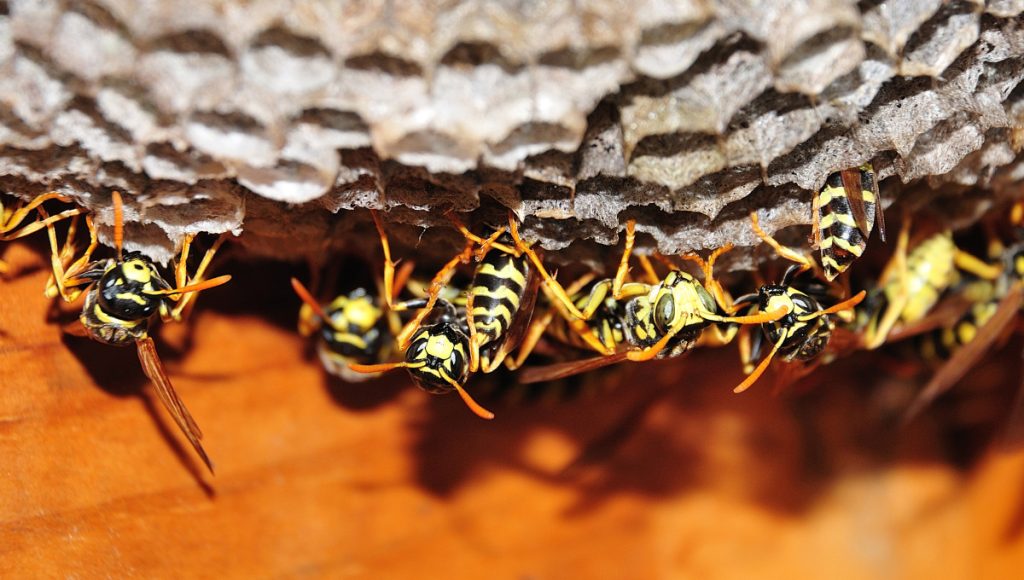
Paper Wasp Quick Facts
Size
Typically about 5/8 to 3/4 inch long
Color
Brown, reddish-brown, black, or yellow-marked, depending on the species
How to Identify
Slender body, narrow waist, long legs that hang during flight, and an exposed umbrella-shaped paper nest
Active Season
Active through much of the year in South Florida, with nesting and foraging often increasing during warm weather
Indoor or Outdoor
Primarily outdoors, especially beneath eaves, railings, roof edges, and other sheltered surfaces
Day or Night
Mostly active during daylight, when workers gather food and nesting material
Diet
Adults feed on nectar and other sugary liquids; developing larvae are fed chewed insects, including caterpillars.
About Paper Wasps
Why DIY Paper Wasp Control Can Fail
Do-it-yourself efforts may help prevent occasional nest construction, but an established paper wasp colony can be difficult to address safely and completely. Professional inspection is a practical next step when the nest is active, elevated, hidden, close to frequently used areas, or difficult to distinguish from another stinging wasp.

Lower-Impact Options
When appropriate, we emphasize nest-specific service, precise placement, physical removal after activity has stopped, monitoring, and practical exclusion or habitat recommendations to reduce unnecessary product use.
The Pest Busterzz Paper Wasp Treatment Approach
Pest Busterzz begins with proper identification, evaluates the nest location and surrounding activity, and develops a plan based on the inspection findings.
Inspection
We confirm whether the insects are paper wasps and inspect eaves, soffits, porches, balconies, signs, sheds, fixtures, equipment areas, and other protected surfaces for active or developing nests.
Targeted Treatment
Based on the nest location, colony activity, property use, and access conditions, the plan may include carefully placed nest treatment, removal of accessible nesting material after activity has stopped, exterior management, or exclusion recommendations.
Monitoring & Follow-Up
We check whether wasp traffic continues, evaluate results, adjust the plan when necessary, and address additional nesting areas discovered during service.
Prevention
Recommendations may include repairing damaged screens, sealing appropriate exterior gaps, organizing storage areas, checking seldom-used outdoor items, and regularly inspecting sheltered ledges before nests expand.
faqs