

Cicada Killer Wasp

Pest Busterzz Home Icon

Pest Library

Cicada Killer Wasp Control in South Florida
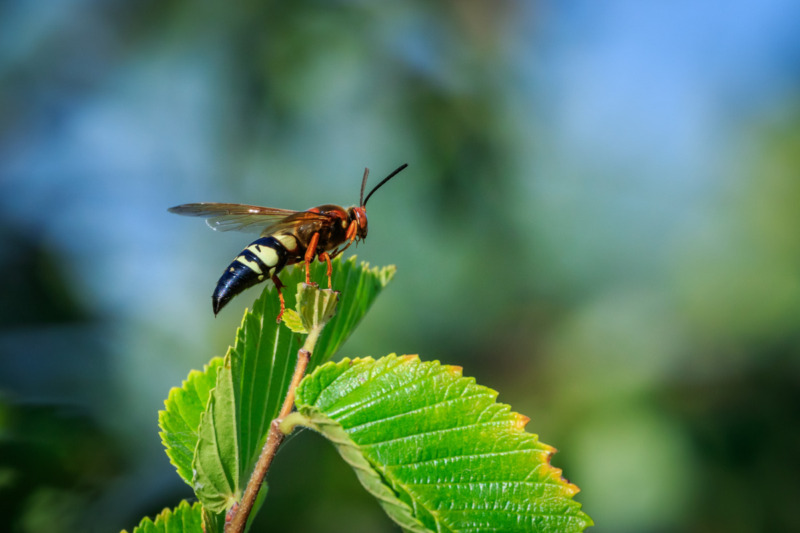
Cicada Killer Wasp Quick Facts

Size

Approximately 1 to 1½ inches long

Color

Usually black or reddish-brown with yellow markings and amber-brown wings

How to Identify

Very large wasp seen flying low over the ground or entering a round soil burrow

Active Season

Most noticeable during South Florida’s warm summer months

Indoor or Outdoor

Primarily outdoors in sunny areas with exposed, well-drained soil

Day or Night

Active during daylight, especially in warm, sunny weather

Diet

Adults feed on nectar and plant fluids; females capture cicadas for their developing larvae.

About Cicada Killer Wasps

Cicada killer wasps are large, solitary hunting wasps in the genus Sphecius. Florida is home to the eastern cicada killer, Sphecius speciosus, as well as the less common Caribbean species Sphecius hogardii, which has been recorded in parts of South Florida. Unlike yellowjackets and other colony-forming wasps, each female generally prepares an underground burrow for her own offspring.

Their size, low-flying activity, and bold coloring can make them appear threatening. Property owners are most likely to notice males patrolling nesting areas or females excavating sandy soil near lawns, walkways, landscape beds, and commercial grounds. The main concerns are intimidating activity, loose soil, and nests located close to areas people regularly use.

Where Do Cicada Killer Wasps Nest?

Preferred Nesting Areas

Female cicada killers dig burrows in sunny, relatively dry soil that is loose enough to excavate but firm enough to hold a tunnel. Common sites include:

  • Thin or stressed turf
  • Exposed sandy patches
  • Garden and landscape borders
  • Sloped banks
  • Areas beside sidewalks, patios, and driveways
  • Soil beneath shrubs where plant cover is sparse
  • Playground edges and commercial landscape areas

A burrow entrance may be surrounded by a fan-shaped or irregular mound of freshly displaced soil. Several females may choose the same favorable area even though each wasp maintains her own nest.

South Florida Property Conditions

South Florida’s sandy soils can make excavation easier, especially where irrigation patterns, foot traffic, construction, drought stress, or declining turf leave sunny bare patches. The wasps do not normally establish colonies in attics, wall voids, rooflines, or other parts of a building. Indoor sightings are usually accidental.

Cicada Killer Behavior

Hunting and Nest Provisioning

Female cicada killers capture cicadas in nearby trees, paralyze them with a sting, and carry or drag them back to an underground burrow. Each tunnel may contain several side chambers. The female places one or more cicadas in a chamber, lays an egg, and seals the cell so the developing larva has a food supply.

Adult Feeding

Adult wasps feed on flower nectar and other plant fluids. They do not eat the cicadas they capture; the cicadas are stored as food for their larvae.

Male Patrols

Males often hover close to the ground, defend small territories, and approach people, equipment, or other insects that enter the area. This behavior can seem confrontational, but male cicada killers cannot sting.

Reaction When Disturbed

Females can sting, but they generally use the stinger to subdue cicadas and are unlikely to sting a person unless grabbed, stepped on, trapped against the skin, or handled roughly.

Property and Safety Concerns

Nuisance Activity

Cicada killers are beneficial predators of cicadas and are generally considered a nuisance rather than a major health or structural threat. Their large size and low flight paths can still make entrances, pool decks, playgrounds, walkways, loading areas, and maintained landscapes uncomfortable to use.

Soil Disturbance

Repeated excavation may leave noticeable soil mounds and disturb small sections of turf or landscape beds. The wasps do not consume wood, damage building materials, contaminate stored food, or build paper nests.

Sting Risk

Females are capable of stinging, but stings are uncommon when the insects are left alone. Greater caution may be appropriate where nests are close to children’s play areas, pet activity, pedestrian routes, or areas used by someone with a known sensitivity to insect stings.

Because cicada killers may be confused with more defensive social wasps, proper identification is important before treatment decisions are made.

When Are Cicada Killer Wasps Active in South Florida?

Cicada killer activity is most noticeable during the warmer summer months, when adults emerge from the soil, mate, excavate burrows, and provision their nests while cicadas are available.

Activity is often greatest during:

  • Warm, sunny daytime conditions
  • Periods when cicadas are abundant
  • Dry weather that leaves exposed soil suitable for digging
  • Times when turf becomes thin or stressed

Several wasps may appear almost at once when a previously used or especially suitable nesting area becomes active. The visible adults do not maintain a permanent colony, but the same location may attract new females in later seasons when soil conditions remain favorable.

Dense turf, heavy mulch, saturated soil, and deep shade are generally less attractive than sunny, well-drained bare ground. Indoor activity is uncommon and usually results from a wasp entering accidentally.

Why DIY Cicada Killer Wasp Control Can Fail

DIY efforts may reduce visible cicada killer activity without addressing all active burrows or the soil conditions attracting new females. Professional service may be the more practical next step when numerous nests appear, activity returns seasonally, burrows are close to high-use areas, or the insect cannot be confidently distinguished from a more defensive wasp.

  • Treating Only Wasps in Flight | Reducing visible adults does not necessarily address underground burrows, developing larvae, or other females nesting nearby.
  • Misidentifying the Wasp | Cicada killers can resemble hornets or large yellowjackets from a distance. A treatment chosen for the wrong species may be ineffective or unnecessarily disruptive.
  • Missing Additional Burrows | Several solitary females may use the same favorable patch of soil. Treating one opening may leave other active nests nearby.
  • Ignoring Nesting Conditions | Thin turf, exposed sand, sunny bare soil, and dry landscape edges can continue attracting cicada killers after visible activity is reduced.
  • Failing to Reach the Nest | Burrows may extend several feet and branch into multiple cells, making the full nesting area difficult to evaluate from the surface.
  • Overlooking Product Safety | Improper applications near lawns, ornamental plants, pets, walkways, or drainage areas may create unnecessary exposure or conflict with label directions.
cicada killer wasp treatment in South Florida

Lower-Impact Options

When appropriate, we may emphasize precise treatment placement, monitoring, turf improvement, mulching, and other habitat changes to reduce unnecessary product use.

The Pest Busterzz Approach to Cicada Killer Wasp Treatment

Pest Busterzz begins with proper identification, evaluates the active nesting area, and recommends a plan based on the burrow locations, level of activity, and surrounding property conditions.

01

Inspection

We confirm whether the insects are cicada killers or another type of wasp, locate active burrow entrances, estimate the nesting area, observe flight behavior, and inspect nearby lawns, sandy patches, landscape beds, walkways, and gathering areas.

02

Targeted Treatment

Based on the inspection, the plan may include localized nest treatment, exterior management, and habitat modifications that make the soil less attractive for future nesting. The appropriate methods depend on nest location, activity level, and property use.

03

Monitoring & Follow-Up

We check for continuing flight activity, newly opened burrows, and changes in the nesting area. Follow-up needs depend on the number of nests, soil conditions, seasonal activity, and the results of the initial service.

04

Prevention

Recommendations may include improving thin turf, covering bare soil with appropriate mulch, correcting landscape conditions that leave dry open patches, and monitoring sunny areas where burrows have appeared before.

Yes. Cicada killer wasps occur in Florida, including South Florida. The eastern cicada killer is the species most people recognize, while a less common rust-orange species has been recorded in the Florida Keys and parts of Southwest Florida.

Females hunt cicadas, paralyze them, and carry them to underground nest cells as food for their developing larvae. Adult wasps themselves feed mainly on nectar and plant fluids.

No. They do not eat wood, build paper nests, or damage structural materials. Their excavation may disturb small areas of turf or leave noticeable soil mounds where several females nest close together.

Males patrol nesting areas and may hover near people or equipment that enter their territory. Females also fly low while locating burrows or returning with cicadas. The behavior may look aggressive, but males cannot sting.

The entrance is usually a round hole in exposed soil with a mound or fan of freshly excavated dirt nearby. A female may repeatedly enter the opening, sometimes while carrying a cicada.

Females can sting, but they are generally not aggressive and usually sting only when grabbed, stepped on, or trapped. Males may approach people near nesting areas, but they do not have stingers.

It may reduce a few visible adults, but it may not address underground nests, additional burrows, or the exposed soil conditions that attract new females. Product use must also follow label directions.

Not necessarily. A single wasp may be feeding, hunting, or passing through. Repeated low flight over the same patch, fresh soil mounds, or several visible holes are stronger signs of active nesting.

Sunny exposure, loose well-drained soil, thin turf, and nearby cicada activity can make the same location attractive in later seasons. The returning wasps may be a new generation rather than the same adults.

Consider an inspection when numerous burrows appear, nests are beside doors, sidewalks, playgrounds, pool areas, or work zones, activity keeps returning, or you are uncertain whether the insects are cicada killers or a more defensive wasp.

Pest Busterzz Home Icon

faqs

Cicada Killer Wasp FAQs