

Indianmeal Moth

Pest Busterzz Home Icon

Pest Library

Indianmeal Moth
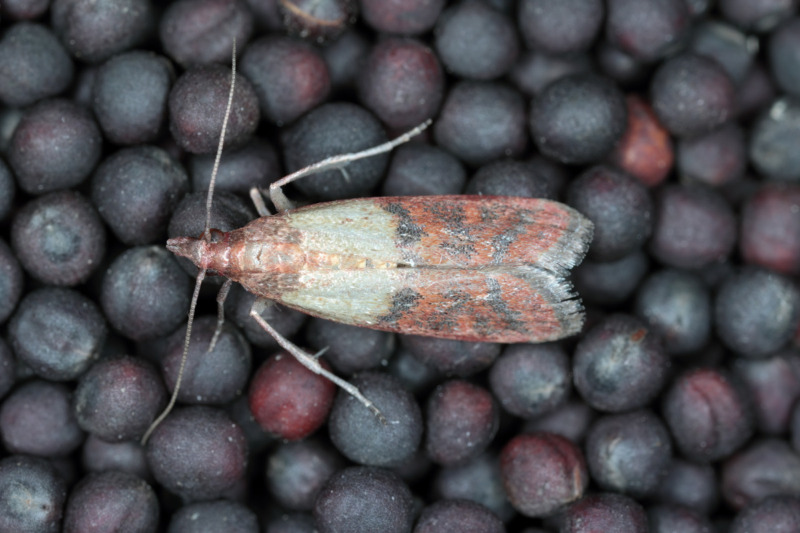
Indianmeal Moth Quick Facts

Size

Adults about ½ inch long with a wingspan of roughly ⅔ to ¾ inch; mature larvae reach about ½ inch.

Color

Forewings gray on the basal third and reddish-brown to coppery on the outer two-thirds; larvae usually off-white to creamy, sometimes pinkish or greenish depending on diet, with a brown head.

How to Identify

Distinctive two-toned forewings and the presence of silken webbing mixed with frass in dry foods; wandering cream-colored larvae on walls or ceilings are also a strong clue.

Active Season

Year-round in South Florida, with faster development and more generations during warm months.

Indoor or Outdoor

Primarily an indoor pantry and stored-product pest; can also live outdoors in Florida.

Day or Night

Adults most noticeable flying at dusk or at night and often drawn to lights; larvae feed continuously inside food packages.

Diet

Larvae feed on a wide range of stored dry goods including grains, cereals, flour, cornmeal, nuts, dried fruit, seeds, spices, chocolate, and dry pet food or birdseed.

About Indianmeal Moths

The Indianmeal moth, Plodia interpunctella, is one of the most common stored-product pests found in American homes, grocery stores, and food-storage areas. Adults are small moths easily recognized by their two-toned wings—pale gray near the body and coppery-brown farther out. In South Florida’s warm climate the moth thrives both indoors and outdoors, often arriving in packaged dry goods from stores or warehouses. The real problem is the larvae, which spin silk webbing through food and leave behind frass and shed skins. Homeowners and business owners typically notice the moths first when adults flutter near kitchen lights or ceilings, signaling that a food source somewhere on the property is already supporting the next generation.

Where Are Indianmeal Moths Commonly Found?

Indoor Hiding Places

Indianmeal moths develop wherever suitable dry food is available and relatively undisturbed. The most common indoor sites include:

  • Kitchen pantries and upper cabinets
  • Drawers holding baking supplies
  • Closets used for dry pet food or birdseed
  • Seams of cardboard boxes and under shelf paper
  • Cracks in wooden shelving
  • Ceilings, wall junctions, and undersides of shelves (common pupation sites)

Outdoor Locations

In Florida the moth can complete its life cycle outdoors in bird feeders, spilled grain, or other protected food sources. Adults readily enter buildings through open doors, windows, or gaps around utility lines.

South Florida Conditions That Support Activity

South Florida’s consistently warm temperatures and the region’s heavy reliance on packaged dry goods create nearly ideal conditions for continuous breeding. Risk increases when:

  • Dry goods are stored in original packaging for long periods
  • Birdseed or pet food is kept in open bags
  • Pantry shelves contain crumbs or old product residue
  • Packages are brought home already containing eggs or larvae

Indianmeal Moth Behavior and Attractants

Feeding Habits

Adult moths do not feed. The larvae are the stage that damages food. They feed on and contaminate:

  • Grains, cereals, flour, and cornmeal
  • Nuts, dried fruit, and seeds
  • Spices, chocolate, and powdered milk
  • Dry pet food and birdseed

As they feed they spin silk webbing that mats food particles together and mixes with frass and shed skins.

Reproduction and Movement

Females lay up to several hundred eggs directly on or near a food source. After hatching, larvae feed and spin silk. When ready to pupate, mature larvae often leave the food and crawl considerable distances, appearing on walls, ceilings, or even in rooms far from the pantry. This wandering behavior frequently misleads people into thinking the infestation is more widespread than it actually is.

Peak Activity

Adults fly with a characteristic zigzag motion and are strongly attracted to lights, which is why they are often first noticed in the evening near windows or kitchen fixtures. In warm South Florida conditions a complete generation can finish in roughly a month, allowing populations to build quickly if an overlooked food source remains available.

Damage and Concerns

Food Contamination

The primary issue is food contamination rather than structural damage or disease transmission. Larvae render stored products unappetizing and unusable by fouling them with silk, frass, and shed skins. Infested packages of cereal, flour, nuts, spices, or pet food must usually be discarded. Businesses that store or sell dry goods can face customer complaints and product loss when moths appear in retail or warehouse settings.

Health and Safety

The moths themselves do not bite, sting, or pose a direct health threat to people or pets, though heavily contaminated pet food is no longer suitable for animals. Seeing a few adults often indicates that eggs or larvae are already present somewhere in the storage area.

When Are Indianmeal Moths Active in South Florida?

In South Florida the Indianmeal moth remains active year-round. Warm temperatures accelerate development, so multiple generations can occur each year, especially during the long hot season. Cooler winter periods slow the life cycle but rarely stop it indoors, where heated homes and climate-controlled storage keep conditions favorable.

Sudden indoor sightings frequently follow the purchase of already-infested packages from a store or the disturbance of an outdoor food source after rain or tropical weather. Because development continues without a true dormant season, activity can appear at any time of year once a suitable food source is present.

Why DIY Indianmeal Moth Control May Fall Short

Finding and discarding one obviously webbed package rarely ends the problem. Professional service becomes the more practical next step when moths repeatedly return, appear in several rooms, or when identification or hidden breeding sites remain uncertain.

  • Missing Hidden Stages | Eggs and small larvae can be present in neighboring containers that look clean on the outside. Larvae that have already left the food to pupate on walls or ceilings will still emerge as adults.
  • Overlooking Less Obvious Sources | Birdseed, dry pet food, bulk spices, or decorative items containing seeds are frequently missed and allow the cycle to continue.
  • Incomplete Clean-Outs | Store-bought sprays or fogs may kill visible moths but leave hidden stages untouched. South Florida’s warm temperatures mean any remaining eggs or larvae develop quickly.
  • Reinfestation from Outdoor Sources | Adults from outdoor populations (bird feeders, spilled grain) can re-enter through open doors or windows after an indoor clean-out.
  • Identification Uncertainty | Similar-looking moths or other pantry pests can lead to treatments that do not match the actual biology of the Indianmeal moth.
Indianmeal moth treatment in South Florida

Lower-Impact Options

When appropriate, Pest Busterzz prioritizes sanitation, monitoring traps, exclusion of outdoor sources, and precise placement of treatments so that product use remains limited to areas of confirmed activity.

The Pest Busterzz Indianmeal Moth Treatment Approach

Pest Busterzz focuses on locating the food sources supporting the moths, removing or treating residual stages, and reducing the conditions that allow activity to return.

01

Inspection

We identify the pest, determine the extent of activity, and carefully examine pantries, cabinets, pet-food storage, and other potential breeding sites. We look for webbing, frass, wandering larvae, and entry points that may allow outdoor moths to re-enter.

02

Targeted Treatment

The plan is based on inspection findings and may include thorough sanitation guidance, removal of contaminated products, trapping of adults, and precise applications directed at residual stages in cracks, voids, or storage areas. Exterior sources are addressed when outdoor populations are contributing to indoor activity.

03

Monitoring & Follow-Up

Activity is checked after initial work, traps are evaluated, and any newly discovered food sources or breeding sites are handled. Follow-up timing depends on the temperature-driven life cycle and the conditions found on the property.

04

Prevention

Recommendations focus on sealing dry goods in airtight containers, inspecting packages before storage, vacuuming shelves and crevices regularly, and keeping birdseed or pet food in sealed bins. Reducing clutter and promptly discarding outdated dry goods further limits places for moths to develop.

Indianmeal moths have clearly two-toned wings—gray near the body and coppery farther out—while clothes moths are more uniformly tan or buff. Indianmeal moths are almost always associated with dry foods rather than fabrics or wool.

Larvae often leave the original package to pupate on walls, ceilings, or neighboring shelves. Those pupae still produce adults. Additional eggs or tiny larvae may also be present in other packages that looked clean.

In South Florida they can complete their life cycle outdoors as well, especially around bird feeders or spilled grain. Adults from outdoor populations readily fly indoors through open doors or windows.

The moths themselves are not toxic, but heavily contaminated food containing silk, frass, and shed skins is no longer wholesome and should be discarded. Fresh, uninfested pet food is the better choice.

Under warm indoor temperatures a generation can finish in about a month, and females lay large numbers of eggs. Multiple overlapping generations can therefore appear within a single season if food sources remain available.

Traps that attract male moths are useful for monitoring and can reduce mating, but they do not remove the larvae already feeding inside food packages. Source removal and sanitation remain essential.

If moths continue to appear after you have discarded obviously infested items, cleaned the pantry thoroughly, and sealed remaining dry goods, a professional inspection can locate hidden sources or outdoor contributions that are difficult to find on your own.

Commercial food-storage settings often require systematic inspection of bulk products, monitoring traps, and coordinated sanitation to prevent customer complaints and product loss.

Pest Busterzz Home Icon

faqs

Indianmeal Moth FAQs