

Pest Library
Merchant Grain Beetle
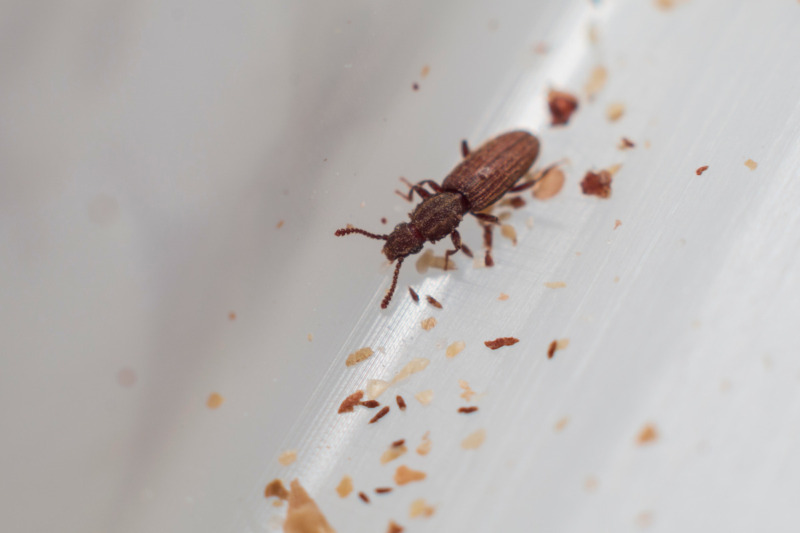
Merchant Grain Beetle Quick Facts
Size
Adults measure about 1/10 inch (roughly 3 mm) long.
Color
Dark brown with a smooth, flattened body.
How to Identify
Six saw-like projections along each side of the thorax and relatively large eyes; adults can fly.
Active Season
May remain active year-round in South Florida’s warm climate.
Indoor or Outdoor
Primarily indoor, especially in pantries and food-storage areas.
Day or Night
Active at various times, often noticed when disturbed in stored goods.
Diet
Prefers processed cereals, rolled oats, flour, cake mixes, pasta, nuts, coconut, and other oil-rich dry foods; does not attack intact whole-grain kernels.
About Merchant Grain Beetles
Why DIY Merchant Grain Beetle Control May Fall Short
Home treatments frequently miss hidden eggs and larvae inside unopened or partially used packages. Discarding only the most obviously infested item leaves other products that still contain developing stages. Over-the-counter sprays or traps may kill visible adults but do nothing for insects already inside food or packaging.

Lower-Impact Options
Whenever practical, Pest Busterzz emphasizes precise placement, sanitation, and habitat changes that reduce the need for broader product applications.
The Pest Busterzz Merchant Grain Beetle Treatment Approach
Pest Busterzz focuses on identifying the source of activity, treating affected areas, and helping reduce the conditions that allow merchant grain beetles to return.
Inspection
Technicians identify the beetle, examine pantry shelves, cupboards, and storage areas, and check packages for signs of activity. They look for entry points into packaging, spilled food debris, and conditions that allow populations to persist.
Targeted Treatment
The plan is based on what the inspection reveals. Options may include localized treatment of cracks and voids near storage areas, monitoring devices, thorough sanitation recommendations, and exclusion steps to limit movement between packages. Treatment is matched to the level of activity and the specific foods involved.
Monitoring & Follow-Up
Follow-up visits confirm that activity has declined and that newly discovered packages or areas are addressed. Timing depends on the life cycle and the conditions found at the property.
Prevention
Store dry goods in airtight containers, rotate stock so older items are used first, wipe shelves regularly to remove crumbs, and inspect new packages before placing them in the pantry. Discard any product that shows signs of infestation promptly.
faqs