

Pest Library
Drugstore Beetle
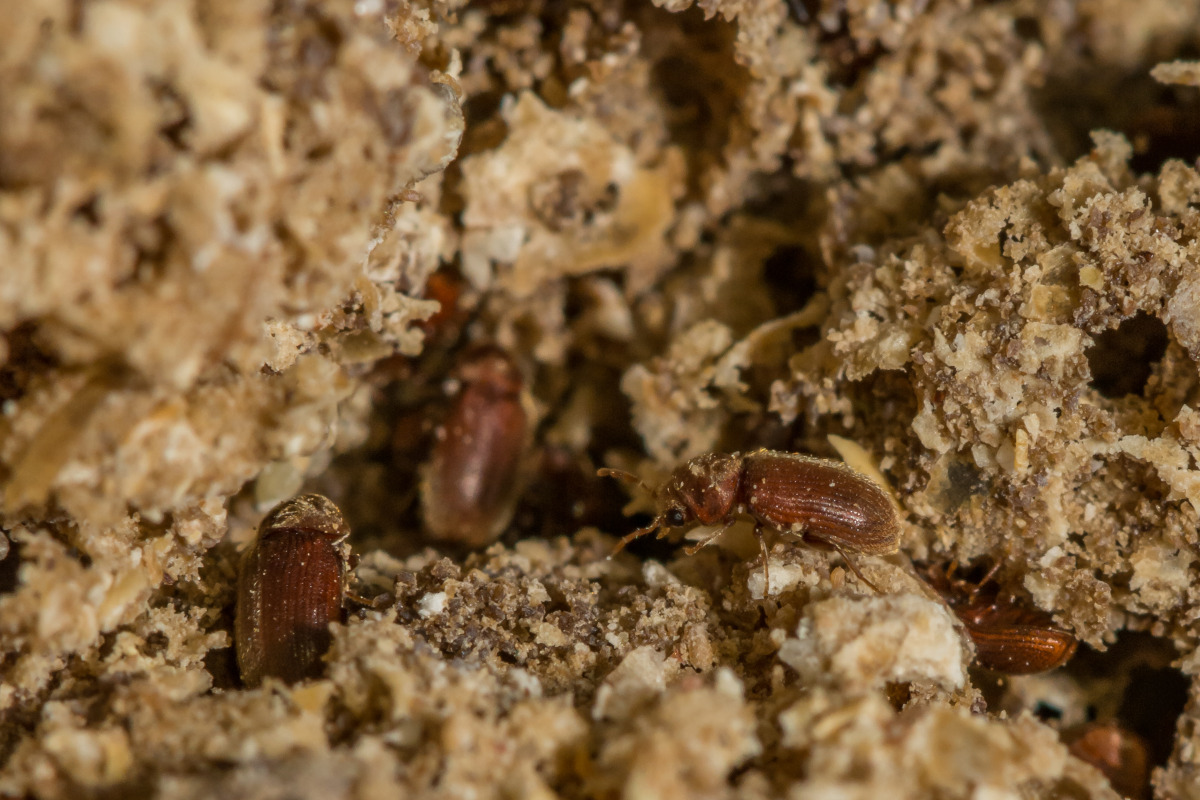
Drugstore Beetle Quick Facts
Size
Adults measure about 1/10 to 1/7 inch long (2.25–3.5 mm)
Color
Uniform brown to reddish-brown
How to Identify
Cylindrical body with fine longitudinal rows of pits or hairs on the wing covers and antennae that end in a three-segmented club; the head is largely hidden when viewed from above. Often confused with the cigarette beetle
Active Season
May remain active year-round in South Florida’s warm, humid conditions
Indoor or Outdoor
Primarily indoor pests of stored products; occasionally associated with outdoor sites such as bird nests
Day or Night
Adults often fly toward light and are frequently noticed on windowsills or near lights; activity can occur at various times when food and conditions allow
Diet
Larvae feed on a very wide range of dried plant and animal materials, including flours, cereals, spices, pet food, dried fruits, chocolates, and some non-food items such as leather, books, or museum specimens
About Drugstore Beetles
Why DIY Drugstore Beetle Control May Fall Short
Locating every infested package can be difficult when beetles have spread to multiple containers or to spills in cracks and seams. Professional service becomes the more practical next step when activity continues after discarding obvious packages, the source is unclear, or identification is uncertain.

Lower-Impact Options
When appropriate, Pest Busterzz emphasizes precise placement, sanitation, exclusion of entry into packaging, and monitoring to limit broader product use while addressing the specific conditions supporting drugstore beetles.
The Pest Busterzz Approach to Drugstore Beetle Treatment
Pest Busterzz focuses on accurate identification, locating the sources of activity, and reducing the conditions that allow drugstore beetles to return.
Inspection
We identify the beetle species, evaluate the extent of activity, look for entry points or breeding materials, and check the environmental conditions supporting the problem in stored-product areas.
Targeted Treatment
The plan depends on the pest, property, activity level, and inspection findings. It may include removal guidance for infested materials, localized applications where appropriate, monitoring tools, and recommendations tailored to the specific products and storage setup.
Monitoring & Follow-Up
We check activity, evaluate results, adjust the plan when necessary, and address newly discovered problem areas. Timing depends on the life cycle and conditions found at the property.
Prevention
Recommendations focus on transferring dry goods into sealed glass, metal, or heavy plastic containers, rotating stock so older items are used first, promptly cleaning spills and crumbs, and inspecting new packages before storage.
faqs