

Firebrat

Pest Busterzz Home Icon

Pest Library

Firebrat
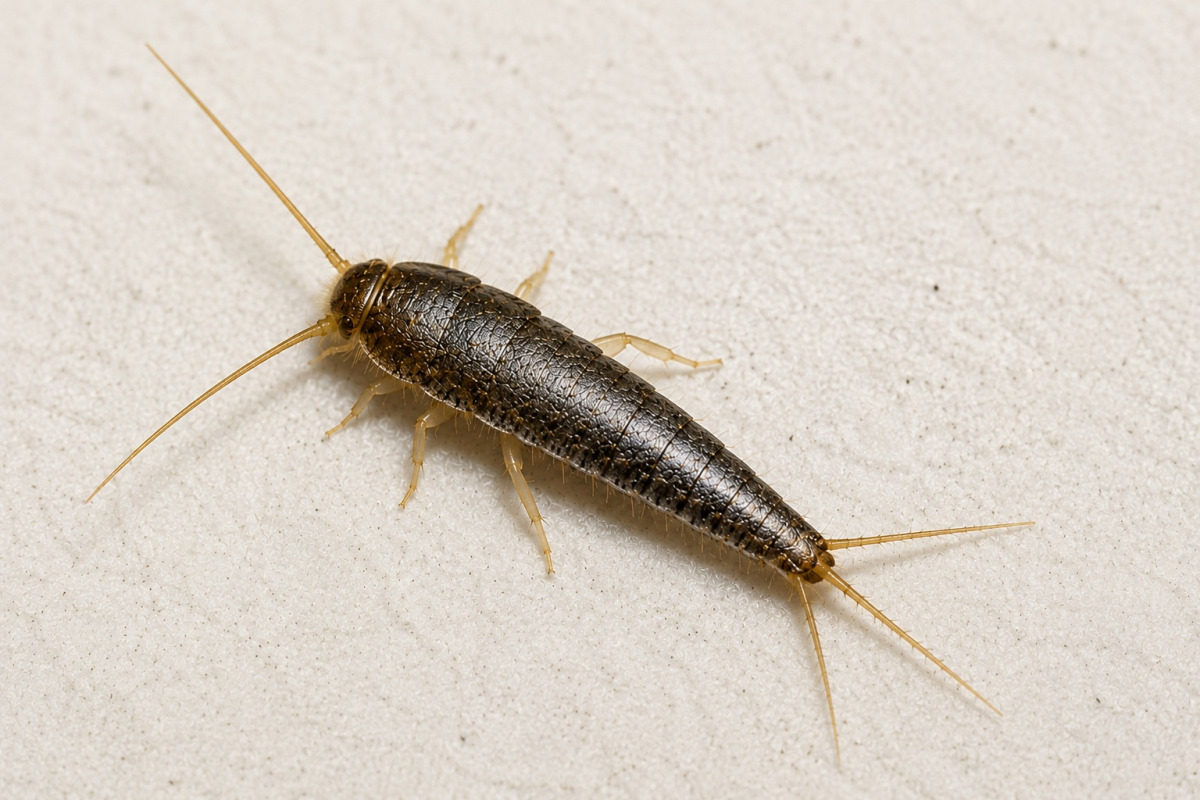
Firebrat Quick Facts

Size

Adults typically measure 1/4 to 1/2 inch in length, excluding long tail filaments.

Color

Mottled gray and brown with alternating dark and light patches across the body.

How to Identify

Teardrop-shaped, wingless insect with long antennae and three tail filaments, moving in a swift, darting motion.

Active Season

Active year-round in South Florida due to stable indoor climates and consistently high heat near appliances.

Indoor or Outdoor

Primarily an indoor scavenger that congregates around hot, secluded utility and mechanical spaces.

Day or Night

Mostly active at night, quickly scattering to find dark structural cracks when lights are turned on.

Diet

Consumes starches, sugars, and proteins, including paper goods, flour, cereal, book bindings, wallpaper paste, and rayon.

About Firebrats

The firebrat (Thermobia domestica) is a primitive, wingless insect closely related to the silverfish, recognized by its flattened body, long antennae, and dark brown mottled scales. In South Florida properties, these scavengers thrive in hot microclimates where temperatures regularly exceed 90°F, such as boiler closets, water heater rooms, furnace spaces, and unvented attics.

Property owners often notice firebrats near heat sources or where paper and pantry items are stored. While they do not bite or harm structures, firebrats can contaminate food and damage books, cardboard, wallpaper, and natural fabrics, making targeted environmental management essential.

Where Are Firebrats Commonly Found?

Indoor Hiding Places

Firebrats seek warm, dark, and secluded interior areas where heat accumulates throughout the day. Common indoor locations include:

  • Water heater closets and boiler rooms
  • Spaces behind ovens, ranges, and commercial baking equipment
  • Laundry rooms near dryer vents and hot water lines
  • Unconditioned attics and roof voids in South Florida homes
  • Utility chases and plumbing pipe chases
  • Crevices behind warm baseboards and kitchen cabinets
  • Inside cardboard storage boxes stacked near heat sources

Outdoor and Entry Locations

Firebrats are primarily indoor dwellers, but outdoor activity can occur near warm building features. Typical exterior areas include:

  • Warm mulch beds near building foundations
  • Underneath heat-retaining pavers or stones exposed to direct sun
  • Gaps around exterior dryer exhaust vents
  • Utility pipe penetrations and foundation wall cracks

South Florida Conditions That Support Activity

South Florida properties provide an ideal background climate for firebrats due to prolonged heat and high atmospheric moisture. Risk increases when a property features:

  • High attic temperatures caused by intense summer sun
  • Poorly ventilated utility closets or laundry areas
  • Unsealed openings around plumbing lines and electrical conduits
  • Cardboard boxes or paper products stored in warm garages or attics
  • Spilled starches, grains, or dry pet food in warm pantries

Firebrat Behavior and Feeding Habits

Feeding Habits

Firebrats are opportunistic scavengers focused on starches, carbohydrates, and proteins. Their diet includes:

  • Book bindings, paste, and paper products
  • Wallpaper adhesive and backing
  • Flour, cereal, bakery goods, and meal mix
  • Rayon, cotton, and starched fabrics
  • Shed insect skins and organic debris

Movement and Nocturnal Activity

Firebrats are nocturnal and extremely sensitive to light. When exposed to a sudden light source, they dart away rapidly in a rapid, fish-like motion to seek cover in narrow gaps. Because they lack wings, they move between rooms by creeping through wall voids, utility chases, and along warm water pipes.

Heat Preference and Reproduction

Firebrats thrive in high temperatures between 90°F and 106°F. Females lay eggs in small batches within dark cracks and structural voids near heat sources. In consistent heat, nymphs hatch and mature continuously, allowing localized populations to build without needing to forage far for food or shelter.

Firebrat Concerns and Property Risks

Property and Material Damage

Firebrats do not structural damage to wooden beams or drywall. However, their feeding habits can damage stored items, leaving behind telltale signs such as:

  • Shallow, irregular scrape marks on paper and cardboard
  • Small, notched holes in book pages and wallpaper
  • Yellow staining from excrement or body oils on paper or cloth
  • Fraying on rayon and cotton fabrics

Pantry Contamination

When firebrats enter pantries or dry food storage areas, they can contaminate open boxes of flour, grain, and dried pet food with shed skins, feces, and body scales, requiring affected items to be discarded.

Health and Bite Clarification

Firebrats do not bite, sting, or transmit vector-borne diseases to humans or pets. They are primarily nuisance pests whose presence indicates excessive indoor heat, lack of ventilation, or unsealed structural voids.

When Are Firebrats Active in South Florida?

Because firebrats inhabit warm indoor spaces, their activity in South Florida remains steady throughout the entire year. Indoor populations operate independently of outdoor weather changes.

Activity levels and reproduction can increase during:

  • Peak summer months when attic and wall temperatures spike
  • Periods when water heaters and air conditioning equipment run continuously
  • Humid weather spells that raise ambient interior moisture

Brief winter cold fronts in South Florida rarely impact firebrat colonies tucked away near interior heat sources, allowing them to reproduce uninterrupted without a dormant season.

Key Differences Between Firebrats and Silverfish

Firebrats and silverfish are frequently confused because of their similar teardrop shapes, lack of wings, and quick movements. However, distinguishing between them is critical for implementing proper control measures, as each species thrives under vastly different environmental conditions within a South Florida property.

While silverfish prefer cooler, damp spots like bathrooms and crawlspaces, firebrats gravitate toward intense heat. Identifying whether you are dealing with silverfish or firebrats ensures treatments focus on the correct microclimates.

Why DIY Firebrat Control Fails

Firebrats can be difficult to manage with over-the-counter products because they nest inside protected high-heat spaces. DIY efforts often yield incomplete results for several key reasons:

  • Inaccessible Nesting Sites | Firebrats live deep within narrow wall voids, behind water heaters, and around attic insulation where generic surface sprays fail to reach.
  • Misidentifying the Pest | Applying silverfish treatments in cool, damp spaces will miss firebrat populations harboring near hot utility lines and heat-generating appliances.
  • Scattering the Population | Using strong repellent sprays near active hiding spots can flush firebrats out, driving them deeper into adjacent wall cavities or higher into the roofline.
  • Protected Egg Batches | Aerosol foggers do not penetrate narrow crevice sites, leaving hidden egg clusters protected to hatch weeks after treatment.
  • Unaddressed Heat and Food Sources | Temporary treatments leave underlying attractants like unsealed utility gaps, stored cardboard, and accessible starches intact.
Firebrat treatment in South Florida

Lower-Impact Options

When appropriate, Pest Busterzz prioritizes targeted baits, void applications, crack-and-crevice placements, exclusion work, and habitat adjustments to minimize unnecessary product use.

The Pest Busterzz Firebrat Treatment Approach

Pest Busterzz locates active firebrat harborages, applies targeted treatments into heat-concentrated microclimates, and addresses environmental conditions to deliver long-term protection.

01

Inspection

We evaluate heat-concentrated zones, inspecting water heater closets, boiler spaces, laundry rooms, ovens, attics, and utility penetrations for live firebrats, shed skins, and feeding sign.

02

Targeted Treatment

Based on findings, we apply specialized long-lasting dusts, targeted baits, or crack-and-crevice treatments directly into wall voids and structural gaps around heat sources where pests shelter.

03

Monitoring & Follow-Up

We deploy monitoring traps near mechanical equipment and heat sources to verify population decline, adjusting treatments if ongoing firebrat activity is detected.

04

Prevention

We provide recommendations to seal gap penetrations around hot water pipes, improve attic ventilation, switch from cardboard to plastic storage, and store pantry starches in sealed containers.

Firebrats are attracted to intense heat above 90°F, dark shelter, and starchy food sources. Radiant heat from water heaters, furnace closets, ovens, and hot attic voids creates ideal conditions, especially when paper or pantry goods are stored nearby.

Silverfish are metallic silver or dark gray and prefer cool, damp spots like bathrooms. Firebrats have mottled gray-and-brown markings and specifically seek out high-heat areas like water heater closets, boiler spaces, and hot attics.

No. Firebrats do not bite, sting, or transmit diseases to humans or pets. They are purely nuisance pests that cause localized cosmetic damage to paper products, book bindings, wallpaper, and stored carbohydrates.

Water heater closets offer the ideal microclimate for firebrats: dark shelter, ambient humidity, and steady heat above 90°F. Gaps around utility pipes also give them easy passage into wall voids.

Yes. Over time, firebrats chew small, notch-like holes in cardboard, book pages, wallpaper, and starched cotton or rayon fabrics. They can also contaminate open boxes of dry food with droppings and shed skins.

Over-the-counter foggers rarely eliminate firebrat colonies. The spray mist settles on open surfaces rather than penetrating into the deep wall voids, insulation gaps, and narrow utility spaces where firebrats hide and breed.

Schedule a professional inspection if you notice recurring firebrat activity in utility rooms, find chew marks on paper goods or fabrics, or continue to see pests despite changing storage habits.

Pest Busterzz Home Icon

faqs

Firebrat FAQs