

Booklice (Psocids)

Pest Busterzz Home Icon

Pest Library

Booklice (Psocids)
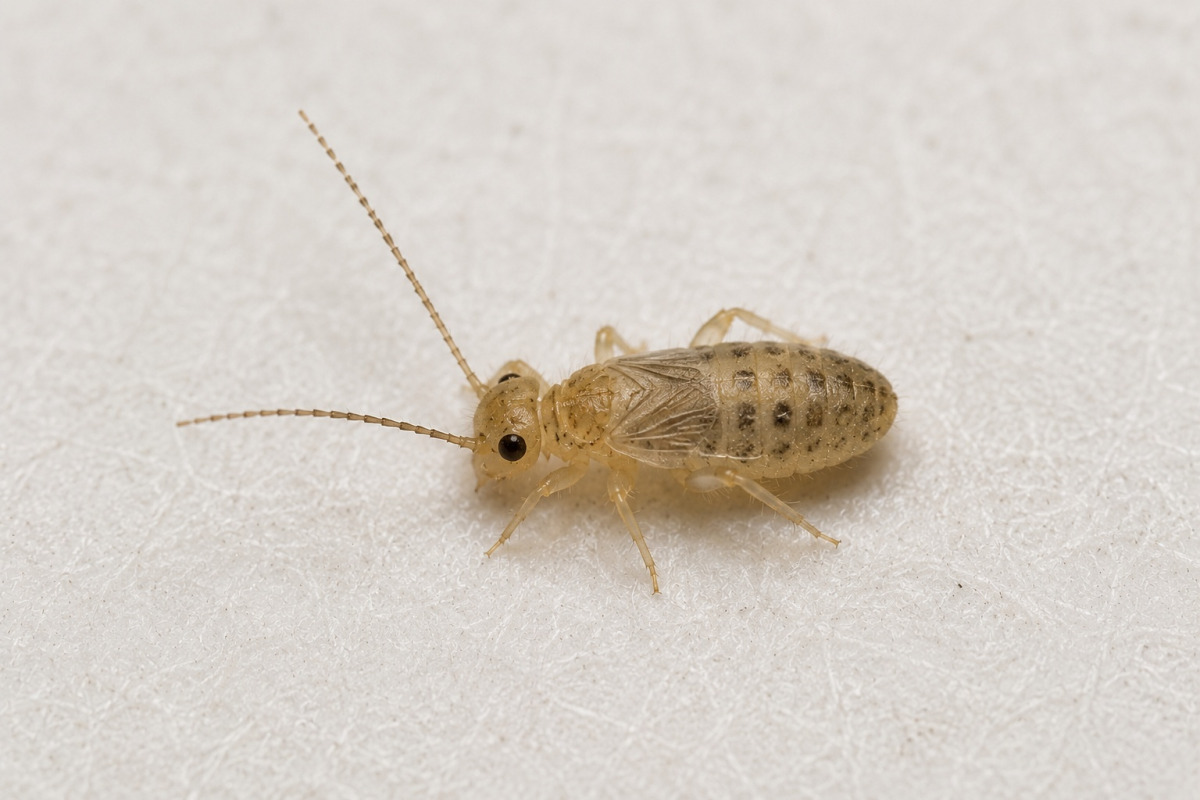
Booklice (Psocids) Quick Facts

Size

Extremely small, ranging from 1/32 to 1/16 inch long (1 to 2 mm)

Color

Translucent white, pale grey, or light tan

How to Identify

Tiny, soft-bodied insects with a swollen forehead, long thread-like antennae, and a distinct jerky running motion

Active Season

Active year-round in South Florida, with noticeable surges during hot, highly humid summer and autumn months

Indoor or Outdoor

Found in both environments, thriving outdoors on tree bark and leaves, and indoors in damp, humid spaces

Day or Night

Active throughout the day and night, primarily moving around whenever relative humidity levels are high

Diet

Microscopic fungi, mold, mildew, algae, starch, and organic decay products

About Booklice (Psocids)

Booklice, scientifically known as psocids, are tiny, harmless insects commonly found around South Florida properties where elevated moisture levels exist. Despite their common name, booklice are not actual lice—they do not bite, feed on human blood, or transmit diseases. Indoors, they often attract attention when small populations suddenly expand around humid areas, damp cardboard, or moisture-damaged building materials.

Property owners typically become concerned when hundreds of these translucent insects appear on walls, shelving, or food pantries. Their presence is almost always a direct biological indicator of an underlying moisture problem, excessive humidity, or micro-mold growth that requires attention.

Where Are Booklice Commonly Found?

Outdoor Nesting Areas

Outdoors, psocids inhabit natural, humid damp zones that protect them from drying out. Typical outdoor sites include:

  • Beneath loose tree bark and decaying logs
  • Under damp mulch and fallen leaves
  • On lichens and algae growing on rocks or wooden fences
  • Shaded, damp areas around plant foliage
  • Beneath outdoor debris and compost piles

Indoor Hiding Places

Indoors, psocids seek out undisturbed micro-climates that maintain high relative humidity—ideally above 60%. Common indoor locations include:

  • Water-damaged drywall and plaster
  • Window sills collecting persistent condensation
  • Damp bathrooms, laundry rooms, and unventilated closets
  • Paper products, cardboard storage boxes, and stacked books
  • Behind peeling wallpaper where starch paste is present
  • Pantry cabinets containing unsealed grains, flour, or cereals

South Florida Conditions That Support Activity

South Florida properties can provide favorable booklice conditions due to intense moisture levels and humidity. Risk may increase when a property has:

  • High interior humidity levels exceeding 60% relative humidity
  • Plumbing leaks or air-conditioning condensation drainage issues
  • Fresh plaster or drywall in new construction drying out slowly
  • Poor airflow in closed storage rooms, attics, or garages
  • Damp cardboard boxes stored directly on concrete floors

Booklice Behavior and Attractants

Feeding Habits

Booklice feed primarily on microscopic fungi, mold spores, algae, and starchy materials. Common dietary sources include:

  • Microscopic mold and mildew growing on damp surfaces
  • Starch-based bookbindings and wallpaper paste
  • Cardboard adhesives and damp paper products
  • Processed grains, flour, cereals, and dry pet food

Movement and Social Habits

Unlike social insects like ants or termites, booklice do not form organized colonies, nests, or central queens. However, large numbers naturally aggregate wherever micro-mold spores and moisture are abundant. They move across surfaces in rapid, jerky, darting motions when exposed to sudden light or airflow.

Moisture Sensitivity

Booklice lack a heavy protective cuticle, making them extremely susceptible to desiccation. They rely directly on ambient relative humidity to maintain their body fluids. When ambient humidity drops below 50%, psocids rapidly dry out and die off naturally.

Peak Activity

Populations explode during South Florida’s hot, rainy summer and early autumn months. High outdoor humidity combined with indoor air-conditioning condensation creates prime micro-climates for rapid reproduction and population surges.

Concerns and Impacts

Nuisance and Biological Indicator

Booklice are fundamentally a nuisance pest. They do not bite people or pets, sting, or transmit disease-causing pathogens. However, seeing hundreds of tiny insects crawling across bathroom walls or pantry shelves can cause significant psychological distress. Crucially, their presence serves as an early biological warning sign of elevated indoor humidity, hidden water leaks, or active mold growth.

Food and Material Contamination

While psocids do not destroy wood or structural framing, large infestations can contaminate stored pantry goods by introducing shed skins, moisture, and waste into dry items like flour, cereals, and grains. They may also damage delicate paper goods, starched books, or antique collections in damp storage areas.

When Are Booklice Active in South Florida?

South Florida’s subtropical climate allows booklice to remain active year-round indoors. However, activity spikes dramatically during humid summer weather, tropical storms, and hurricane season when ambient environmental moisture remains high.

Activity commonly escalates following:

  • Extended summer rainstorms that increase interior humidity
  • Air-conditioning malfunctions or drainage line clogs
  • Minor roof, window, or plumbing leaks
  • Recent home construction where plaster and drywall are still curing

Key Distinctions: Booklice vs. Termites and Bed Bugs

Because psocids are tiny, light-colored, and frequently gather in concealed areas, homeowners often mistake them for subterranean termite nymphs or early-stage bed bug nymphs. Recognizing the subtle physical and behavioral differences saves unnecessary worry:

  • Body Structure: Booklice have a soft, distinctly broad head with long, slender antennae and a narrow body segment behind the head. Termite nymphs have wider waists and straight, bead-like antennae.
  • Movement: Psocids run in short, jerky bursts and react quickly to disturbance. Bed bug nymphs move slower and possess a flatter, oval-shaped body built for clinging to fabrics.
  • Evidence Left Behind: Booklice do not leave wood tubing, mud tunnels, fecal spotting on mattresses, or structural hollows. Their main visible sign is simply the presence of live insects moving over damp surfaces.

Why DIY Booklice Control Misses the Mark

Attempting to resolve a booklice infestation with off-the-shelf insect sprays frequently yields frustrating, temporary results. Professional service is the most effective approach when booklice activity persists despite basic cleaning efforts.

  • Missing Hidden Food Sources | Contact sprays kill visible bugs on surfaces but fail to eliminate the microscopic fungal spores growing inside wall voids, under cabinets, or behind baseboards.
  • Ignoring Environmental Moisture | Over-the-counter insecticides do nothing to lower relative humidity or resolve underlying plumbing drips that allow booklice populations to thrive.
  • Scattering Insects Across Property | Improperly applying liquid chemical sprays can scatter booklice into new, untreated rooms or void spaces where humidity remains high.
  • Pantry Safety Concerns | Spraying household pest products near food items or kitchen shelving creates potential chemical contamination risks without solving the root issue.
  • Continued Egg Hatching | Surface sprays do not prevent eggs hidden in cracks from hatching, leading to recurring activity weeks after the initial application.
Booklice treatment in South Florida

Lower-Impact Options

Where appropriate, we prioritize precise placement, environmental management, targeted void applications, and sanitation recommendations to control booklice without unnecessary product use.

The Pest Busterzz Booklice Treatment Approach

Pest Busterzz focuses on identifying the root environmental conditions, managing active harbourage points, and recommending measures to reduce indoor moisture.

01

Inspection

We evaluate relative humidity, inspect high-risk areas like cabinets, water heaters, and utility voids, confirm insect identification, and pinpoint environmental conditions supporting the infestation.

02

Targeted Treatment

When active treatment is required, we utilize precise crack-and-crevice applications, void dust treatments, and localized harborage management designed specifically to address hidden insects without over-applying products.

03

Monitoring & Follow-Up

We deploy targeted sticky monitors to evaluate population declines, verify that environmental adjustments are working, and ensure newly emerging nymphs are effectively managed.

04

Prevention

Recommendations focus on maintaining relative humidity below 50% using dehumidifiers, repairing minor plumbing leaks, increasing closet ventilation, and discarding damp cardboard or paper materials.

Booklice are attracted to high humidity and microscopic mold, not general dirt or poor sanitation. Even immaculately clean South Florida properties can host booklice if high moisture, localized plumbing drips, or condensation on window frames allow micro-mold to grow.

No. Booklice lack mouthparts capable of piercing human or animal skin. They feed exclusively on microscopic fungi, algae, mold, and starchy organic materials, posing no direct threat of bites, stings, or bodily harm.

Booklice do not consume sound wood or structural framing, so they do not cause structural destruction like termites or carpenter ants. However, they can damage starchy paper items, old books, wallpaper paste, and unsealed dry food packages if left unmanaged in damp environments.

While both are small and pale, booklice have prominent, swollen foreheads, long thread-like antennae, and move with a quick, jerky motion. Termite nymphs move more deliberately, possess bead-like antennae, and are found inside mud tubes or damaged wood rather than running across open walls.

Air conditioning helps lower interior humidity, which slows down booklice activity. However, standard cooling alone may not reach deeply hidden areas like damp wall voids, underlying cabinets, or unventilated closets where moisture remains trapped.

Heavy rains spike outdoor humidity and cause temporary water intrusion or condensation buildup inside walls and rooflines. This sudden dampness encourages rapid microscopic mold growth, providing an abundant food supply that allows booklice populations to surge.

Contact sprays only kill the exposed insects you can see. They do not eliminate the microscopic mold spores feeding the infestation in wall voids or prevent newly laid eggs from hatching.

Maintaining relative humidity consistently below 50% deprives booklice of environmental moisture. Under these conditions, the insects dehydrate and their fungal food supply stops growing.

Re-emergence occurs when underlying moisture conditions remain uncorrected, hidden micro-mold spores continue to develop behind drywall or cabinets, or remaining eggs hatch in unmanaged voids.

You should schedule an inspection if booklice repeatedly appear in multiple rooms, if activity persists after running dehumidifiers, or if you suspect hidden moisture damage behind walls or beneath cabinets.

Pest Busterzz Home Icon

faqs

Booklice FAQs