

Hunting Billbug

Pest Busterzz Home Icon

Pest Library

Hunting Billbug
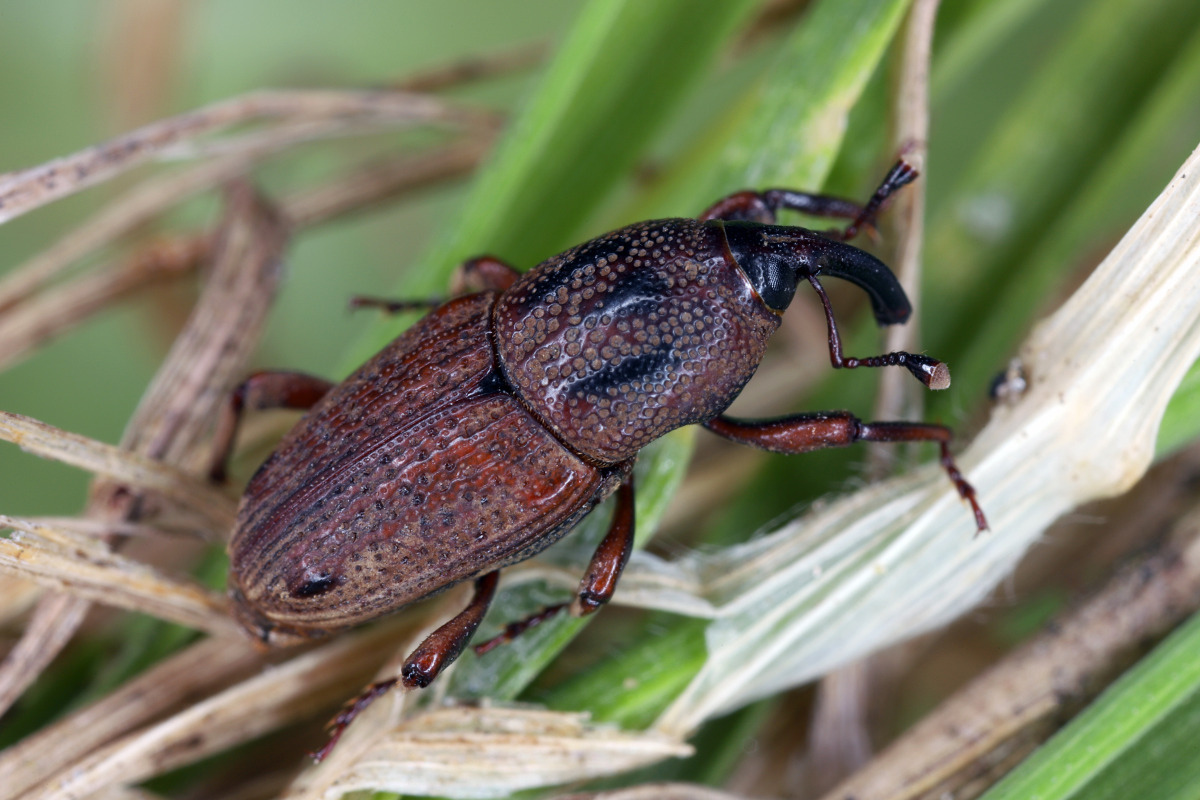
Hunting Billbug Quick Facts

Size

Adults measure 1/4 to 3/8 inch long; larvae reach up to 1/2 inch.

Color

Dark grayish-black to reddish-brown, frequently encrusted with dry soil.

How to Identify

Curved, elongated snout and a Y-shaped smooth line flanked by parenthesis-like markings on the thorax.

Active Season

Active year-round in South Florida, with feeding and reproduction surging from spring through autumn.

Indoor or Outdoor

Primarily an outdoor turfgrass pest that may accidentally wander onto patios, driveways, or lower entryways.

Day or Night

Mostly active at night when adults feed on turf blades; adults hide in thatch and soil crevices during the day.

Diet

Warm-season turfgrasses, with larvae feeding internally on stems, crowns, and roots while adults chew leaf tissue.

About Hunting Billbugs

The Hunting Billbug (Sphenophorus venatus vestitus) is a specialized species of snout beetle that poses a frequent challenge to South Florida turfgrass. Recognized by its curved beak and textured, dark shell, this pest carries out its life cycle within high-value residential and commercial lawn turf.

Property owners often first suspect a billbug issue when irregular, yellowing patches appear in warm-season grasses such as Zoysia or Bermuda. Because this damage mimics drought or disease, proper identification is essential before attempting turf management.

Where Are Hunting Billbugs Commonly Found?

Outdoor Turf Environments

Hunting Billbugs establish populations primarily within warm-season turf ecosystems across South Florida. Preferred landscape habitats include:

  • Zoyasiagrass lawns and golf course turf
  • Bermudagrass athletic fields and landscapes
  • Bahiagrass pastures and residential yards
  • St. Augustinegrass lawn borders
  • Dense organic thatch layers between green grass and topsoil
  • Soil crevices along concrete walkways, driveways, and curbing
  • Shaded areas beneath landscape mulch and pavers near turf edges

Females lay eggs into grass stems, while young larvae drop down to inhabit the soil and root zones.

Accidental Indoor Encounters

Hunting Billbugs do not breed, nest, or feed indoors. However, adult beetles are occasionally discovered in building structures under specific circumstances:

  • Crawling across garage floors and threshold entries
  • Wandering through sliding glass door tracks bordering turf areas
  • Entering low exterior doorways following heavy rain or lawn irrigation
  • Sheltering beneath doormats or outdoor utility closets

Indoor presence is purely accidental, as these beetles rely entirely on outdoor plant roots and stems to survive.

South Florida Conditions That Support Activity

Subtropical property conditions in South Florida provide an exceptional environment for billbug establishment. Factors that encourage pressure include:

  • Thick thatch accumulation from over-fertilization
  • Frequent automated irrigation cycles that keep thatch continuously moist
  • Monoculture plantings of susceptible Zoysia or Bermuda cultivars
  • Sandy soil structures that facilitate larval movement among roots
  • Extended seasonal warmth allowing multiple annual generations
  • Rainfall saturation driving adults to concrete perimeters

Hunting Billbug Behavior and Movement

Feeding Habits Across Life Stages

Hunting Billbugs display distinct feeding behaviors as they transition through life stages:

  • Adults: Use chew-capable snouts to make notches in lower stem blades and crowns during night hours.
  • Early-Instar Larvae: Tunnel inside plant stems, consuming internal plant tissue from the inside out.
  • Late-Instar Larvae: Move into the topsoil to chew directly on primary roots and stolons.

This combined feeding strategy weakens the upper grass structure while simultaneously eliminating its underlying root anchor.

Foraging and Defensive Responses

Adult billbugs are slow movers that rarely take flight, despite possessing wings. During daylight hours, adults remain stationary inside thatch or upper soil layers to avoid desiccation and predators.

When disturbed by humans or lawn maintenance equipment, adults pull their legs tightly against their bodies and remain motionless, playing dead until the perceived threat passes.

Reproductive Cycle and Dispersal

Mating occurs on the soil surface during spring. Females chew small slits into grass sheaths, inserting individual eggs into stems. Key reproduction traits include:

  • Hatching within 3 to 10 days depending on soil heat
  • Larval development inside stems before dropping to soil
  • Pupation occurring directly within topsoil cells
  • Multiple overlapping generations produced during warm months

Because dispersal occurs primarily by adults crawling, billbug infestations usually spread outward in expanding circles across turf zones.

Environmental Influences

Billbug movement accelerates significantly following summer rainstorms or intense lawn soaking. Water-saturated thatch forces adult beetles to crawl onto adjacent hardscape features like curbing and driveways to find temporary dry footing.

Property Impacts and Concerns

Turfgrass and Landscape Degradation

Hunting Billbugs are strictly agricultural and landscape turf pests. They do not sting, bite humans, transmit medical pathogens, damage household structures, or attack indoor food stores.

However, their impact on outdoor lawn health can be substantial, including:

  • Severe root severance leaving grass detached from soil
  • Rapid yellowing and browning of affected turf zones
  • Dieback of premium Zoysia and Bermuda grass lawn areas
  • Increased weed encroachment into dead turf patches
  • Expense associated with removing dead sod and resodding

Impact on Property Aesthetics

Dead straw-colored patches created by billbug larvae mar the uniform appearance of manicured residential lawns, commercial properties, and HOA common grounds. Because the loss of root structure prevents grass from recovering through watering alone, unchecked activity leads to lasting aesthetic damage throughout summer months.

When Are Hunting Billbugs Active in South Florida?

Due to South Florida’s warm subtropical weather, Hunting Billbugs can remain active year-round without entering full winter hibernation.

Activity patterns typically follow key seasonal triggers:

  • Spring (March – May): Rising ground warmth initiates adult mating and egg deposition into stems.
  • Summer (June – August): Larval populations peak in root zones, causing visible lawn browning during summer heat.
  • Fall (September – November): Secondary adult emergence leads to surface foraging and final egg laying.
  • Winter (December – February): Adults shelter in thatch during brief cold snaps but resume feeding during warm spells.

Heavy rainfall, summer tropical storms, and excessive sprinkler watering routinely force adult beetles out of flooded thatch and onto nearby sidewalks, patios, and garage entries.

Recognizing the Signs of Billbug Damage

Confirming Hunting Billbug activity requires evaluating specific physical evidence within the turf structure. Because damaged grass turns brown in expanding patches, property owners often confuse billbugs with fungal disease, drought, or chinch bugs.

A reliable indicator is finding hollowed grass stems filled with fine, sawdust-like droppings called frass, left behind by tunneling larvae. As feeding progresses to the roots, affected grass loses its anchorage. Performing a simple “tug test” by grabbing damaged blades and pulling upward will cause infested turf to lift cleanly off the soil without resistance, resembling an unattached piece of carpet. Additionally, small notched chew marks along lower leaf blades indicate adult nighttime feeding.

Why DIY Hunting Billbug May Fail

Managing Hunting Billbugs independently can prove challenging due to their subterranean habits and protective turf environments. Professional intervention becomes practical when turf damage continues to spread, watering fails to green up brown patches, or treatments fail to reach subterranean larvae.

  • Misidentifying the Root Cause | Treating yellowing grass with lawn fertilizers, fungicides, or chinch bug products will not stop root-feeding billbug larvae residing beneath the soil line.
  • Targeting Only Visible Adults | Standard off-the-shelf contact sprays applied to grass blades may kill a few crawling adult beetles while missing the destructive larvae feeding safely inside roots and stems.
  • Thatch Barrier Protection | Thick South Florida turf layer creates an organic barrier that binds up surface-applied liquid DIY products before they can filter down into the root zone.
  • Mis-Timed Application Cycles | Applying treatments without tracking specific life stages often results in products being used after larvae have finished feeding and pupated into resistant adults.
  • Reinfestation from Nearby Turf | Untreated neighboring lawns, easement turf, or surrounding landscape borders can continually supply crawling adult billbugs back onto your lawn.
Hunting Billbug treatment in South Florida

Lower-Impact Options

When appropriate, we prioritize thatch-penetrating localized applications, cultural watering adjustments, and targeted sub-surface placement to minimize product usage across your lawn.

The Pest Busterzz Hunting Billbug Treatment Approach

Pest Busterzz focuses on evaluating root damage, controlling active billbug generations in the soil, and implementing cultural lawn management to encourage turf recovery.

01

Inspection

We evaluate affected lawn zones, perform tug tests to check root anchorage, inspect stem crowns for larval frass, and confirm whether adult billbugs or larvae are driving turf damage.

02

Targeted Treatment

Based on inspection findings, we apply targeted treatments designed to filter through dense thatch into the subterranean root layer, suppressing active larvae while addressing surface-active adults.

03

Monitoring & Follow-Up

We evaluate lawn response following application, check for newly hatching larval cycles, and adjust our management strategy as seasonal moisture and temperature shifts dictate.

04

Prevention

Recommendations may include managing lawn thatch through aeration, avoiding over-fertilization, adjusting irrigation schedules to reduce surface dampness, and setting proper mowing heights.

Chinch bugs primarily attack St. Augustinegrass and feed above ground on grass sheaths. Hunting Billbugs prefer Zoysia and Bermuda grass, and their larvae feed inside stems and root crowns below the surface. If damaged grass easily pulls away from the soil without roots attached, billbugs are likely responsible.

No. Hunting Billbugs feed strictly on grass blades and roots. They do not bite, sting, transmit diseases, or damage wooden structures. Any adults found crawling inside doors or garages are accidental visitors that cannot survive indoors.

Adult billbugs have textured outer shells that accumulate and hold fine soil particles. This dull, earthy coating serves as natural camouflage while they hide in thatch and soil crevices during daylight hours.

Because billbug larvae chew through plant stem bases and root systems, the grass loses its structural ability to draw up water. Applying extra water cannot revive rootless turf and may inadvertently encourage humid thatch conditions that favor pest survival.

Yes. Because South Florida rarely experiences extended freezing weather, billbugs do not undergo complete winter dormancy. Activity may slow during brief cold fronts but resumes quickly whenever warm temperatures return.

Over-the-counter contact sprays primarily kill adult beetles on top of the lawn. They frequently fail to penetrate deep into heavy South Florida lawn thatch to reach the destructive larvae feeding beneath the soil line.

Pest Busterzz Home Icon

faqs

Hunting Billbug FAQs

Protecting your South Florida property begins with accurate pest identification and a customized management strategy. If brown, rootless turf patches are spreading across your lawn, contact Pest Busterzz today to schedule a thorough lawn inspection and stop billbug damage before costly resodding becomes necessary.