

Black Widow Spider

Pest Busterzz Home Icon

Pest Library

Black Widow Spider Control in South Florida
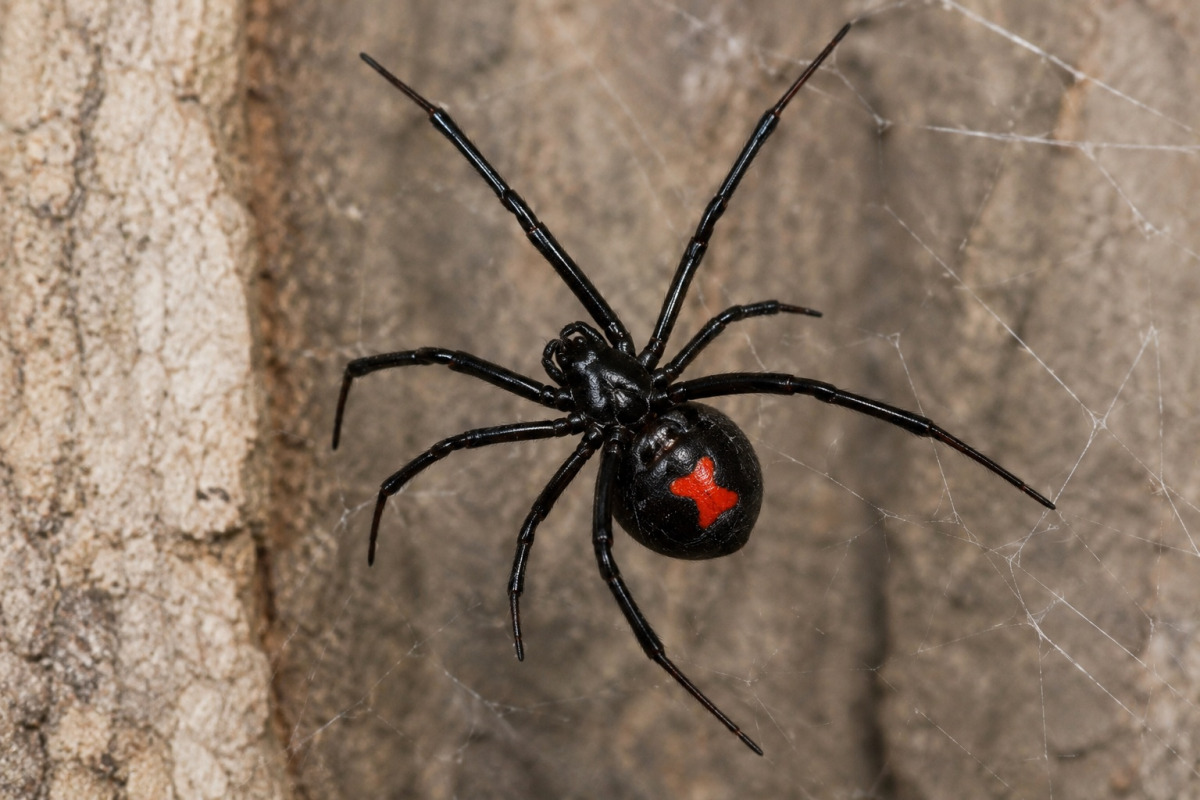
Black Widow Spider Quick Facts

Size

Adult females are about 1/3 to 1/2 inch in body length and roughly 1 to 1 1/2 inches across with legs extended

Color

Adult females are usually glossy black with a red or orange hourglass marking beneath the abdomen

How to Identify

A rounded abdomen, long slender legs, and a red or orange hourglass marking on the underside of an adult female

Active Season

Active year-round in South Florida, with encounters often increasing during warm weather and after storms or property disturbance

Indoor or Outdoor

Mostly outdoors in sheltered, undisturbed areas, but they may also occupy garages, sheds, utility spaces, and seldom-used indoor storage areas

Day or Night

Mostly active at night; females generally remain close to their irregular webs during the day unless disturbed.

Diet

Insects and other small arthropods captured in a strong, irregular web.

About Black Widow Spiders

Black widow spiders are cobweb spiders in the genus Latrodectus. In South Florida, the southern black widow, Latrodectus mactans, may be encountered along with other widow species. Adult females are commonly recognized by a glossy dark body and a red or orange hourglass-shaped marking on the underside of the abdomen.

Black widows usually stay in protected, low-traffic areas where their irregular webs can remain undisturbed. They are shy rather than aggressive, but a bite may occur when a spider is trapped against the skin, reached into unknowingly, or disturbed in stored materials. Because widow venom is medically significant, correct identification and careful removal are important.

Where Are Black Widow Spiders Commonly Found?

Outdoor Web-Building Areas

Black widow spiders build strong, irregular cobwebs in dry or sheltered places that provide anchor points and access to insect prey. Typical outdoor locations include:

  • Woodpiles, stacked lumber, and stored building materials
  • Under patio furniture, grills, planters, and outdoor equipment
  • Inside hollow stumps, rodent burrows, and protected landscape cavities
  • Along fences, retaining walls, and the undersides of ledges
  • In sheds, pump enclosures, pool equipment areas, and detached garages
  • Near utility boxes, meters, and seldom-disturbed mechanical spaces
  • Beneath debris, stones, dense ground cover, and stored containers
  • Where outdoor lighting or nearby vegetation attracts insects

The web is usually messy rather than symmetrical and may contain a sheltered retreat where the female remains during daylight hours.

Indoor Hiding and Web Sites

Indoor black widow activity is less common than outdoor activity, but spiders may establish webs in quiet spaces that are rarely cleaned or disturbed. Common locations include:

  • Garages, sheds, and utility rooms
  • Storage closets, crawl spaces, and unfinished basements where present
  • Behind shelving, appliances, or stored boxes
  • Near plumbing penetrations, floor drains, and utility chases
  • In corners beneath workbenches or cabinets
  • Inside rarely used boots, gloves, tarps, and outdoor gear
  • Around door thresholds and gaps leading from attached garages
  • Any dark, protected area with an established web and steady insect activity

Black widows do not feed on wood or building materials. Indoor activity is more closely related to shelter, available prey, and objects brought in from garages, sheds, or outdoor storage.

South Florida Conditions That Support Activity

South Florida’s warm climate and abundant insect activity can support widow spiders throughout the year. Encounters may be more likely when a property has:

  • Cluttered garages, sheds, patios, or storage rooms
  • Wood, equipment, pots, or boxes left undisturbed for long periods
  • Dense vegetation and ground cover close to structures
  • Gaps around doors, utility lines, vents, or garage openings
  • Outdoor lighting that draws moths and other insect prey
  • Firewood or construction materials stored against the building
  • Storm debris, displaced materials, or recently disturbed hiding places
  • Pool and irrigation equipment enclosures that receive little routine cleaning
  • Frequent movement of stored outdoor items into occupied spaces

Black Widow Spider Behavior and Web Activity

Feeding Habits

Black widows are predators that rely on their webs to capture insects and other small arthropods. Common prey may include:

  • Flies and mosquitoes
  • Moths and small beetles
  • Crickets and cockroaches
  • Other spiders and crawling arthropods
  • Insects drawn to outdoor lights, waste areas, or vegetation

After prey becomes tangled, the spider bites and wraps it before feeding. Black widows do not seek human food, and their presence is often tied to shelter and a dependable supply of insects.

Web and Reproduction Habits

Black widows are solitary. Adult females generally remain near their webs, while males wander more often when searching for mates. A female may produce several papery, round egg sacs, each suspended within or near the web.

Spiderlings disperse after hatching, so multiple small spiders or egg sacs can indicate that a protected site has supported reproduction. Egg sacs should not be handled directly, especially when an adult female may be guarding nearby.

Shelter and Disturbance

Black widows favor locations that remain quiet, protected, and structurally suitable for a web. Activity may persist around:

  • Undisturbed storage and accumulated clutter
  • Woodpiles, landscape debris, and construction materials
  • Utility enclosures and outdoor equipment
  • Cracks, ledges, corners, and sheltered voids
  • Areas with consistent insect prey
  • Objects that are seldom moved or inspected
  • Vegetation or ground cover that shields web sites
  • Entry gaps connecting outdoor storage areas to occupied rooms

Reducing undisturbed shelter and insect activity can make a property less favorable, but established webs and egg sacs should be approached cautiously.

Daily and Seasonal Activity

Black widows are mainly nocturnal. A female may stay concealed near the web during daylight and move onto the web after dark. Activity can become more noticeable when landscaping, storage, storm debris, or construction materials are moved.

South Florida’s mild winters allow activity to continue year-round. Weather changes do not create black widows, but heavy rain, storms, cleanup, and property disturbance may expose spiders or move them toward more protected sites.

Health and Property Concerns

Property Impact

Black widow spiders do not damage wood, wiring, furnishings, or structural materials. Their webs may collect dust and insect remains, but the primary concern is the possibility of accidental contact in a concealed or frequently handled area.

Locations that deserve closer inspection include:

  • Children’s play areas and outdoor toy storage
  • Garages, workshops, and maintenance rooms
  • Pool equipment, irrigation controls, and utility boxes
  • Firewood, lumber, and stacked materials
  • Commercial storage, loading, and waste-handling areas
  • Gloves, boots, tarps, and equipment stored outdoors

Correct identification matters because false widow spiders, dark house spiders, and other cobweb spiders may resemble a black widow from above. The red hourglass is on the underside and may not be visible without safely observing the spider.

Bite Risk

Black widows are not aggressive and usually attempt to remain hidden. Bites most often occur when a spider is pressed against the skin, reached into unknowingly, or disturbed while someone handles stored materials. A bite may cause pain and muscle cramping, and symptoms can spread beyond the bite site.

When Medical Care May Be Needed

Because widow venom can affect the nervous system, anyone who believes they were bitten should seek prompt medical guidance, especially if pain spreads, muscle cramps develop, or there is sweating, nausea, breathing difficulty, weakness, or other significant symptoms.

Do not attempt to capture a suspected widow with bare hands. When it can be done without additional contact, a clear photograph may help with identification. Pest Busterzz provides pest identification and control guidance, but medical questions should be directed to a qualified healthcare professional.

When Are Black Widow Spiders Active in South Florida?

South Florida’s subtropical climate allows black widow spiders to remain active throughout the year. Activity may be less visible during cooler or unusually dry periods, but sheltered spiders and egg sacs can remain present.

Activity may increase during:

  • Warm spring and summer weather
  • The humid rainy season, when insect prey is abundant
  • Storm cleanup or movement of outdoor storage
  • Landscape trimming, construction, or renovation
  • Long periods when garages, sheds, or equipment areas remain undisturbed
  • Increases in moth, cricket, cockroach, and other insect activity
  • Bringing firewood, boxes, pots, or outdoor equipment inside

Heavy rain can damage exposed webs or flood low hiding places, while storms and cleanup may dislodge spiders from protected sites. At other times, warm nights and plentiful insects can support continued feeding and reproduction outdoors.

Indoor sightings may occur when a spider enters with stored items or finds a quiet garage, shed, utility room, or storage area. Seeing one spider does not always mean a widespread infestation, but webs, egg sacs, or repeated sightings justify a closer inspection.

How to Recognize Black Widow Webs and Egg Sacs

A black widow web usually looks irregular, tangled, and three-dimensional rather than neat or circular. The silk can feel unusually strong, and the female often remains in a protected retreat connected to the web. Round or pear-shaped papery egg sacs may hang nearby. These signs are most likely in quiet corners, beneath equipment, inside sheds, around utility areas, or among stored materials. Avoid reaching into the web or handling an egg sac. Because several cobweb spiders build similar-looking webs, the web alone cannot confirm the species; identification should also consider the spider’s body shape and markings.

Why DIY Black Widow Spider Control May Fall Short

A single visible spider may be only part of the activity around a property. Professional inspection is a practical next step when identification is uncertain, egg sacs are present, webs recur in occupied areas, or spiders are found near children, pets, employees, or frequently handled equipment.

  • Removing Only the Visible Spider | Eliminating one adult does not address nearby egg sacs, additional webs, spiderlings, or protected hiding places elsewhere on the property.
  • Misidentifying the Spider | Several dark cobweb spiders resemble black widows. Treatment decisions and safety precautions should be based on a reliable identification rather than body color alone.
  • Disturbing a Web or Egg Sac | Reaching into a web, crushing a spider, or handling an egg sac can increase the chance of accidental contact. Concealed locations may also be difficult to treat safely.
  • Missing Nearby Harborage | Webs may occur beneath equipment, inside clutter, around utility boxes, or among stored materials. Treating one corner may not resolve activity in surrounding sheltered areas.
  • Leaving Shelter and Prey Conditions Unchanged | Clutter, dense vegetation, insect-attracting lights, and undisturbed storage can continue to support web building and reinfestation.
  • Unsafe Product Placement | Broad or poorly directed applications may expose people, pets, or beneficial organisms without reaching the protected areas where spiders and egg sacs are located.
black widow spider treatment in South Florida

Lower-Impact Options

When appropriate, Pest Busterzz may prioritize precise placement, web and egg-sac removal, exclusion, monitoring, and habitat changes to reduce unnecessary product use.

The Pest Busterzz Black Widow Spider Treatment Approach

Pest Busterzz begins with proper identification and a careful evaluation of webs, egg sacs, hiding places, entry routes, and conditions that may allow black widow activity to return.

01

Inspection

We confirm whether the spider is a black widow or a similar species, then inspect garages, sheds, storage, landscaping, utility areas, web sites, egg sacs, and likely entry points.

02

Targeted Treatment

Based on the inspection, the plan may include localized treatment, careful web and egg-sac removal, crack-and-crevice or void applications, exterior management, and exclusion. The methods used depend on the location and level of activity.

03

Monitoring & Follow-Up

We evaluate whether webs or spiders return, inspect newly discovered problem areas, and adjust the plan when conditions or activity indicate that follow-up is appropriate.

04

Prevention

Recommendations may include reducing clutter, storing firewood and materials away from structures, sealing access points, trimming dense vegetation, managing insect-attracting conditions, and routinely inspecting gloves, shoes, and outdoor equipment.

Yes. The southern black widow occurs in Florida, and South Florida’s warm climate can support widow activity year-round. They are usually found in quiet, protected outdoor locations rather than open, frequently disturbed areas.

Adult females are typically glossy black with a rounded abdomen and a red or orange hourglass marking on the underside. Juveniles and males can have lighter markings, so professional identification may be useful when the hourglass is not visible.

False widows can have a dark, rounded abdomen but generally lack the distinct red hourglass beneath the abdomen. Because markings vary and safe viewing may be difficult, avoid handling the spider and rely on an experienced professional when identification is uncertain.

The property may offer undisturbed shelter, strong web anchor points, and plentiful insects. Woodpiles, garages, sheds, utility areas, stored equipment, dense vegetation, and exterior lighting can all create favorable conditions.

They often hide in protected, low-traffic places such as woodpiles, storage areas, garages, sheds, utility boxes, equipment enclosures, hollow stumps, and beneath outdoor furniture or containers. Their irregular webs are usually close to the retreat.

No. Black widows are shy and generally remain near their webs. Bites are more likely when a spider is trapped against the skin, reached into unknowingly, or disturbed while stored items, firewood, equipment, or clothing are handled.

Seek prompt medical guidance. Widow bites can cause pain and muscle cramping that may spread beyond the bite site. Call emergency services for severe symptoms such as breathing difficulty, intense pain, weakness, or other rapidly worsening effects.

Not necessarily. Black widows are solitary, but one female may have egg sacs nearby, and the same property conditions can support additional spiders. Repeated sightings, several webs, or egg sacs are good reasons to schedule an inspection.

Recurring activity may result from hidden egg sacs, untreated web sites, new spiders entering from outside, abundant insect prey, or continued shelter in cluttered and seldom-disturbed areas. Prevention and follow-up depend on what the inspection finds.

Schedule service when identification is uncertain, egg sacs are present, webs occur near occupied or frequently handled areas, sightings repeat, or the spider is near children, pets, employees, or customers. A professional can evaluate the activity without unnecessary disturbance.

Pest Busterzz Home Icon

faqs

Black Widow Spider FAQs