

Pest Library
Aphids
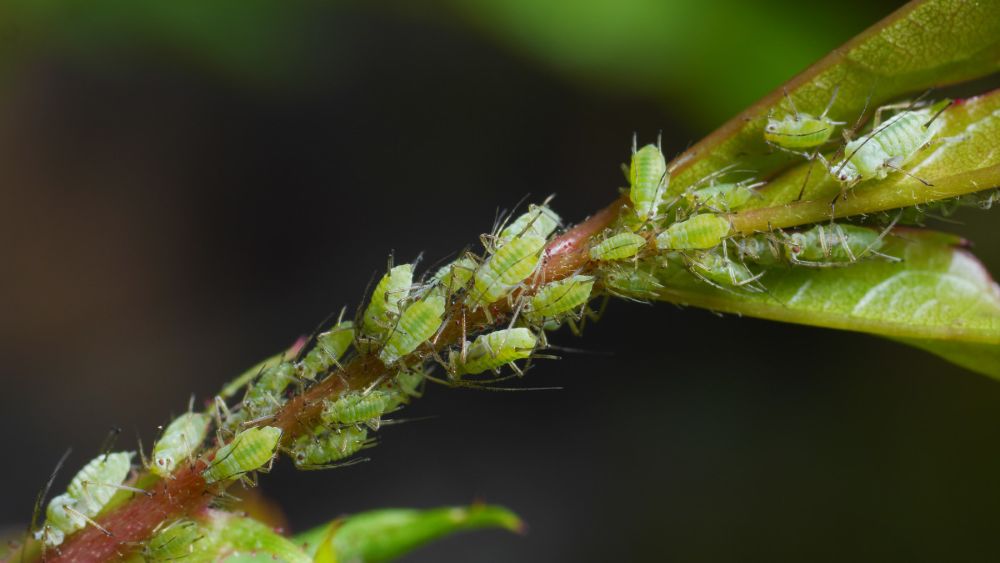
Aphids Quick Facts
Size:
Approximately 1/16 to 1/8 inch long (1.5 to 3 mm).
Color:
Commonly bright green, but variations include yellow, black, brown, gray, pink, or fuzzy white.
How to identify:
Small, pear-shaped bodies with two distinct pipe-like tubes called cornicles projecting from their rear end.
Active season:
Year-round in South Florida, with noticeable surges during spring and fall plant flushing periods.
Indoor or outdoor:
Primarily outdoors on foliage and trees, occasionally hitchhiking indoors on potted houseplants.
Day or night:
Active continuously throughout the day and night, slowly feeding on plant sap.
Diet:
Plant sap (phloem) extracted directly from stems, leaves, shoots, and flower buds.
About Aphids
Signs of an Aphid Infestation on Your Property
Spotting an aphid problem early helps prevent severe stress to your ornamental plants and lawn features. Because these insects are small and gather on leaf undersides, secondary evidence is often noticed before the pests themselves. Common indicators include:
Why DIY Aphid Control May Fail
Managing aphids on your own often proves frustrating for South Florida property owners due to the biology and rapid reproduction of these pests. Standard store-bought sprays or simple water rinses frequently miss key areas or provide only temporary relief.

Lower-Impact Options
Whenever possible, Pest Busterzz utilizes targeted liquid formulations, systemic applications, or horticultural oils that focus specifically on target pests while minimizing drift and preserving the broader ecosystem.
The Pest Busterzz Aphids Treatment Approach
At Pest Busterzz, we utilize a balanced approach that targets plant pests while preserving the health of your landscape and surrounding environment.
Inspection
Our technician conducts a thorough evaluation of your property’s foliage, identifying the specific aphid species, affected plant varieties, severity of the infestation, and any secondary ant activity or sooty mold accumulation.
Targeted Treatment
Based on the inspection, we apply precise, plant-safe applications directly to infested foliage, focusing on the undersides of leaves and leaf axils where colonies shelter.
Monitoring & Follow-Up
We assess plant recovery and population reductions, providing additional targeted treatments if persistent generations emerge during peak growing seasons.
Prevention
We provide actionable guidance on horticultural practices, such as balancing soil nitrogen levels, adjusting irrigation cycles, and trimming back overlapping branches to promote airflow and reduce pest harborages.
faqs