
What Are the First Signs of Termites in a Broward County Home?
If you notice winged insects near a window, narrow mud lines along a foundation, small piles of grain-like material, or wood that sounds hollow, do not ignore it. Those can be early signs of termite activity.
They are clues, not proof. Ants, water damage, mold, and other wood-damaging problems can look similar. The only reliable way to know what is happening is to have the structure and evidence inspected.
Here are the signs Broward homeowners should watch for first.
1. Winged insects or piles of shed wings
Termites sometimes leave the colony as winged adults, called swarmers. You may notice them around windows, doors, lights, or other areas where they can gather. You may also find wings after the insects are gone.
Do not assume every flying insect is a termite. The EPA notes that termite wings are roughly equal in length and termite antennae are straight. Ants usually have longer front wings and bent antennae.
That difference can help you look more closely, but it is not a substitute for identification. If you find a swarm indoors or repeatedly find shed wings, take a clear photo and note where you found them.
2. Mud tubes along the foundation or walls
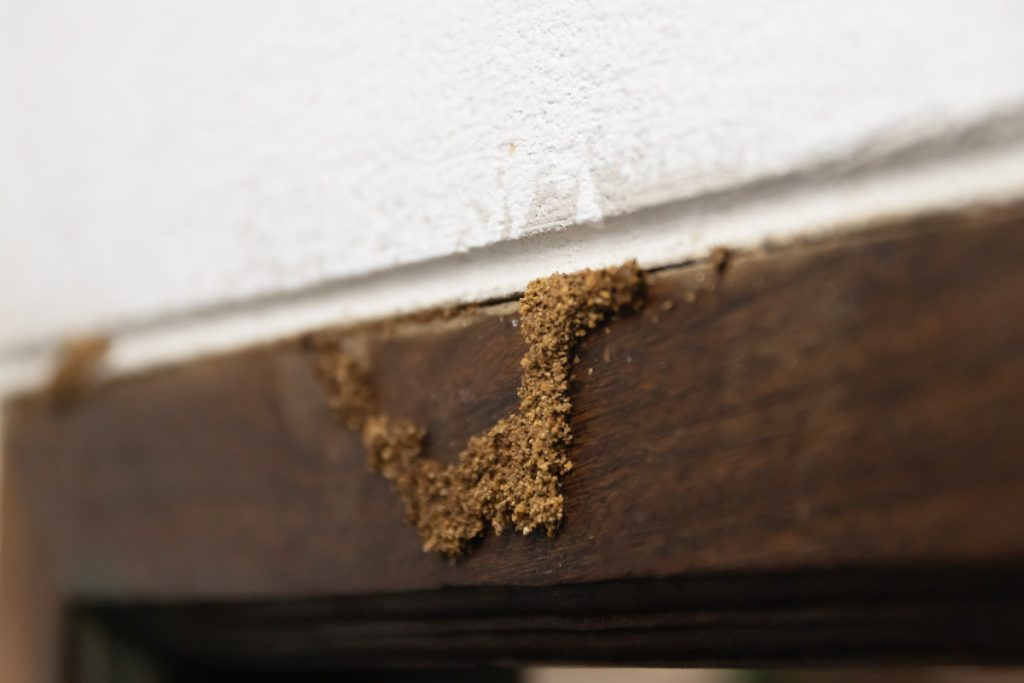
Subterranean termites use mud tubes to travel above ground while staying protected from drying out. These narrow tubes may appear along a foundation, garage threshold, wall, crawlspace, or another path between soil and wood.
UF/IFAS describes mud tubes as strong evidence of subterranean termites. Still, the tube itself does not tell you how active the problem is or how far it extends.
If you see one, photograph it before cleaning, painting, or repairing the area. Record whether it is indoors or outdoors and whether it connects to a wall, slab, wood member, or soil line. That information can help an inspector understand what to check.
3. Wood that sounds hollow or shows unusual changes
Termites can remain inside wood where they are difficult to see. The EPA recommends checking exposed wood for hollow spots. UF/IFAS also describes inspections that focus on areas such as baseboards, door frames, thresholds, and other common entry points.
Pay attention to wood that sounds different when lightly tapped, looks blistered or altered, or has damage around door and window trim. Do not assume every damaged board has termites. Leaks, rot, carpenter ants, and normal wear can create similar problems.
The important question is whether the change is new, spreading, or located near a moisture source or soil connection. A professional inspection can help separate termite evidence from other repairs your home may need.
4. Small pellets or sand-like material near wood
Drywood termites can leave a different kind of clue. UF/IFAS describes six-sided pellets that are pushed out through tiny kick holes. The material may look like sand or fine grit and can collect below a piece of wood, trim, a window, or another infested area.
This clue is especially important because drywood termites do not need a connection to the ground in the same way subterranean termites do. Finding pellets does not identify the species by itself, but it is a good reason to request an inspection rather than sweeping the material away and waiting to see what happens.
5. Moisture and access points that make inspection difficult
Moisture is not itself proof of termites. It is a home-maintenance issue that can make some areas more attractive or harder to inspect.
Look at the places where water and wood meet:
- Gutters and downspouts that discharge next to the foundation
- Air-conditioning drainage lines pointed toward the structure
- Irrigation that sprays walls or door thresholds
- Leaks under sinks, around plumbing, or near the roof
- Mulch, soil, or plants covering the lower edge of exterior walls
- Firewood, lumber, or wood debris stored beside the home
These conditions do not mean termites are present. They do mean you may have hidden access points or moisture problems worth correcting.
A sign is not the same as a diagnosis
The first signs can help you decide when to investigate, but they cannot tell you the termite species, colony size, or treatment method.
For example, a winged insect may be an ant. A pile of material may be sawdust or another kind of debris. A hollow-sounding board may have water damage. Even mud tubes do not explain the full extent of activity without a closer inspection.
Avoid choosing a treatment based only on a photo or a general online remedy. The right next step depends on what is found, where it is located, and whether the evidence points to drywood, subterranean, or another wood-damaging problem.
A simple Broward termite-prevention checklist
Home maintenance can make termite evidence easier to spot and can reduce conditions that give pests access to the structure:
- Keep gutters and downspouts moving water away from the house.
- Fix plumbing, roof, and air-conditioning leaks promptly.
- Keep irrigation from spraying exterior walls.
- Avoid wood-to-ground contact where possible.
- Remove branches, lumber, and wood debris that touch or sit beside the structure.
- Keep firewood away from the home and raised off the ground.
- Keep soil, mulch, and plants from hiding the lower wall or foundation edge.
- Check garages, storage areas, door frames, window trim, and accessible foundation walls periodically.
UF/IFAS recommends maintaining an inspection space of at least six inches between the bottom of wall siding and the soil or mulch line. The exact conditions of a property vary, so homeowners should not remove building materials or change drainage without understanding how the work affects the structure.
When should you request a termite inspection?
Request an inspection if you find a swarm indoors, repeated shed wings, mud tubes, drywood-like pellets, or wood changes that you cannot explain. It is also reasonable to ask for help when moisture, landscaping, or stored wood makes parts of the structure difficult to inspect.
Pest Busterzz’s termite control service describes inspection and identification, targeted treatment, and prevention and monitoring for drywood and subterranean termite concerns. The method should be selected after the property is inspected, not from a headline or a single photograph.
To discuss what you found, request a termite inspection and include the location of the signs, when you noticed them, and whether they appeared indoors or outdoors. Pest Busterzz serves Broward County and surrounding South Florida areas.
Frequently asked questions
Is every winged insect near a window a termite?
No. Winged ants can look similar. Termites generally have wings of similar length and straight antennae, while ants have bent antennae and longer front wings. A photo may help, but it may not be enough for a confident identification.
Can I identify termites from a picture?
Sometimes a clear image is useful, but not always. UF/IFAS notes that many submitted photographs do not show the features needed for identification. If possible, save the location and other evidence for the inspector instead of relying on a picture alone.
Should I remove a mud tube if I find one?
Photograph it and record where it is before cleaning or covering it. Removing visible evidence does not answer whether termites are active elsewhere, so request an inspection if the tube is new or unexplained.
Do I need to see live termites before calling a professional?
No. Swarmers, shed wings, mud tubes, pellets, or unexplained wood changes can all justify an inspection. A professional can look for evidence that is not visible during a quick homeowner check.
What should I do first if I suspect termites?
Document what you found, correct obvious leaks when it is safe to do so, and request an inspection. Do not assume a store-bought spray or a surface repair has addressed hidden activity.