
Commercial Pest Control Frequency in Palm Beach, FL
How Often Should Commercial Properties in Palm Beach Get Preventative Pest Control?
Most commercial properties in Palm Beach, FL should receive preventative pest control at least quarterly, while higher-risk businesses may need monthly service. Restaurants, hotels, multifamily properties, healthcare facilities, and buildings with frequent deliveries or food storage typically benefit from more frequent inspections and treatments. The right schedule depends on the property, pest pressure, sanitation conditions, and previous pest activity.
At Pest Busterzz, preventative pest control is about addressing vulnerabilities before they become expensive, disruptive infestations. Commercial properties need more than a quick response when someone spots a roach or rodent. They need consistent inspections, monitoring, exclusion, and targeted treatments built around how the property actually operates. Pest Busterzz helps Palm Beach businesses protect their facilities, employees, customers, tenants, and reputations with practical pest management strategies. By emphasizing attentive service and long-term prevention, the goal is not simply to eliminate the pest you can see. It is to identify why pests are appearing and reduce the conditions that allow them to return.
Choosing the Right Commercial Pest Management Schedule in Palm Beach
There is no single pest control schedule that works for every commercial property. The U.S. Environmental Protection Agency recommends an Integrated Pest Management (IPM) approach based on inspection, monitoring, prevention, and appropriate control measures rather than relying exclusively on routine pesticide applications.
Palm Beach properties deserve particular attention because South Florida’s warm, humid environment provides favorable conditions for many common pests. Landscaping, irrigation, food waste, loading areas, plumbing, and frequent movement of people and products can create additional opportunities for pests to reach a commercial building.
How Often Does a Commercial Building Need Pest Control?
Quarterly preventative pest control can be appropriate for lower-risk commercial properties, while monthly service is often better for facilities with greater pest exposure. The service interval should reflect the property’s conditions rather than an arbitrary calendar.
A commercial pest control professional may consider factors such as:
- Type of business and building
- Food preparation or storage
- Past pest problems
- Waste and recycling practices
- Loading docks and deliveries
- Landscaping near the structure
- Plumbing leaks and moisture
- Number of employees, tenants, guests, or customers
- Nearby pest activity
- Seasonal changes in pest pressure
A professional office with limited food service, for example, may have different requirements than a Palm Beach restaurant, hotel, grocery operation, or multifamily community.
Regular monitoring matters even when pests are not visible. According to the EPA, successful IPM programs routinely monitor pest populations, vulnerable areas, and the effectiveness of prevention and control methods.
Why Is Preventative Pest Control Important for Palm Beach Businesses?
Preventative pest control helps businesses find and correct pest risks before a small problem develops into an infestation. This can reduce disruption while helping protect sanitation standards, property, inventory, and the customer experience.
The EPA identifies food, water, and shelter as major conditions that support pest activity. Recommended IPM prevention measures include sealing pest entry points, maintaining clean food areas, removing trash and excessive vegetation, installing barriers, and eliminating standing water.
For Palm Beach businesses, prevention may include inspecting areas such as:
- Doors and exterior openings: Small gaps can provide entry points for insects and rodents.
- Kitchens and break rooms: Food residue and moisture can support cockroach and ant activity.
- Loading and storage areas: Deliveries and cardboard packaging can introduce or conceal pests.
- Dumpsters and waste zones: Food debris and overflowing waste can attract insects and rodents.
- Landscaped areas: Mulch, vegetation, moisture, and organic debris close to a building can provide pest habitat.
UF/IFAS Extension notes that cockroaches can live outdoors in locations including leaf litter, mulch, vegetation, tree holes, and palm trees. It also identifies prevention and sanitation, including eliminating access to food, water, and harborage, as important parts of effective cockroach management.
What Pests Should Palm Beach Commercial Properties Watch For?
Cockroaches, ants, rodents, mosquitoes, termites, and other structural pests can all create concerns for South Florida commercial properties. The exact risk depends on the facility and its surroundings.
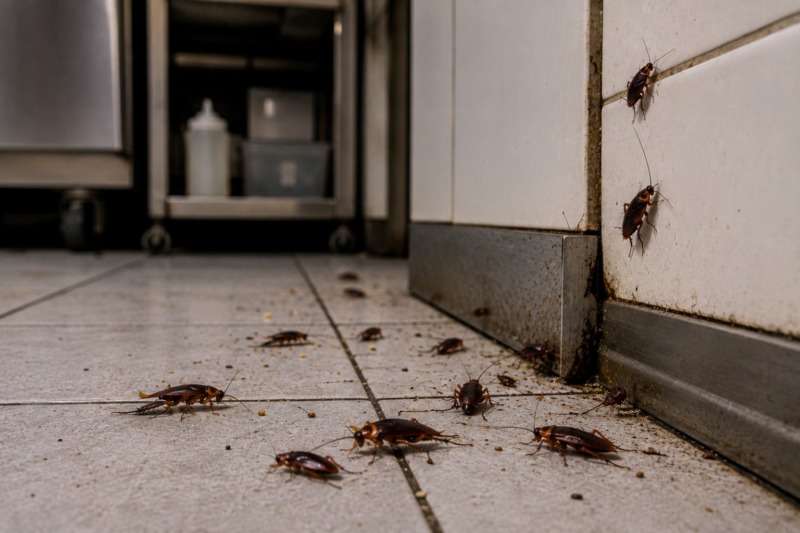
Cockroaches deserve particular attention around food, storage, plumbing, and damp areas. UF/IFAS states that an integrated pest management approach is the most effective method for cockroach control and warns that relying on chemicals alone is the least effective approach.
Rodents are another concern because commercial properties can offer the three things pests need most: food, water, and shelter. Waste areas, storage rooms, wall penetrations, landscaping, and utility openings should be checked regularly for evidence of activity.
Mosquito prevention also requires attention to moisture. The EPA recommends eliminating standing water in containers and other locations where mosquitoes may breed. For Palm Beach commercial properties with irrigation, landscaped grounds, outdoor seating, or decorative water features, routine inspections can help uncover preventable breeding conditions.
What Happens During Preventative Commercial Pest Control?
Effective preventative pest control combines inspection and monitoring with sanitation recommendations, exclusion, and targeted control when necessary. It should be an ongoing management process rather than simply spraying the same areas on every visit.
A preventative visit may include checking:
- Known pest entry points
- Kitchens and food-storage spaces
- Plumbing and moisture-prone areas
- Utility and mechanical rooms
- Loading docks
- Storage areas
- Exterior walls and doors
- Waste collection areas
- Landscaping adjacent to the building
- Signs of pest activity or structural vulnerabilities
The EPA’s IPM model follows four basic stages: identify and monitor pests, establish action thresholds, prevent pest activity, and use appropriate control measures when needed. This approach can reduce unnecessary pesticide use while focusing resources where they provide the greatest benefit.
Documentation is valuable too. Keeping records of inspections, pest sightings, treatments, and recommendations can reveal recurring patterns and help property managers determine whether corrective actions are working.
Can Preventative Pest Control Save a Business Money?
Prevention can reduce the risk of larger infestations that require more extensive treatment, repairs, cleanup, or operational disruption. Addressing an entry point or moisture problem early is generally easier than dealing with an established pest population.
The EPA notes that IPM can require more effort or resources initially but that costs are generally lower over time because the underlying causes of pest problems are addressed. Some preventative improvements can offer benefits beyond pest control. For example, sealing gaps can help exclude pests while building maintenance that reduces moisture can address multiple facility concerns.
For commercial properties, there is also a reputational consideration. A single pest sighting in a customer-facing business can quickly affect how guests perceive cleanliness and management standards. Preventative service provides an opportunity to identify warning signs before customers, tenants, or employees do.
Frequently Asked Questions About Commercial Pest Control in Palm Beach
Is quarterly pest control enough for a commercial property?
Quarterly service may be sufficient for some low-risk properties with strong sanitation and few pest issues. Businesses involving food, hospitality, multifamily housing, frequent deliveries, or persistent pest pressure may require monthly or more targeted monitoring.
Do restaurants need pest control more often than offices?
Often, yes. Restaurants typically have more food, moisture, waste, deliveries, and potential harborage areas, which can increase pest pressure compared with a conventional office environment.
Should I schedule pest control if I haven’t seen any pests?
Yes. Preventative commercial pest control is designed to identify pest activity and conducive conditions before they become obvious. Waiting until pests are regularly visible can allow a problem to become more difficult to manage.
What is the best way to prevent pests in a commercial building?
The EPA recommends an IPM strategy that combines monitoring with prevention, including removing food and water sources, reducing clutter, sealing entry points, managing trash, and using appropriate pest barriers and treatments when necessary.
Protect Your Palm Beach Property Before Pests Become a Problem
Palm Beach commercial properties should not have to wait for an infestation to make pest management a priority. A preventative program gives property managers and business owners a proactive way to monitor vulnerabilities, address conducive conditions, and respond to pest activity early.
Ready for preventative commercial pest control in Palm Beach? Contact Pest Busterzz today to build a pest management plan around your property and its unique risks.