

Ghost Ant

Pest Busterzz Home Icon

Pest Library

Ghost Ant Control in South Florida
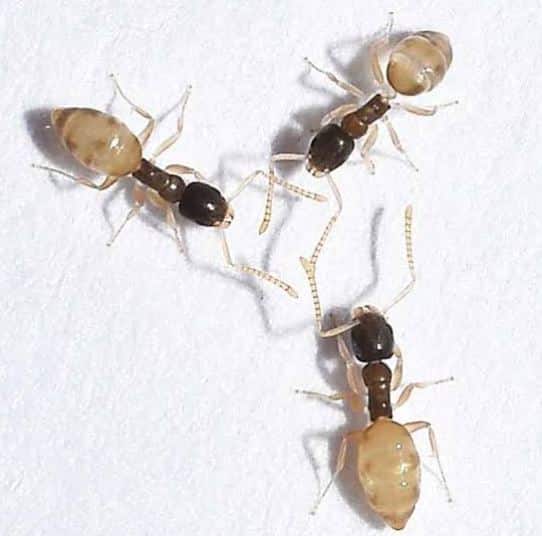
Ghost Ant Quick Facts

Size

Approximately 1/16 inch long

Color

Dark brown head and middle body with pale, nearly translucent legs and abdomen

How to Identify

Tiny ants with a dark front body and nearly transparent rear body that can be difficult to see on light surfaces

Active Season

Active year-round in South Florida, with activity often increasing during warm, humid conditions

Indoor or Outdoor

Found indoors and outdoors, including wall voids, cabinets, potted plants, landscaping, and spaces beneath objects

Day or Night

Ghost ants may forage during the day or at night, depending on food, moisture, temperature, and nest location.

Diet

Ghost ants feed on sweets, syrups, honeydew, household food residue, and live or dead insects.

About Ghost Ants

Ghost ants, Tapinoma melanocephalum, are extremely small tropical ants commonly found in Central and South Florida. Their dark head and middle body contrast with pale legs and an almost translucent abdomen, giving the workers a faint, disappearing appearance as they move across counters, walls, and floors.

These ants may maintain nests both indoors and outdoors. Colonies often contain multiple queens and can be divided among several small nesting sites connected by trails. South Florida’s warm climate, irrigated landscaping, potted plants, and year-round access to food and moisture create favorable conditions. Ghost ants are mainly nuisance pests, but their ability to nest inside buildings and shift between locations can make recurring activity difficult to resolve.

Where Do Ghost Ants Nest?

Outdoor Nesting Areas

Ghost ants use small, temporary, or concealed spaces rather than building a large, obvious mound. Outdoor nesting and shelter sites may include:

  • Potted plants and planter boxes
  • Beneath stones, boards, and landscape decorations
  • Loose bark and tree cavities
  • Palm frond bases
  • Mulch, leaf litter, moist grass, and plant stems
  • Irrigated planting beds
  • Areas near aphids, whiteflies, scales, and other honeydew-producing insects

Indoor Hiding Places

Inside homes and businesses, ghost ants may occupy narrow, protected spaces that are difficult to inspect directly. Common locations include:

  • Wall voids and spaces behind baseboards
  • Cabinets and shelving
  • Cracks, furniture, books, and stored items
  • Potted plants and plant saucers
  • Areas around sinks, plumbing, and condensation
  • Kitchens, bathrooms, break rooms, laundry rooms, and utility areas

South Florida Conditions That Support Activity

Warm temperatures allow ghost ants to remain active throughout the year. Irrigated landscaping, dense vegetation, potted plants, small exterior openings, food residue, leaks, and dependable indoor moisture can all help colonies persist. Because a colony may be divided among several sites, ants seen in one room may be connected to additional nests elsewhere in the building or outdoors.

Ghost Ant Behavior and Attractants

Feeding Habits

Ghost ants are strongly attracted to sweet materials. Indoors, workers may feed on sugar, syrup, cakes, spilled drinks, crumbs, and other food residue. Outdoors, they collect honeydew from plant-feeding insects and also scavenge live or dead insects.

Multiple Queens and Budding

Colonies may contain numerous reproductive females and occupy several nesting sites. New nests can form through budding, when queens leave an established nest with workers and sometimes brood to occupy another protected location. This allows ghost ants to spread through wall voids, cabinets, potted plants, and nearby rooms without relying only on winged mating flights.

Movement and Moisture

Workers often run quickly and unpredictably when disturbed, but they may move slowly along an established trail. Some may carry larvae or pupae between nesting sites. Leaking pipes, condensation, wet sponges, sinks, plant saucers, and damp wall spaces can help support indoor colonies.

How Colonies Spread

Ghost ants can enter through very small gaps around windows, doors, plumbing lines, electrical penetrations, siding, and foundation joints. They may also be transported in potted plants or other items moved between outdoor and indoor areas.

Ghost Ant Concerns

Indoor Nuisance Activity

Ghost ants are mainly nuisance pests rather than a major structural or medical threat. Their tiny size allows them to enter food-storage and preparation areas through openings that may be difficult to notice. Workers may appear on counters, sinks, floors, cabinets, shelving, and food containers.

Food and Business Concerns

Repeated ant activity around kitchens, restaurants, offices, healthcare settings, apartments, and other commercial properties can create sanitation and customer-perception concerns. Wiping away a trail does not necessarily remove the source because the colony may occupy several separate spaces.

Landscape Effects

Outdoors, ghost ants sometimes tend aphids, whiteflies, and similar insects for honeydew. This relationship can make plant-feeding insects harder to manage on affected ornamentals because the ants remain near a dependable sugar source.

Bites, Stings, and Property Damage

Ghost ants do not sting and are not generally considered an important biting pest. They do not damage sound wood or construct large soil mounds. Their main significance comes from indoor nesting, food-area activity, and the difficulty of locating all connected subcolonies.

When Are Ghost Ants Active in South Florida?

Ghost ants can remain active throughout the year in South Florida because the region provides the warm conditions this tropical species needs. Indoor colonies may continue foraging even when weather temporarily reduces outdoor activity.

Activity may become more noticeable during:

  • Warm, humid weather
  • Rain that disturbs exposed outdoor nesting sites
  • Dry periods that increase demand for indoor moisture
  • Changes in irrigation or landscaping
  • Movement of potted plants indoors
  • Disturbance that causes a colony to relocate or bud

Cold fronts may reduce visible exterior foraging, but colonies protected in wall voids, cabinets, greenhouses, or other warm spaces may remain active. Trails can also shift quickly, so ants may disappear from one location and reappear elsewhere without the colony being eliminated.

Why DIY Ghost Ant Control May Not Work Well

DIY efforts may reduce visible ghost ants without reaching the queens and brood hidden in multiple nesting locations. Professional inspection may be the more practical next step when ants repeatedly return, appear in several rooms, emerge from wall or cabinet gaps, or cannot be reliably identified.

  • Treating Only One Trail | The colony may occupy several wall voids, cabinets, potted plants, or outdoor nesting sites. Removing one visible trail may not address the connected subcolonies.
  • Using a Treatment the Ants Do Not Accept | Ghost ants frequently prefer sweets, but competing food, placement, freshness, and changing colony needs can affect bait response.
  • Causing the Colony to Relocate | Disturbing an accessible nest or relying on repellent applications may encourage workers and queens to move into another protected space.
  • Overlooking Outdoor Sources | Indoor workers may originate from planters, mulch, loose bark, palm fronds, or vegetation touching the building.
  • Leaving Food and Moisture Available | Syrup residue, crumbs, leaks, condensation, wet plant saucers, and honeydew-producing insects can continue supporting the colony.
  • Missing Multiple Nesting Sites | A ghost ant colony may be divided among several small locations, so treating one cabinet, room, or planter may provide only temporary relief.
ghost ant treatment in South Florida

Lower-Impact Options

When appropriate, we may prioritize precise bait placement, monitoring, sanitation, moisture correction, exclusion, and habitat modification to reduce unnecessary product use.

The Pest Busterzz Ghost Ant Treatment Approach

Pest Busterzz focuses on identifying ghost ants, tracing connected trails and nesting areas, and addressing the food, moisture, and access conditions that help colonies persist.

01

Inspection

We identify the ant species, trace active trails, and inspect sinks, cabinets, baseboards, wall openings, potted plants, plumbing areas, windows, exterior vegetation, mulch, palm fronds, and objects near the foundation.

02

Targeted Treatment

Based on the inspection, treatment may include baiting, localized crack-and-crevice treatment, treatment of accessible voids, exterior management, exclusion, and recommendations for sanitation or habitat changes.

03

Monitoring & Follow-Up

We monitor established trails, evaluate bait response, and check for activity in newly discovered locations. Follow-up needs depend on how widely the colony is distributed and whether outdoor sources remain active.

04

Prevention

Recommendations may include repairing leaks, drying condensation-prone areas, sealing food, cleaning sweet spills, checking potted plants, trimming vegetation, sealing small openings, and addressing honeydew-producing insects.

Ghost ant workers are extremely small and have a dark head and middle body with pale legs and a nearly transparent abdomen. They may be difficult to see on light counters or walls. Because other tiny household ants can look similar, professional identification may be useful.

Yes. Ghost ants are well established in Florida and are especially common from Central Florida southward. South Florida’s warm climate allows them to live outdoors and inside buildings throughout the year.

Indoor nests may be located in wall voids, cabinets, baseboard gaps, cracks, books, furniture, potted plants, and other narrow protected spaces. A colony may be divided among several locations, so more than one nesting area can contribute to the same problem.

Kitchens provide sweets, crumbs, syrups, grease, and moisture, while bathrooms offer sinks, condensation, plumbing leaks, and damp surfaces. Ghost ants may travel from an indoor nest or enter from nearby landscaping while searching for these resources.

Ghost ants commonly nest in flowerpots and other small protected spaces. A plant moved indoors may carry workers, queens, brood, or an entire small subcolony. Inspecting the pot, saucer, soil surface, and nearby trails can help identify the source.

Ghost ants do not sting and are not generally considered an important biting pest. Their main concern is nuisance activity in kitchens, bathrooms, cabinets, and other indoor spaces rather than injury to people or pets.

Cleaning removes food residue and scent trails but may not reach the nest. Workers can establish a new route from a wall void, cabinet, potted plant, or outdoor colony. Multiple queens and connected subcolonies can also allow activity to continue.

Bait can be useful when workers accept it and carry it back to connected nesting areas. Placement, freshness, competing food, moisture, and the ants’ current feeding preference can affect results, so the best approach depends on inspection findings.

Ghost ants do not damage sound wood or excavate structural galleries. Their significance comes from indoor nesting, food-area activity, and recurring trails rather than structural destruction.

Consider scheduling an inspection when ghost ants appear in several rooms, repeatedly return after cleaning, emerge from wall or cabinet gaps, or remain active around food and moisture areas. Professional identification is also useful when the ants are too small to distinguish from another species.

Pest Busterzz Home Icon

faqs

Ghost Ant FAQs