
Bugs in Christmas Tree Branches? Check Yours Before It Comes Inside
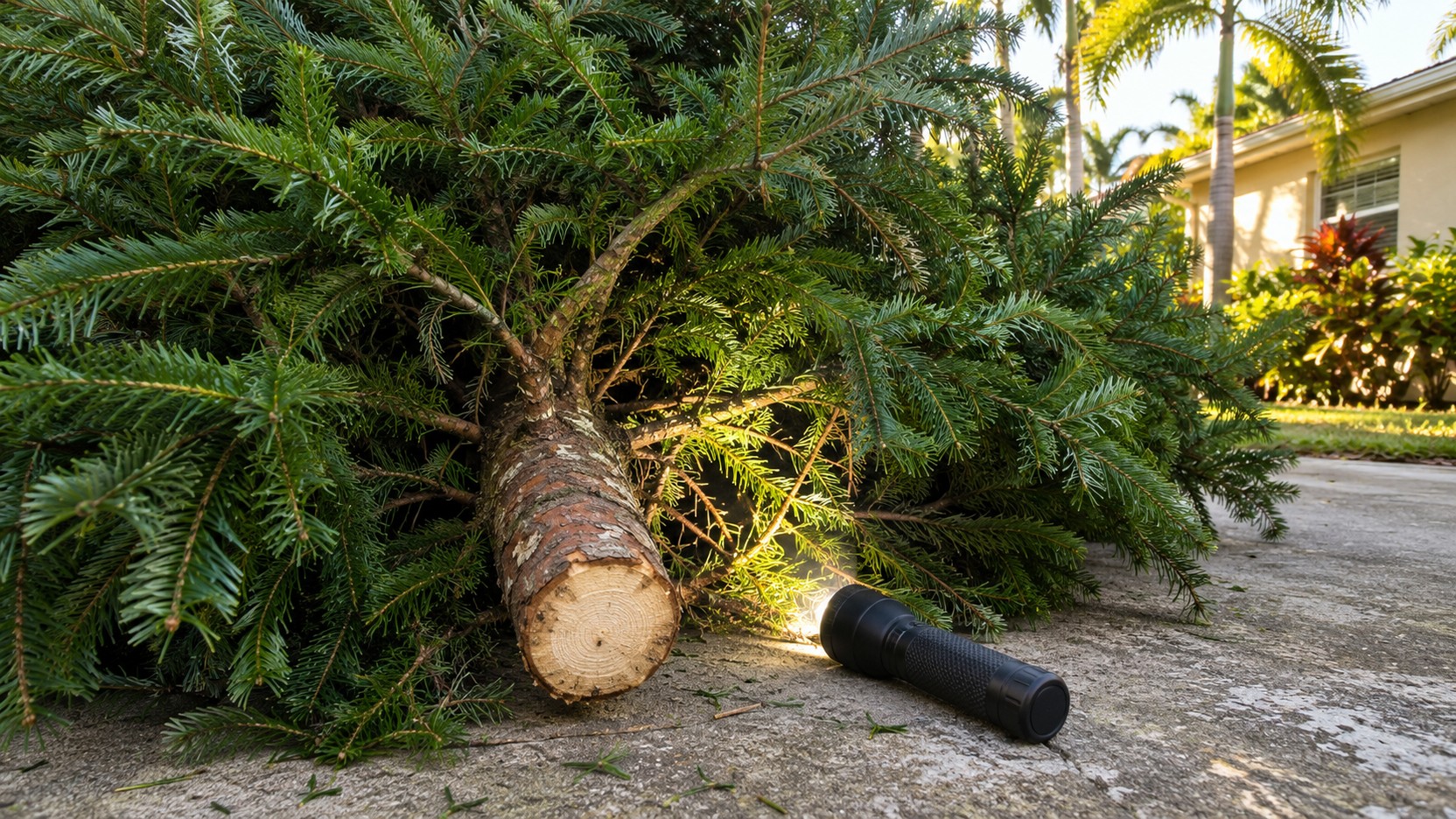
Bugs in Christmas tree branches are common, and most of them are aphids, spiders, mites or egg cases that rode in from the tree farm. Look into the tree with a flashlight at the lot, put it through the shaker, and give it a second shake on your driveway before it comes inside. Then keep the stand clean and dry around the base, because in South Florida the bigger problem is local ants and roaches walking over to the tree.
Tree lots open around Thanksgiving here, and most cut firs sold in Miami-Dade, Broward and Palm Beach come down on trucks from farms up north. They sit outside in our warm weather, then go into a warm living room. Anything tucked in the branches wakes up. A quick check at the lot saves you from vacuuming tiny spiders off the gifts.
What actually lives in a cut Christmas tree
A fir or pine is a home for small insects all year. When it’s cut, wrapped and shipped, some of them come along.
The usual hitchhikers
- Aphids: tiny soft insects in clusters on twigs. Large dark conifer aphids can leave a red or purple stain if you crush them.
- Adelgids: white cottony fluff on the branches or the undersides of needles.
- Spiders and egg sacs: small webs deep in the tree, or round silk sacs that hatch into spiderlings in a warm house.
- Mites: specks so small you see them as moving dust on a white sheet of paper.
- Scale: small bumps stuck to needles and twigs that don’t move.
- Bark beetles: tiny round holes in the trunk with fine sawdust below.
- Praying mantis egg cases: a tan, foamy-looking lump about the size of a walnut, glued to a twig.
Most of these feed on the tree or on other bugs. Once the tree is cut and indoors, they have nothing to live on and they don’t move into your furniture. If you’re curious about what spiders do in a house, our post on spiders in your home covers the common ones.
The South Florida problem: local pests that find the tree
Here, our own pests join in. A tree stand holds water. The tree skirt catches crumbs from cookies and candy canes. Boxes come in from a warm garage. Ghost ants, sugar ants and roaches will all walk to that spot. A fresh tree left standing on the grass overnight can also pick up fire ants.
If you’re also pulling decoration boxes out of the garage, read our holiday decoration box check for rodents first.
How to check a Christmas tree for bugs: 7 steps
- Shop in daylight and bring a flashlight. Ask the lot to lay the tree on its side. Shine the light from the cut end into the center, where bugs hide. Have them roll it partway so you can see the side that was lying against the ground.
- Check the trunk. Look for small round holes in the bark with fine sawdust caught right below them or in a branch fork. Holes and dust together point to bark beetles, so pick another tree. Sawdust on the ground alone means little at a lot where the crew trims trunks all day.
- Look under the branches. Turn a few limbs over. Look for white cottony fluff, clusters of dark aphids, webs and egg sacs, scale bumps and old bird nests.
- Find and remove mantis egg cases. Clip the twig and set it in a shrub outside. Indoors, a case can hatch into a crowd of tiny mantises.
- Use the shaker. Most lots have a mechanical tree shaker. Ask for a full run before they wrap it. It knocks out loose needles and a lot of bugs.
- Shake it again at home. Spread an old light-colored sheet on the driveway or pavers, not the grass, open the netting and bounce the trunk a few times. Bugs show up on a pale sheet much better than in a pile of needles. Hold a white sheet of paper under a branch and tap it. Moving specks mean another shake or a hose rinse, then let it dry before it comes in.
- Set it up clean. Put the stand on a tray or mat, top off the water without spilling, and keep food and treats off the tree skirt. Look at the bottom of any ornament box from the garage before you slide it behind the tree. Check the floor and windowsills near the tree each morning for the first stretch.
Bugs in Christmas tree checklist
Save this to your phone before you head to the lot.
- [ ] Tree laid down and checked with a flashlight from the cut end
- [ ] Trunk checked for tiny holes and fine sawdust
- [ ] Branch undersides checked for white fluff, aphid clusters, webs and egg sacs
- [ ] Mantis egg cases clipped and moved to a shrub outside
- [ ] Bird nests pulled out
- [ ] Tree run through the lot’s shaker
- [ ] Second shake on the driveway, not the grass
- [ ] White paper tap test on a few branches
- [ ] Stand on a tray, water topped off, spills wiped
- [ ] No food, candy or open treats on the tree skirt
- [ ] Wreaths, garlands and potted trees checked the same way
What to do about each bug, and what makes it worse
- Aphids: Tiny soft clusters, some large and dark. Shake them off outside and vacuum stragglers. Crushing them on carpet or fabric can leave a stain.
- Adelgids: White cottony fluff. If the coating is heavy, pick another tree. Don’t bring a heavily coated tree inside.
- Spiders and egg sacs: Small webs or round silk sacs. Remove the sacs and vacuum spiderlings. Don’t spray aerosol bug spray near the tree lights.
- Mantis egg case: A tan foamy lump on a twig. Clip the twig and put it in a shrub outside. Leaving it on the tree in a warm room can let it hatch.
- Bark beetle signs: Tiny holes in the bark with fine sawdust right below them. Choose a different tree. Sawdust on the lot’s ground alone isn’t enough to go by, because the crew trims trunks all day.
- Ants at the stand: A trail to the water or the tree skirt. Wipe spills, clean up crumbs, and call a pro if they keep coming. Sugary treats left on the tree skirt make it worse.
- Roaches near the tree: Movement under gifts at night, or droppings that look like pepper. Clear clutter and food, and call a pro. The source is usually already in the house.
Wreaths, garlands and potted trees
Fresh wreaths and garlands come from the same farms as cut trees, so they carry the same hitchhikers. Shake them outside and look at the back, where the greens are wired to the frame.
Potted live trees, rosemary trees and Norfolk Island pines bring soil with them. In South Florida that soil can hold ants. Before a pot comes inside, tap the side of the pot, lift it and look underneath. A pot that’s been sitting on a patio or in the garden center yard is worth a closer look. Our sugar ant guide explains why ants are so hard to stop once they’re inside.
If bugs show up after the tree is inside
Skip the can of bug spray. Do this instead:
- Vacuum them up with a hose attachment, not the beater bar. Hold the nozzle just above each bug instead of dragging it across the fabric. Empty the canister outside.
- Don’t crush aphids on carpet, the tree skirt or gift wrap. They can leave a stain.
- Unplug the lights before you work around the tree, and keep aerosol sprays away from it entirely. The cans are flammable.
- Move a crawling tree back outside. If bugs keep coming out of it, take it back to the lot and ask for another one.
Spiderlings and baby mantises tend to head for windows and light. Most die off indoors because there’s nothing for them to eat.
When bugs in a Christmas tree need a pest pro
The tree bugs themselves rarely need a pro. These signs do:
- Ants trailing across the floor to the tree stand, the tree skirt or the treats.
- Roaches under the gifts at night, or droppings that look like ground pepper near the tree.
- Bugs showing up in other rooms, not only around the tree.
- You can’t tell what you’re seeing and want someone to look.
Those usually point to pests already living in the house, and the tree just gave them a reason to show up in the living room. When you call, tell us where you first saw them and which way they were moving. “Along the baseboard from the kitchen to the stand” gives us a much better starting point than “near the tree.” A close photo plus a wider one showing where it was helps too. If pests come back between scheduled visits, re-treatment is free at no extra charge. If you’re not sure whether you saw a palmetto bug or another roach, our palmetto bug vs cockroach guide can help. For the rest of the season, our older posts on hidden pests during the holidays and pest problems with holiday decor cover lights, boxes and gatherings, and the guest room check helps if family is flying in.
Christmas tree bug FAQs
Are bugs in a Christmas tree normal?
Yes. A cut fir spent its life outdoors, so aphids, spiders, mites and egg cases can ride along. Most stay on the tree and die off indoors. A good look and a hard shake before it comes inside catch most of them.
Do Christmas tree bugs bite or spread to the house?
Aphids, mites, spiderlings and mantis babies don’t infest homes or chew furniture. They wander to windowsills and die. Ants and roaches that walk to the tree from the house are a different story, and those are worth calling about.
Should I spray my Christmas tree for bugs?
No. Don’t spray aerosol bug spray on or near a tree, especially one with lights, because the cans are flammable. Shake the tree outside, vacuum any stragglers with a hose attachment, and take it back to the lot if it’s crawling.
What is the brown foam ball on my Christmas tree?
That’s usually a praying mantis egg case. Indoors it can hatch into a crowd of tiny mantises. Clip the twig it’s on and set it in a shrub outside, where it belongs.
When should I call a pest pro about my Christmas tree?
Call when ants trail to the tree stand, roaches show up around the tree skirt or gifts, bugs turn up in other rooms, or you can’t tell what you’re looking at. Those usually point to a pest problem in the house.
Book a holiday pest inspection
Seeing ants or roaches around the tree, or bugs in more than one room? Contact Pest Busterzz and tell us what you’re seeing and where. We serve homes across Miami-Dade, Broward and Palm Beach counties, and we’ll find where they’re coming from before your guests arrive.