

Clothes Moth

Pest Busterzz Home Icon

Pest Library

Clothes Moth
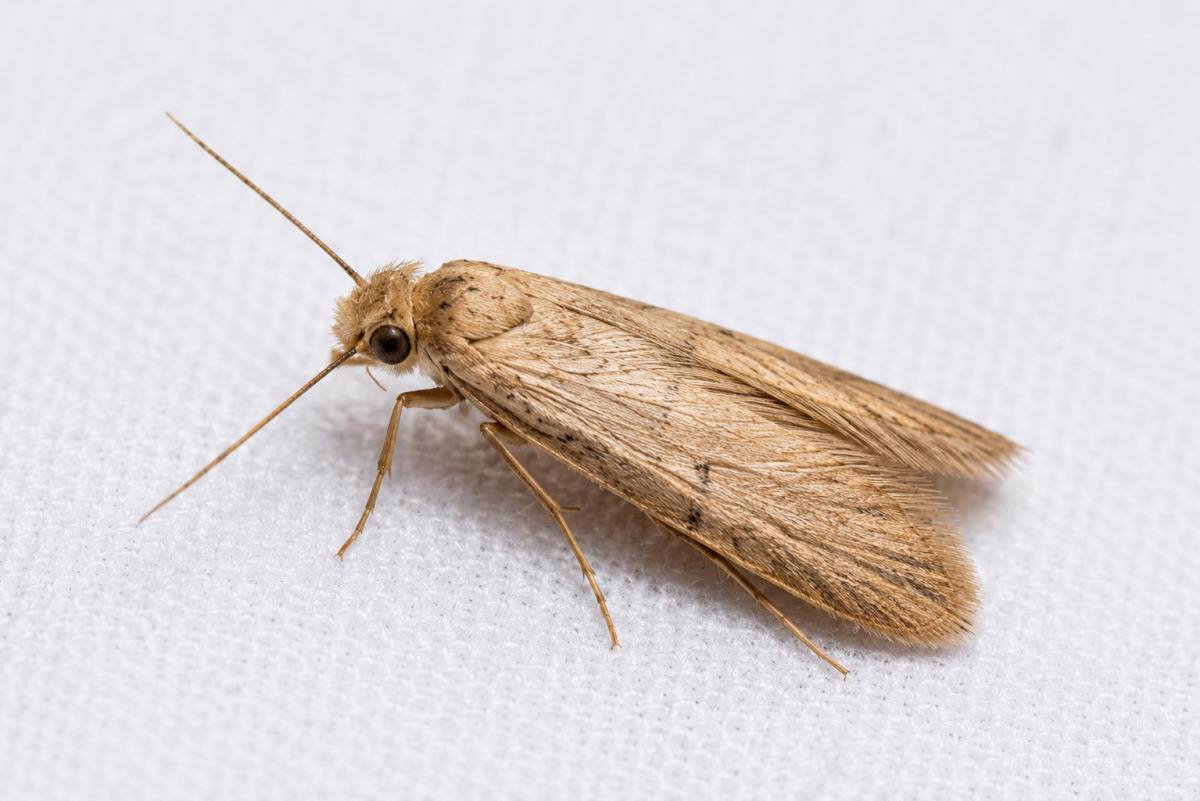
Clothes Moth Quick Facts

Size

Adults are approximately 1/4 inch long with a wingspan near 1/2 inch; larvae reach roughly 1/3 to 1/2 inch before pupating.

Color

Uniform golden-buff to silvery-tan in adults, with dark spots appearing on wings of certain species; larvae are creamy white with dark heads.

How to Identify

Weak, fluttering flight that avoids light, accompanied by silken feeding tubes, portable cases, or irregular holes in natural animal fibers.

Active Season

Remains active year-round in South Florida indoor settings due to consistent indoor climate control and warm ambient temperatures.

Indoor or Outdoor

Primarily an indoor pest found in dark closets, storage chests, attics, and undisturbed living spaces containing natural textiles.

Day or Night

Mostly active at night or in dimly lit spaces, deliberately retreating from light when disturbed.

Diet

Larvae consume materials containing keratin, including wool, silk, feathers, fur, leather, hair, and natural bristle brushes.

About Clothes Moths

Clothes moths are small, secretive insects belonging to the family Tineidae. The two primary species encountered in South Florida homes and commercial properties are the webbing clothes moth (Tineola bisselliella) and the casemaking clothes moth (Tinea pellionella). Unlike many common flying household pests, adult clothes moths are not attracted to light and do not feed on fabrics themselves. Instead, they seek out dark, quiet environments to reproduce, placing their eggs directly onto natural fibers.

Property owners typically become aware of an infestation when valuable wool garments, silk drapes, heirloom area rugs, or upholstered furnishings show signs of feeding damage. Because larval feeding centers on keratin-based animal fibers, undetected activity can lead to substantial financial loss and permanent damage to fine textiles throughout a residence or business.

Where Are Clothes Moths Commonly Found?

Indoor Hiding Places

Clothes moths thrive in sheltered, undisturbed spaces where natural items sit for extended periods without movement or light exposure. Frequently targeted interior areas include:

  • Deep corners and upper shelves of walk-in closets
  • Underneath heavy, low-profile furniture resting on wool carpeting
  • Storage trunks, cedar chests, and cardboard storage boxes
  • Attics, dark closets, and climate-controlled storage units
  • Spaces along baseboards where pet dander and natural lint gather
  • Folds of long-hanging wool suits, cashmere coats, or silk gowns
  • Inside piano key beds containing felt dampers and wool padding

High-Risk Materials and Target Objects

Larvae require organic animal fibers to complete their life cycle. High-value materials commonly affected in South Florida structures include:

  • Hand-knotted Oriental, Persian, and wool area rugs
  • Fine apparel made of cashmere, mohair, angora, and sheep’s wool
  • Feather- or down-filled pillows, duvets, and comforters
  • Natural leather coats, fur shawls, and hide wall hangings
  • Mounted animal specimens and taxidermy displays
  • Antique furniture stuffed with horsehair or covered in natural velvet

South Florida Conditions That Support Activity

While outdoor weather changes seasonally, indoor environmental factors in South Florida keep clothes moths active continuously throughout the year. Factors favoring establishment include:

  • Maintained indoor air conditioning, providing stable ambient temperatures
  • Higher interior humidity levels during summer months
  • Stored clothing containing unwashed skin oils, salt, or perspiration residue
  • Infested vintage textiles, thrift store clothing, or second-hand wool rugs introduced to the property
  • Accumulations of pet hair behind vents, under appliances, or within floor cracks

Clothes Moth Behavior and Attractants

Feeding Habits

Adult clothes moths do not have functional mouthparts and live purely to reproduce. All fabric destruction is carried out exclusively by the larval stage. Larvae target materials containing keratin, a structural protein found in animal hair, wool, feathers, and silk.

Larvae demonstrate a strong preference for textiles soiled with human sweat, body oils, beverage spills, or food residue, as these stains supply essential B vitamins and minerals required for their development. While larvae cannot digest synthetic fibers like polyester or nylon, they will readily chew through synthetic-blend fabrics to reach natural fibers or feed on organic stains surface-deposited on the material.

Movement and Light Avoidance

Clothes moths exhibit photophobic behavior, meaning they actively flee from direct natural or artificial light. When doors are opened or closet lights turned on, adults run quickly into shadows or skim closely along dark walls rather than flying toward light fixtures. Their flight is weak, fluttery, and erratic, making them easy to distinguish from strong-flying kitchen or drain pests.

Silk Production and Case Construction

Feeding larvae produce telltale silken material that varies by species:

  • Webbing Clothes Moths: Larvae construct temporary silken feeding tunnels or flat web sheets across fabric surfaces, grazing on outer fibers while hidden beneath the silk cover.
  • Casemaking Clothes Moths: Larvae construct an open-ended, portable cylindrical case out of silk and woven fabric fragments. They drag this protective casing along behind them as they feed, eventually pupating inside it.

Reproduction and Spread

Female adults lay dozens of sticky eggs individually or in small clusters within dark garment folds, rug bases, or upholstery seams. Eggs hatch in under a week during warm conditions, allowing new generations to establish rapidly inside undisturbed storage locations.

Damage and Concerns

Property and Textile Damage

The primary concern surrounding clothes moths is physical and economic damage to personal property. Larval feeding leaves irregular holes, thinned spots, or shredded backing across natural textiles. Because feeding often occurs in hidden areas—such as underneath collars, inside sleeve lining, or on the underside of heavy carpets—damage can become severe before it is observed.

Loss of Fine and Heirlooms Items

Infestations routinely affect irreplaceable family heirlooms, designer wool apparel, hand-knotted silk rugs, and custom upholstered furnishings. Repairing damaged textiles often requires specialized reweaving or costly professional restoration, and severely damaged items may be impossible to salvage.

Commercial and Business Impact

For South Florida businesses, clothes moths pose reputational and financial risks. High-risk commercial properties include:

  • High-end clothing boutiques and tailor shops
  • Dry cleaners and garment storage facilities
  • Rug importers, galleries, and carpet restoration centers
  • Museums, theater wardrobe departments, and historical home exhibits

Health and Safety Clarification

Clothes moths do not bite, sting, or attack humans or pets. They do not transmit disease pathogens, contaminate stored food pantries, or cause structural timber damage. Their risk is strictly confined to keratin-bearing natural products and fabrics.

When Are Clothes Moths Active in South Florida?

Unlike colder northern regions where moth development slows or pauses during winter, South Florida’s subtropical environment allows clothes moths to reproduce throughout the entire calendar year.

Key factors influencing local indoor activity include:

  • Year-Round Interior Stability: Regulated indoor heating and cooling keep closets within an optimal temperature range for continuous larval feeding and egg hatch.
  • Summer Humidity Surges: Increased humidity between May and October accelerates egg development rates, leading to noticeable population spikes during late summer.
  • Seasonal Storage Rotations: Activity often becomes apparent when seasonal wardrobes, extra blankets, or winter suits are unpacked from dark storage spaces.
  • Air Conditioning Outages: Periods where homes sit unconditioned during extended travel or post-storm power interruptions can create rapid increases in indoor humidity, accelerating larval growth.

Signs of a Clothes Moth Infestation

Because adult clothes moths naturally avoid light and rarely fly openly through living areas, seeing an adult insect is seldom the initial warning sign. Property owners usually discover activity during routine closet cleanouts, vacuuming, or wardrobe reorganization. Early detection is crucial to preventing extensive fabric damage.

  • Irregular Holes in Fabrics | Thinning surface fibers, threadbare patches, or scattered holes appearing across wool garments, cashmere sweaters, silk scarves, or wool rug borders.
  • Silken Webbing and Patchwork Sheets | Fine, spider-like webbing or webbed silken sheets spun across carpet pile, garment linings, or stored textile containers.
  • Portable Case Attachments | Small, cylindrical silken cases attached to closet walls, baseboards, or fabric seams, often dyed the color of the textile eaten.
  • Granular Fecal Debris (Frass) | Tiny sand-like droppings scattered around damaged fabrics, often sharing the hue of the consumed fiber.
  • Shed Larval Skins and Pupal Cases | Dried, hollow skins left on natural textiles as larvae progress through development molts.

Why DIY Clothes Moth Control Falls Short

Self-treatment attempts often yield temporary results because clothes moth larvae remain well-hidden within deep textile layers, under heavy furniture, or inside undisturbed structural voids.

  • Overlooking Hidden Nesting and Feeding Sites | Over-the-counter sprays miss larvae sheltered deep within heavy wool rug pile, behind mopboards, or inside wall voids containing pet hair.
  • Incomplete Lifecycle Targeting | Surface aerosols may eliminate a few visible adult moths while failing to reach protected eggs and feeding larvae tucked into fabric seams.
  • Chemical Staining and Fabric Damage | Applying improper retail chemicals directly to delicate cashmere, silk, or leather can cause permanent staining or fabric deterioration.
  • Pest Misidentification | Confusing clothes moths with pantry-dwelling species like Indian meal moths leads to misplaced control efforts that leave textile infestations unchecked.
  • Unaddressed Organic Reservoirs | Standard cleaning leaves behind accumulated dander, hair, and organic lint under floorboards and vents, providing a continuous food source for reinfestation.
clothes moth treatment in South Florida

Lower-Impact Options

When appropriate, Pest Busterzz prioritizes precise placement, pheromone monitoring, targeted crack-and-crevice applications, and tailored sanitation recommendations to minimize overall product use inside living areas.

The Pest Busterzz Clothes Moth Treatment Approach

Pest Busterzz delivers a structured, systematic strategy to pinpoint clothes moth activity, eliminate hidden larval populations, and protect valuable home and business textiles.

01

Inspection

We evaluate high-risk locations, including wardrobes, carpet perimeters, storage closets, air registers, and upholstered items, to confirm the species, assess damage scope, and identify primary breeding sources.

02

Targeted Treatment

Treatment plans focus strictly on infested areas and harboring sites. We apply crack-and-crevice treatments along baseboards, treat structural voids where hair accumulates, and apply targeted care near affected storage zones without direct contact with fine fabrics.

03

Monitoring & Follow-Up

We deploy specialized pheromone monitoring traps to capture adult moths, gauge population reduction, verify cycle disruption during follow-up visits, and adjust protocols if lingering activity is uncovered.

04

Prevention

Our practical prevention recommendations focus on dry cleaning textiles before storage, utilizing sealed plastic bins instead of cardboard, vacuuming closet perimeters, and keeping pet hair clear from baseboards and floor vents.

Clothes moths are small (around 1/4 inch) with uniform golden-tan coloring, avoiding light entirely. Pantry moths, such as Indian meal moths, are larger, feature distinctive two-tone reddish-brown and gray wings, and actively fly toward kitchen lights and food cabinets.

No. Clothes moths do not possess biting or stinging mouthparts in either larval or adult stages. They feed strictly on dead keratin fibers and pose no direct bite or disease risk to humans or pets.

Clothes moth larvae rely on keratin—a protein found in animal-derived fibers—to develop. Wool rugs, cashmere sweaters, and feather items placed in dark, undisturbed closets provide the ideal nutrient supply and protected environment necessary for breeding.

Yes. Professional dry cleaning or washing fabrics in hot water (above 120°F) effectively destroys all developmental stages, including eggs, larvae, and pupae. Dry cleaning also removes body oils and perspiration that attract egg-laying adult moths.

Clothes moths are photophobic, meaning they naturally avoid light sources. They seek dark, quiet locations such as back closet corners, under furniture, and inside storage boxes where eggs can hatch undisturbed.

Larvae cannot digest purely synthetic materials like polyester. However, if a garment contains a synthetic blend with natural fibers, or if synthetic fabric holds organic food or sweat stains, larvae will chew through synthetic threads to reach nutrients.

Mothballs require tightly sealed, airtight storage containers to build up chemical fumes capable of killing larvae. In standard closets or open rooms, vapors dissipate quickly, rendering them largely ineffective while leaving unpleasant chemical odors.

Reoccurring activity often indicates that hidden eggs or larvae survived in untreated areas, such as behind baseboards, under low furniture, or inside air ducts where pet hair and natural lint accumulate.

Professional inspection and service should be scheduled as soon as unexplained holes, silken webbing, or larvae are observed on wool rugs, cashmere, or stored natural garments to stop further textile loss.

Pest Busterzz Home Icon

faqs

Clothes Moth FAQs

Protect your South Florida property from textile damage with expert inspection and targeted treatments. Contact Pest Busterzz today to schedule a thorough interior consultation.