

Confused Flour Beetle

Pest Busterzz Home Icon

Pest Library

Confused Flour Beetle
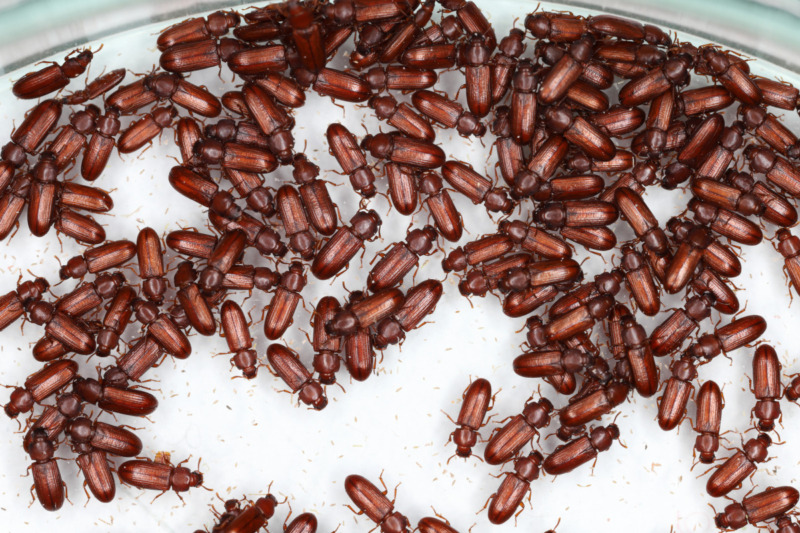
Confused Flour Beetle Quick Facts

Size

About 1/8 inch (roughly 3 to 4 mm) long as an adult

Color

Reddish-brown and somewhat shiny

How to Identify

Flattened, elongated body; antennae that gradually widen into a four-segmented club; straighter sides on the thorax. Closely resembles the red flour beetle

Active Season

Can remain active year-round indoors in South Florida’s warm climate

Indoor or Outdoor

Primarily an indoor stored-product pest found in pantries, kitchens, and food-storage areas

Day or Night

Adults are attracted to light but quickly move toward cover when disturbed; activity centers on food sources

Diet

Broken grain, flour, meal, cereals, pasta, crackers, cake mixes, spices, dried pet food, nuts, chocolate, seeds, and similar dry processed foods

About Confused Flour Beetles

The confused flour beetle (Tribolium confusum) is a common stored-product beetle that appears in homes, grocery settings, and food-storage areas when it arrives in infested packages or finds spilled grain dust and dry goods. Adults are small, reddish-brown, and flattened. The species received its name because it is so easily mixed up with the closely related red flour beetle.

In South Florida, these beetles most often turn up indoors after someone brings home a package of flour, cereal, pet food, or similar items that already contains eggs or insects. Property owners typically notice them when beetles wander out of an infested package into cabinets or across counters. The main concern is contamination of dry food products rather than structural damage or bites.

Where Are Confused Flour Beetles Commonly Found?

Indoor Hiding Places

Confused flour beetles live inside dry food products and in the small accumulations of flour, meal, or grain dust that collect in cracks, under shelf paper, behind appliances, and along cabinet edges. They are secondary pests that prefer already-damaged or milled materials rather than sound whole kernels. Common indoor locations include:

  • Pantries and kitchen cabinets
  • Spice racks and dry-goods storage
  • Pet-food storage areas
  • Cracks and crevices where grain has spilled
  • Under refrigerators, stoves, or drawer bottoms
  • Areas with shelf paper or long-term dry-goods storage

Spilled material can sustain populations even after the original package is discarded. Outdoor activity is uncommon; these beetles reach South Florida properties mainly through commerce and packaged goods.

South Florida Conditions That Support Activity

South Florida’s consistently warm indoor environments allow confused flour beetles to develop and remain active year-round. Risk increases when a property has:

  • Long-term storage of flour, cereal, pasta, or pet food
  • Packages that leak fine powder or show signs of damage
  • Crumbs or spilled meal in cabinet cracks and under appliances
  • Warm, humid kitchen or pantry conditions
  • Infested products purchased from bulk or grocery sources

Confused Flour Beetle Behavior and Attractants

Feeding Habits

Adults and larvae feed on a wide range of dry, starchy, or processed foods. They cannot attack sound, undamaged whole grain. Preferred items include:

  • Flour, meal, and cereals
  • Pasta, crackers, and cake mixes
  • Spices, dried pet food, and birdseed
  • Nuts, chocolate, dried flowers, and seeds

They favor higher-moisture grain products and can leave a grayish tint and a noticeable odor in heavily infested material.

Life Cycle and Movement

Females lay hundreds of tiny white eggs over their long adult lives (sometimes lasting several years). Eggs, larvae, pupae, and adults can all be present at the same time inside an infested product. The life cycle typically takes 40 to 90 days under warm conditions and can continue year-round indoors. Larvae are slender, creamy yellow to light brown, and hide within the food material. Adults do not fly. When disturbed they seek cover, yet they are also attracted to light, which can bring them into view on counters or near windows.

Damage and Concerns

Food Contamination

Confused flour beetles primarily create food-contamination and quality problems. Their presence, along with cast skins, feces, and secretions, can make flour and similar products unpalatable and may encourage mold growth. Infested packages often show fine powder, debris, or beetles crawling out of the container.

Health and Structural Risks

These insects do not bite or sting, are not known to transmit disease, and do not damage the structure of a home or furniture. Rare allergic responses have been noted with flour beetles in occupational settings, but everyday household encounters are mainly a nuisance and sanitation issue. Businesses that store or sell dry goods may face product loss and customer-complaint concerns if infestations are not addressed.

When Are Confused Flour Beetles Active in South Florida?

In South Florida’s consistently warm indoor environments, confused flour beetles can develop and remain active throughout the year. There is no strong outdoor seasonal peak comparable to many landscape pests.

Activity becomes noticeable whenever a new infested package is brought home or when overlooked crumbs and spilled meal allow a population to grow. Higher temperatures and humidity inside kitchens and pantries speed development, while cooler storage can slow it. Sudden indoor sightings often follow the purchase of bulk flour, cereal, birdseed, or pet food that already contained insects or eggs.

Why DIY Efforts Against Confused Flour Beetles Often Fall Short

Finding and discarding one package of flour rarely ends the problem. Eggs and larvae can remain in cracks, under shelf liners, or in other dry goods that were not checked. Professional service becomes the more practical next step when beetles keep appearing in multiple cabinets, the source is unclear, or the infestation involves a commercial food-storage area.

  • Treating Only Visible Beetles | Sprays may kill adults on counters while leaving eggs, larvae, and hidden residue in cracks or other packages untouched.
  • Missing Additional Food Sources | Overlooked pet food, birdseed, spices, nuts, or spilled meal under appliances can restart the cycle.
  • Incomplete Cleaning | Residue in cabinet cracks, under shelf paper, or behind appliances provides enough material for survivors to continue.
  • Short Freezing Times | Freezing a single item for too short a period may not kill every stage present in the product.
  • Identification Uncertainty | Confused flour beetles closely resemble red flour beetles; treating the wrong assumption can delay effective control.
confused flour beetle treatment in South Florida

Lower-Impact Options

Where appropriate, Pest Busterzz emphasizes sanitation, exclusion of food sources, precise placement of monitoring tools, and habitat modification to limit unnecessary product use while addressing the infestation.

The Pest Busterzz Confused Flour Beetle Treatment Approach

Pest Busterzz focuses on confirming the species, locating every food source and residue, and reducing the conditions that allow stored-product beetles to continue.

01

Inspection

We confirm the species, locate all infested products and residue, and examine cabinets, shelves, cracks, and nearby storage areas for eggs, larvae, and spilled material. We also note conditions that allow activity to persist.

02

Targeted Treatment

The plan is based on inspection findings and may include removal guidance for infested goods, thorough cleaning recommendations, localized treatments in voids or crevices where residue remains, and monitoring tools suited to stored-product beetles.

03

Monitoring & Follow-Up

We check whether activity continues, evaluate results, and adjust as needed if new sources are discovered. Follow-up timing depends on the extent of the original problem and the conditions at the property.

04

Prevention

Recommendations typically focus on storing dry goods in tightly sealed containers, rotating stock, promptly cleaning up spills and crumbs, vacuuming cracks and cabinet edges, and inspecting packages for signs of damage or leakage before purchase or storage.

Both are small and reddish-brown. The confused flour beetle has antennae that gradually form a four-segmented club and straighter sides on the thorax; it does not fly. The red flour beetle has a more abrupt three-segmented club and may fly short distances. Side-by-side comparison or professional identification is often needed.

They almost always arrive inside a purchased package of flour, cereal, pasta, pet food, or similar dry goods that already contained eggs or insects. Once inside, they can spread to other products and residue.

They are primarily indoor stored-product pests. Outdoor populations are uncommon; most activity indoors begins with infested packaged foods.

No. They do not attack wood or structure, and they do not bite or sting. The concern is limited to contamination of dry food products.

A single adult may have wandered from a small source. However, because multiple life stages can exist inside a package at once, finding one often warrants a careful check of all dry goods and nearby residue.

Overlooked packages, crumbs under appliances, or residue in cracks and under shelf paper can sustain survivors. Incomplete source removal is the most common reason activity returns.

Freezing can help on individual items when done thoroughly, and cleaning is essential, but sprays alone rarely reach every egg and larva hidden in food or residue. Persistent or widespread activity usually benefits from professional inspection and a coordinated plan.

Contact Pest Busterzz if beetles appear in multiple locations, if you cannot locate every source, if the problem involves a commercial food-storage area, or if activity continues after thorough cleaning and disposal of suspect products.

Pest Busterzz Home Icon

faqs

Confused Flour Beetle FAQs