

Cuban Cockroach

Pest Busterzz Home Icon

Pest Library

Cuban Cockroach Control in South Florida
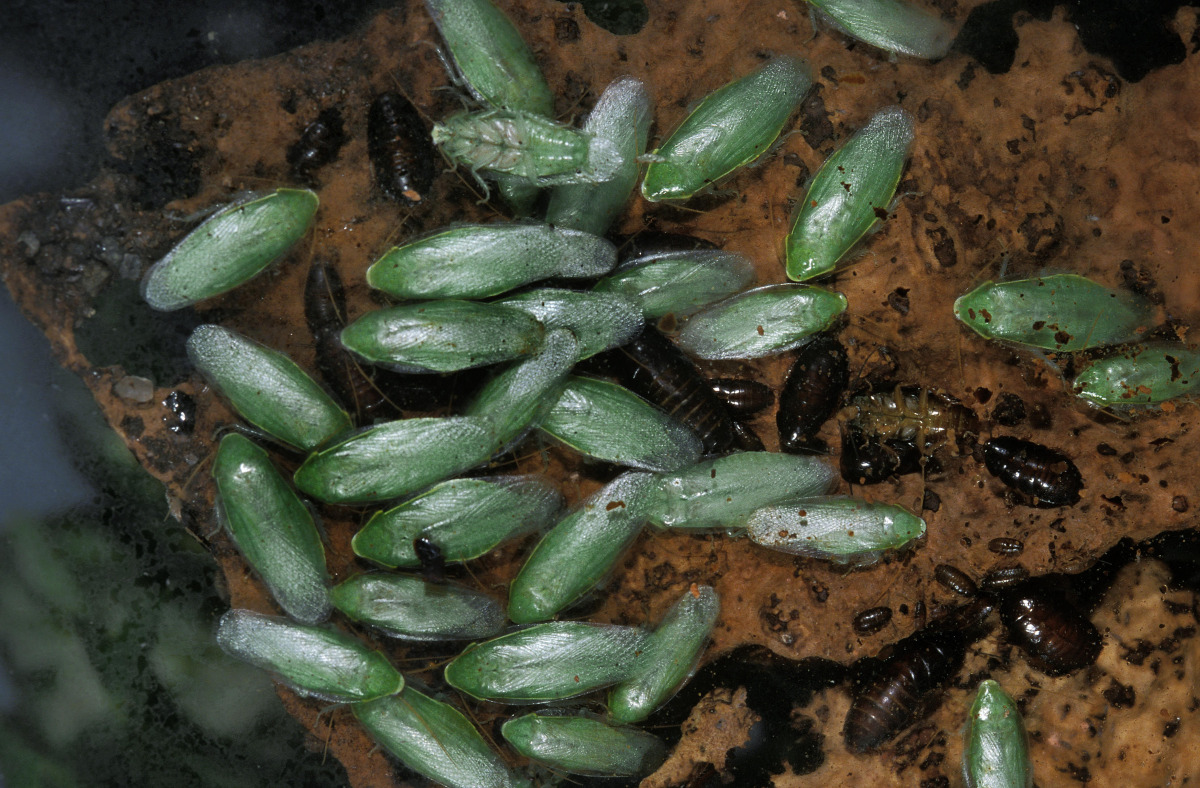
Cuban Cockroach Quick Facts

Size

Approximately 7/8 to 1 inch long as an adult

Color

Adults are pale to bright green; nymphs are dark brown to nearly black

How to Identify

Smooth, leaf-green adult body with long wings and a thin yellow border behind the head

Active Season

Active year-round in South Florida, with adults most noticeable on warm, humid nights

Indoor or Outdoor

Primarily outdoors; adults may accidentally fly indoors but do not normally breed inside buildings

Day or Night

Mostly active at night, when flying adults may gather near porch lights, windows, and illuminated entryways.

Diet

Nymphs feed mainly on decaying plant material and other organic matter in soil, leaf litter, mulch, and rotting wood.

About Cuban Cockroaches

The Cuban cockroach, scientifically known as Panchlora nivea, is an outdoor tropical cockroach recognized by the adult’s unusual pale-green to bright-green color. It is also called the green banana cockroach. Unlike German or American cockroaches, this species is associated mainly with vegetation, mulch, leaf litter, and other damp outdoor organic material.

Adults are strong fliers and are attracted to lights, so a Cuban cockroach may enter through an open door, damaged screen, or gap around a window at night. An occasional indoor sighting is usually accidental rather than evidence of an indoor infestation. Repeated activity is best addressed by identifying the species, checking exterior habitat and entry points, and reducing the conditions drawing adults toward the building.

Where Are Cuban Cockroaches Commonly Found?

Outdoor Habitat and Breeding Areas

Cuban cockroaches live and develop outdoors in warm, humid locations with abundant plant material and shelter. Nymphs are most likely to be found in or near:

  • Leaf litter beneath trees and shrubs
  • Loose bark and sheltered areas around tree bases
  • Rotting logs, stumps, and decaying wood
  • Moist mulch and compost
  • Firewood and lumber piles
  • Dense tropical vegetation
  • Soil beneath debris, ground cover, or fallen leaves
  • Other shaded areas containing decomposing organic matter

Nymphs are dark and wingless, allowing them to remain concealed in soil and decaying material while they develop. Adults are more visible because they rest on foliage and may fly considerable distances toward lights.

Where Adults May Appear Indoors

Cuban cockroaches do not normally establish indoor populations, but flying adults can enter buildings accidentally. They may be noticed near:

  • Doors opened after dark
  • Windows and sliding glass doors
  • Porch, patio, and balcony lights
  • Damaged screens or unscreened vents
  • Gaps around exterior doors and windows
  • Brightly lit lobbies and storefronts
  • Garages, breezeways, and covered patios
  • Indoor rooms located close to landscaped areas

A single adult near a light or window usually wandered or flew in from outdoors. Finding dark nymphs indoors would be less typical and warrants careful identification to rule out another cockroach species.

South Florida Conditions That Support Activity

South Florida’s tropical and subtropical conditions suit Cuban cockroaches well. Activity around a property may be more noticeable when it has:

  • Dense shrubs, palms, or tropical plants near the building
  • Deep accumulations of leaves or plant debris
  • Frequently wet mulch or shaded soil
  • Compost, rotting wood, or unmanaged yard debris
  • Irrigation that keeps landscaping consistently damp
  • Firewood and lumber piles stored against the structure
  • Tree stumps and decaying landscape material
  • Bright exterior lighting near doors and windows
  • Open doors, damaged screens, or unsealed exterior gaps

Cuban Cockroach Behavior and Attractants

Feeding and Development

Cuban cockroach nymphs live within moist outdoor material where they feed on decomposing plant matter and related organic material, including:

  • Decaying leaves and plant debris
  • Decomposing wood and bark
  • Organic matter mixed into soil
  • Material found in mulch and compost
  • Other naturally decaying vegetation

This outdoor diet differs from the food-seeking behavior associated with common indoor pest cockroaches. Adults may rest on plants and are encountered more often because they fly, especially after dark.

Reproduction and Life Cycle

Female Cuban cockroaches retain the egg case inside the body until the young hatch, so exposed egg cases are rarely seen. The newly emerged nymphs are dark brown rather than green and remain in protected outdoor material as they grow.

Development from egg to adult takes several months and varies between males and females. The pale-green adult stage is winged and mobile, while the immature stages are adapted to staying hidden in soil, leaf litter, and decomposing vegetation.

Flight and Attraction to Light

Adult Cuban cockroaches are capable fliers and may be drawn toward bright light sources at night. Common attractants and entry opportunities include:

  • Porch and patio lights
  • Lighted windows and glass doors
  • Bright commercial signs and entry lighting
  • Open doors after sunset
  • Torn or loose window screens
  • Gaps around door frames
  • Vegetation positioned close to illuminated walls
  • Warm, humid evenings that support flight activity

Adjusting lighting and closing entry routes can reduce indoor encounters without treating areas where the insect is not breeding.

Response When Disturbed

Cuban cockroaches usually try to escape by running or flying when disturbed. Their green coloration helps adults blend into leaves, while the dark nymphs remain concealed near the ground in decaying material.

Because adults can fly directly toward a building, indoor sightings may begin suddenly even when no cockroaches are breeding inside.

Cuban Cockroach Concerns

Primarily a Nuisance

Cuban cockroaches are not considered structural pests. They do not consume sound building materials, and their normal outdoor habitat does not center on kitchens, drains, or indoor food-storage areas.

The most common concerns involve:

  • Unexpected adults flying into living or working spaces
  • Repeated activity around doors, windows, and exterior lights
  • Customer or tenant concern caused by seeing a cockroach
  • Difficulty distinguishing the species from an indoor pest cockroach
  • Outdoor habitat that keeps producing new adults
  • Light and entry conditions that allow recurring indoor encounters

Correct identification is especially important because a green adult Cuban cockroach calls for a different response than German, American, Australian, or smokybrown cockroaches that may create more significant indoor problems.

Health and Sanitation Concerns

This species is rarely found indoors and is not normally regarded as an important household pest. Reliable sources do not characterize Cuban cockroaches as a typical indoor food-contamination or disease-transmission problem. Normal cleaning is appropriate after an accidental indoor sighting, but the presence of one adult does not by itself indicate unsanitary conditions.

People, Pets, and Property

Cuban cockroaches are not known for biting or stinging people, and they are not recognized as a wood-destroying species. An occasional adult is mainly a nuisance and may startle occupants because of its size, color, and ability to fly.

For businesses, repeated sightings can still affect customer impressions. A professional inspection can confirm the species and determine whether activity is limited to outdoor adults attracted by lighting or whether another cockroach is present.

When Are Cuban Cockroaches Active in South Florida?

South Florida’s warmth allows Cuban cockroaches to remain active throughout the year. Adults are generally most noticeable during warm, humid periods when nighttime flight activity is high.

Sightings may increase during:

  • Warm spring and summer nights
  • The humid rainy season
  • Periods following rainfall
  • Tropical weather with high humidity
  • Evenings when doors and windows are opened
  • Times when exterior lighting is used for longer periods
  • Periods when wet leaves, mulch, or storm debris accumulate

Rain and irrigation can keep mulch, leaf litter, and decaying vegetation moist enough to support developing nymphs. At the same time, adults may fly toward protected, illuminated areas around homes and businesses.

Cooler or drier weather may reduce visible flight activity, but sheltered immature cockroaches can remain outdoors. Indoor sightings may resume when warm, humid nights return or when lighting and access conditions draw adults toward the structure.

Why DIY Cuban Cockroach Control May Fall Short

An occasional Cuban cockroach can often be removed without a larger treatment. Recurring sightings, uncertain identification, or activity around a business may justify a professional inspection because the source is usually outdoors and may involve lighting, landscaping, moisture, or several entry routes.

  • Treating Only the Indoor Adult | Removing or spraying one adult does not change the outdoor habitat or lighting conditions that attracted it. Additional adults may continue flying in from nearby vegetation.
  • Assuming Every Cockroach Needs Bait | Cuban cockroaches are outdoor decomposers and do not behave like German cockroaches living in kitchens. Indoor bait placement may be unnecessary or ineffective when adults are only entering accidentally.
  • Misidentifying the Species | Dark Cuban cockroach nymphs can look very different from the green adults, while other cockroach species may require a more intensive indoor response. Treatment should match the confirmed species.
  • Missing Outdoor Habitat | Mulch, leaf litter, compost, rotting wood, and damp plant debris may continue supporting immature cockroaches. Indoor-only applications do not address those exterior conditions.
  • Overlooking Lights and Entry Points | Bright fixtures near doors and windows can repeatedly attract flying adults. Damaged screens, open doors, and small gaps then make entry easier.
  • Relying on Broad Indoor Spraying | Widespread indoor applications may add unnecessary product use when the species is not breeding inside. Focused exterior management, exclusion, and lighting changes are often more relevant.
Cuban cockroach treatment in South Florida

Lower-Impact Options

When appropriate, Pest Busterzz may emphasize inspection, precise exterior treatment, exclusion, lighting adjustments, and habitat recommendations to reduce unnecessary indoor product use.

The Pest Busterzz Cuban Cockroach Treatment Approach

Pest Busterzz begins by confirming the cockroach species and determining whether the activity comes from an outdoor Cuban cockroach population or a different cockroach established inside.

01

Inspection

We identify the cockroach, inspect exterior lights and entry points, and examine mulch, leaf litter, vegetation, decaying wood, stored materials, and other damp outdoor areas that may support activity.

02

Targeted Treatment

Based on the findings, the plan may include localized exterior treatment, crack-and-crevice work at entry areas, exclusion, or habitat modification. The exact methods depend on where cockroaches are developing and how adults are reaching the building.

03

Monitoring & Follow-Up

We evaluate whether sightings decline, check for additional entry routes or outdoor harborage, and adjust the plan when new activity or conditions are discovered.

04

Prevention

Recommendations may include reducing leaf litter and rotting wood, allowing wet mulch to dry, moving firewood away from entrances, repairing screens, sealing gaps, and changing the placement or type of exterior lighting.

Yes. Cuban cockroaches occur in peninsular Florida and are well suited to South Florida’s tropical landscaping, warmth, and humidity. They live mainly outdoors in vegetation, leaf litter, mulch, soil, and decaying plant material.

Adult Cuban cockroaches have a distinctive pale to bright-green body that helps them blend with foliage. A thin yellow margin may be visible along the front edge of the shield-like area behind the head. Nymphs are dark brown and do not share the adult color.

They may accidentally enter homes, but they do not normally breed indoors. One green adult near a porch door, window, or light usually came from outside. Repeated sightings should still be inspected to verify the species and locate the source.

Adults are strong fliers attracted to bright lights at night. Light shining through a window can draw them toward the glass, and damaged screens or open windows may allow them to enter.

The adult was likely attracted by indoor or exterior lighting and entered through an open door, damaged screen, vent, or small exterior gap. This behavior does not automatically mean cockroaches are breeding inside.

Cuban cockroaches are not known as biting or stinging pests. They are mainly an occasional nuisance when adults fly indoors. Their presence should not be confused with the more significant sanitation concerns associated with cockroach species that routinely infest buildings.

An isolated adult can often be captured or removed without broad indoor treatment. Repeated spraying indoors may not prevent new adults from flying in because the source is usually outside.

Keep doors closed after dark, repair screens, seal gaps, and consider lighting choices that are less attractive to flying insects. Moving bright fixtures away from entry doors and reducing nearby damp plant debris may also help.

Recurring adults may be emerging from outdoor leaf litter, mulch, compost, or decaying wood and then flying toward the same lights. Lasting reduction often requires attention to both the exterior habitat and the route into the building.

Schedule an inspection when sightings are frequent, the species is uncertain, dark nymphs appear indoors, activity affects customers or tenants, or you need help identifying outdoor harborage and entry conditions.

Pest Busterzz Home Icon

faqs

Cuban Cockroach FAQs