

Drugstore Beetle

Pest Busterzz Home Icon

Pest Library

Drugstore Beetle
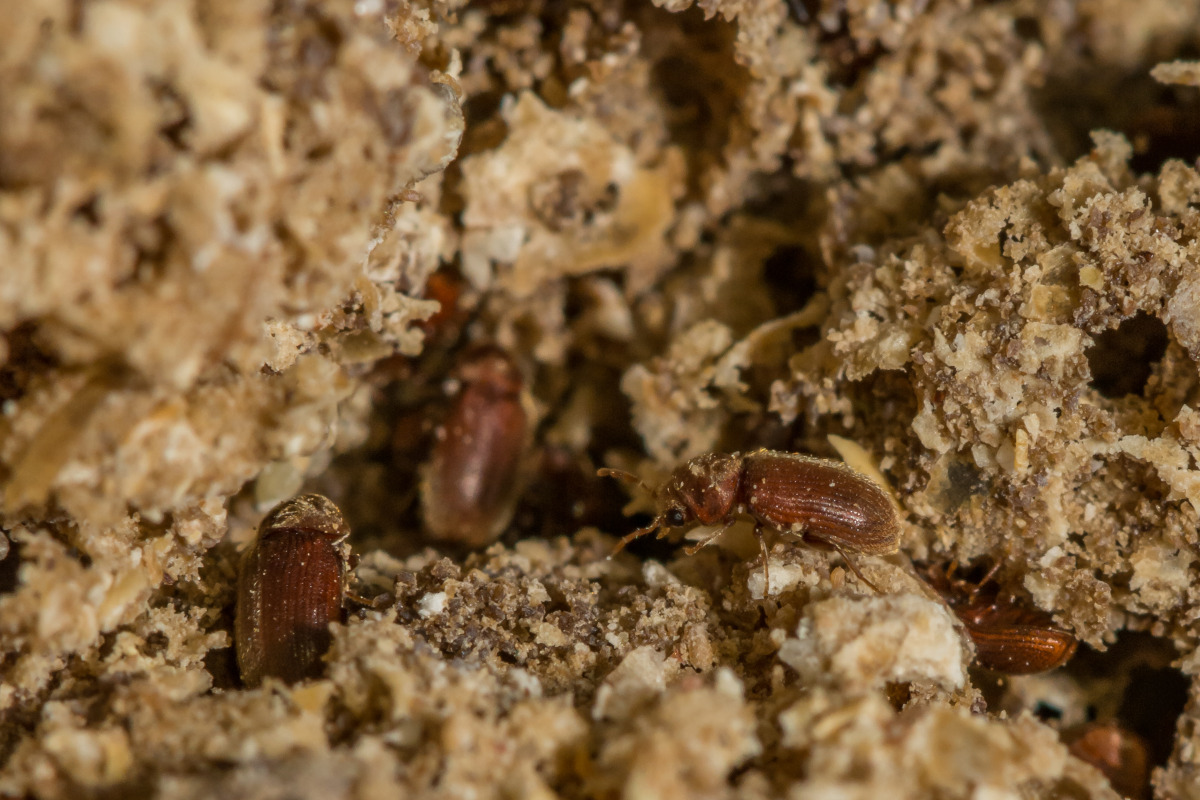
Drugstore Beetle Quick Facts

Size

Adults measure about 1/10 to 1/7 inch long (2.25–3.5 mm)

Color

Uniform brown to reddish-brown

How to Identify

Cylindrical body with fine longitudinal rows of pits or hairs on the wing covers and antennae that end in a three-segmented club; the head is largely hidden when viewed from above. Often confused with the cigarette beetle

Active Season

May remain active year-round in South Florida’s warm, humid conditions

Indoor or Outdoor

Primarily indoor pests of stored products; occasionally associated with outdoor sites such as bird nests

Day or Night

Adults often fly toward light and are frequently noticed on windowsills or near lights; activity can occur at various times when food and conditions allow

Diet

Larvae feed on a very wide range of dried plant and animal materials, including flours, cereals, spices, pet food, dried fruits, chocolates, and some non-food items such as leather, books, or museum specimens

About Drugstore Beetles

The drugstore beetle, Stegobium paniceum, is a small stored-product beetle in the family Ptinidae. Adults are compact, reddish-brown, and often discovered near pantries or food storage areas in South Florida homes and businesses. They earn their name from a historical habit of feeding on dried medicinal materials, yet they attack far more than pharmaceuticals. In the region’s consistently warm climate, these beetles thrive inside packages of dry goods that sit undisturbed. Property owners typically notice them when adults appear on counters or windowsills, signaling that larvae have already been feeding inside food or other organic materials. The main concern is contamination and waste of stored products rather than structural harm or health risks from bites or disease transmission.

Where Are Drugstore Beetles Commonly Found?

Indoor Storage Areas

Drugstore beetles live almost entirely inside the materials they infest. In South Florida homes and commercial kitchens, the highest-risk spots include:

  • Pantry shelves and cabinets holding flour, cereal, spices, pasta, or dry mixes
  • Pet food storage areas
  • Packages of dried fruit, chocolates, or baking ingredients
  • Any location where crumbs or spills accumulate
  • Seams, cracks, and corners near stored products

Larvae develop within the food itself, tunneling through the product and creating fine powdery residue. Adults may leave the food source to seek mates and are often found along window sills or walls near lights.

Outdoor Associations

Outdoor associations are limited but can include bird nests. Entry usually occurs when already-infested packages are brought home from stores or warehouses, or when beetles move from one poorly sealed container to another.

South Florida Conditions That Support Activity

Warm indoor temperatures and moderate-to-high humidity common in South Florida buildings support continuous development. Risk may increase when a property has:

  • Long-term storage of dry goods in original packaging
  • Spilled flour, crumbs, or pet food residue in cabinets
  • Packages that have sat undisturbed for months
  • High indoor humidity that favors faster development
  • Bulk or infrequently rotated pantry items

Drugstore Beetle Behavior and Attractants

Feeding Habits

Larvae do most of the feeding and can consume a remarkably wide range of materials, including:

  • Flours, dry mixes, cereals, and pasta
  • Spices, dried herbs, and seasonings
  • Pet food and birdseed
  • Dried fruits, chocolates, and sweets
  • Books, leather, dried flower arrangements, and museum specimens in some cases

Symbiotic yeasts in their digestive system allow larvae to survive on nutrient-poor materials. Adults generally do not feed heavily; the larvae cause the bulk of the damage and contamination.

Reproduction and Development

Females lay up to about 75 eggs directly on or in suitable food. The white, grub-like larvae tunnel through the substrate for weeks to months depending on temperature and food quality. They form a cocoon of silk and food particles before pupating. Adults emerge, mate, and live from roughly two weeks to two months. Under warm temperatures near 85°F and adequate humidity, the full cycle from egg to adult is often completed in less than two months.

Movement and Detection

Adults can fly and are drawn to light, which explains why homeowners often first spot them on windowsills. Populations can spread from one package to neighboring ones when packaging is thin or damaged. Sudden appearances of adults often follow the opening of an older package or the movement of infested goods from one storage area to another.

Damage and Concerns

Food Contamination

Drugstore beetles primarily create a nuisance and food-waste problem. Larval feeding contaminates dry goods with frass, cast skins, and insect parts, often making the product unusable. They chew small holes in packaging, allowing further infestation or moisture entry.

Other Material Damage

In rare cases they may damage books, leather, dried flower arrangements, or museum specimens. Structural wood damage is not typical for this species.

Health and Safety

They do not bite or sting people or pets, and they are not known to transmit disease. For restaurants, grocery operations, or food-storage businesses in South Florida, visible beetles or contaminated stock can create sanitation and reputation issues. Most residential encounters remain limited to pantry contamination when products are stored for long periods in warm conditions.

When Are Drugstore Beetles Active in South Florida?

In South Florida’s subtropical climate, drugstore beetles can remain active year-round indoors where temperatures stay within their developmental range (roughly 60–93°F, with optimal conditions near 85°F and elevated humidity). Multiple generations are possible each year under favorable conditions.

Activity does not follow strong outdoor seasonal peaks the way some outdoor insects do; instead, it tracks the presence of suitable stored products and stable indoor warmth. High humidity common in the region can support faster development when food is available.

Sudden appearances of adults often follow the opening of an older package or the movement of infested goods from one storage area to another. Colonies protected inside food packages can remain established and become noticeable again when conditions allow adults to emerge and fly toward light.

Why DIY Drugstore Beetle Control May Fall Short

Locating every infested package can be difficult when beetles have spread to multiple containers or to spills in cracks and seams. Professional service becomes the more practical next step when activity continues after discarding obvious packages, the source is unclear, or identification is uncertain.

  • Treating Only Visible Adults | Spraying or removing adults on a countertop or windowsill leaves eggs and larvae inside food sources. New adults can continue emerging from packages that were not inspected.
  • Missing Hidden Breeding Sites | Beetles can infest multiple containers or survive in spilled material in seams and corners. Discarding only the most obvious package may leave other sources untouched.
  • Incomplete Sanitation | Failing to thoroughly clean shelves, crumbs, and packaging residues allows reinfestation even after discarding contaminated goods.
  • Misidentification | Distinguishing drugstore beetles from the similar cigarette beetle requires close examination of antennae and wing covers. Treating the wrong pest can waste time and effort.
  • Reinfestation from New Packages | Even after cleaning, newly purchased dry goods can introduce another infestation if they arrive already containing beetles or eggs.
drugstore beetle treatment in South Florida

Lower-Impact Options

When appropriate, Pest Busterzz emphasizes precise placement, sanitation, exclusion of entry into packaging, and monitoring to limit broader product use while addressing the specific conditions supporting drugstore beetles.

The Pest Busterzz Approach to Drugstore Beetle Treatment

Pest Busterzz focuses on accurate identification, locating the sources of activity, and reducing the conditions that allow drugstore beetles to return.

01

Inspection

We identify the beetle species, evaluate the extent of activity, look for entry points or breeding materials, and check the environmental conditions supporting the problem in stored-product areas.

02

Targeted Treatment

The plan depends on the pest, property, activity level, and inspection findings. It may include removal guidance for infested materials, localized applications where appropriate, monitoring tools, and recommendations tailored to the specific products and storage setup.

03

Monitoring & Follow-Up

We check activity, evaluate results, adjust the plan when necessary, and address newly discovered problem areas. Timing depends on the life cycle and conditions found at the property.

04

Prevention

Recommendations focus on transferring dry goods into sealed glass, metal, or heavy plastic containers, rotating stock so older items are used first, promptly cleaning spills and crumbs, and inspecting new packages before storage.

Both are small and reddish-brown, but drugstore beetles have antennae ending in a three-segmented club and longitudinal rows of pits on the wing covers. Cigarette beetles have serrated antennae and smooth wing covers. A close look or professional confirmation is often needed because the two species look similar at a glance.

They usually arrive already inside packaged dry goods purchased from stores or warehouses. Once inside a warm, humid home, larvae develop in flour, spices, pet food, or similar products that sit unused for extended periods.

No. They do not bite or sting people or pets and are not associated with disease transmission. The primary issue is contamination of stored products.

Not necessarily. Adults leave food sources to mate and are attracted to light, so a few individuals on a windowsill can come from a single package. Checking nearby dry goods for holes and powdery residue is the practical next step.

Larvae mainly attack stored foods, but they have been recorded feeding on or boring into books, leather, dried plant materials, and some museum specimens. Structural wood damage is not typical for this species.

Under warm temperatures near 85°F and adequate humidity, the full cycle from egg to adult is often completed in less than two months. Cooler spots or poorer food can stretch development to several months.

It helps if that bag is the only source, but beetles can move between packages or survive in spilled material in seams and corners. Inspecting all dry goods in the area and cleaning thoroughly reduces the chance of continued activity.

Contact Pest Busterzz if adults keep appearing after you have discarded obvious packages and cleaned, if the infestation involves multiple products or commercial storage, or if you need confirmation of the species and a plan tailored to your property.

Pest Busterzz Home Icon

faqs

Drugstore Beetle FAQs