

Earwigs

Pest Busterzz Home Icon

Pest Library

Earwigs
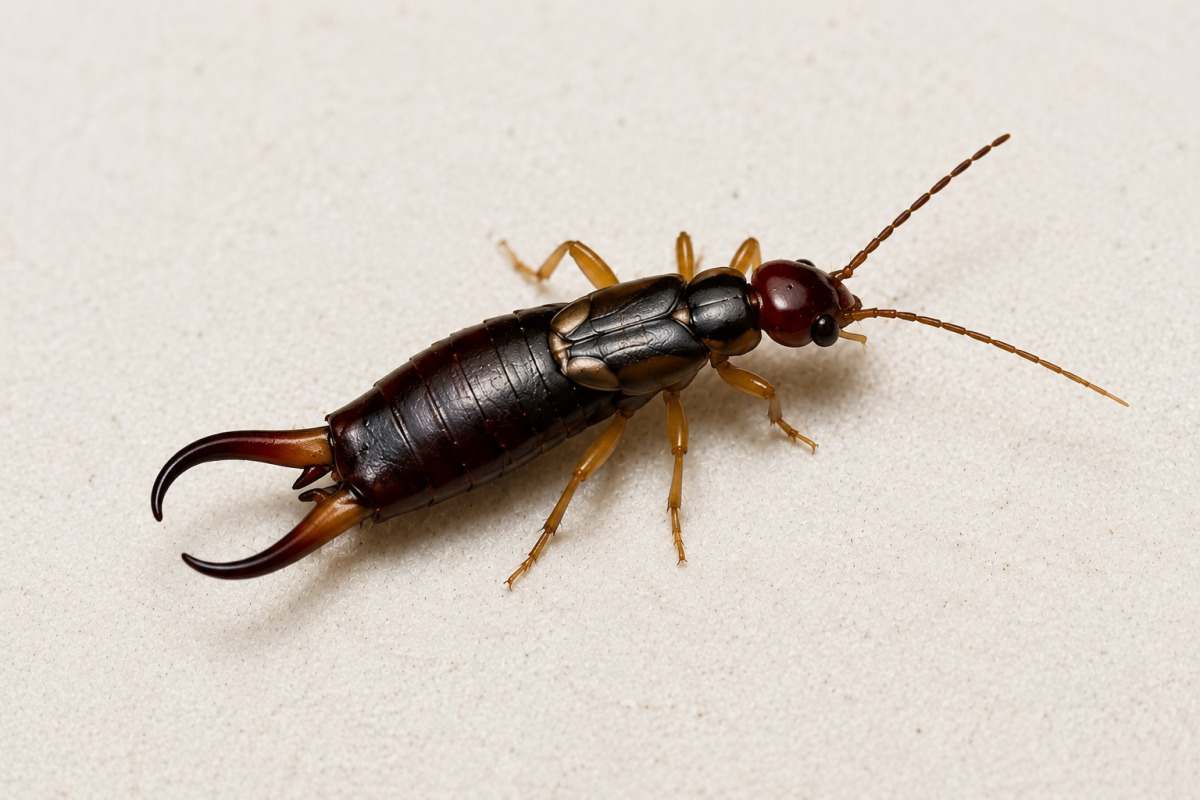
Earwigs Quick Facts

Size:

Adults measure between 1/2 inch and 5/8 inch long.

Color:

Dark brown to reddish-brown or chestnut with lighter yellow-brown legs.

How to identify:

Distinct forcep-like pincers extending from the rear of their flattened abdomen.

Active season:

Active year-round in South Florida, with indoor sightings peaking during rainy summer weather.

Indoor or outdoor:

Primarily outdoor ground dwellers that wander inside ground-floor areas seeking moisture or shelter.

Day or night:

Mostly active at night, hiding in damp, dark harborages throughout daylight hours.

Diet:

Omnivorous scavengers feeding on decaying plant material, seedling foliage, soft garden flower petals, and small insects.

About Earwigs

Earwigs are small, nocturnal insects belonging to the order Dermaptera, most recognized by the pair of forceps-like pincers extending from their lower abdomen. In South Florida, common species include the European earwig (*Forficula auricularia*) and the ringlegged earwig (*Euborellia annulipes*). While their unusual pincher-bearing appearance makes them unsettling to find indoors, earwigs are primarily harmless outdoor scavengers. They break down organic soil material and feed on garden insects, but local summer humidity and heavy weather events frequently drive them into ground-floor living areas seeking dark, damp shelter.

Where Are Earwigs Commonly Found?

Outdoor Nesting Areas

Earwigs thrive outdoors in cool, shaded, damp microclimates containing organic debris. Typical outdoor harborages include:

  • Thick layers of cypress or hardwood mulch
  • Beneath decaying leaf litter and garden compost
  • Underneath landscape timbers, pavers, and stepping stones
  • Base crevices of potted plants and outdoor planters
  • Inside rotting tree stumps or hollow wooden structures
  • Under piles of firewood, yard debris, or stacked stones

Indoor Hiding Places

Earwigs rarely establish self-sustaining indoor colonies unless ongoing water leaks exist. When weather conditions push them indoors, they favor ground-floor areas with high humidity, such as:

  • Bathrooms beneath cabinets and sink vanities
  • Laundry rooms near washing machine hoses and drain lines
  • Kitchens under dishwashers and refrigerator condensation pans
  • Basements, utility closets, and concrete slab expansion joints
  • Soil basins of indoor potted plants

South Florida Conditions That Support Activity

Certain property features common in South Florida make earwig intrusions significantly more likely:

  • Excessive mulch piled directly against building foundations
  • Frequent automated sprinkler cycles that keep surrounding soil continuously wet
  • Air conditioner condensation lines draining directly at the perimeter wall
  • Gaps beneath ground-level exterior doors and missing door sweeps
  • Unsealed weep holes or slab foundation cracks along lower exterior walls

Earwig Behavior and Attractants

Feeding Habits

Earwigs are generalist omnivores that forage for food primarily at night. Their typical diet includes:

  • Decaying plant leaves, moss, and organic soil matter
  • Tender flower petals, seedling foliage, and garden fruits
  • Soft-bodied agricultural insects like aphids and mites
  • Dead insects and organic debris found outdoors

Nesting Habits

Female earwigs exhibit rare maternal instinct among insects, digging small soil nests where they deposit eggs. The female guards her eggs and early-stage nymphs, grooming them to prevent fungal growth until they can forage independently.

Moisture and Light Attraction

Earwigs are extremely sensitive to moisture loss and will perish rapidly in dry environments. They are also attracted to bright outdoor security lighting at night, which draws them toward exterior building walls, entryways, and window frames.

Reaction to Disturbance

When disturbed or exposed to sudden light, earwigs do not show aggressive behavior toward humans. Instead, they quickly scramble into dark crevices or under floor edges to escape.

Earwig Concerns and Risks

Landscape and Garden Nuisance

While earwigs do not cause structural or wood damage to homes, large outdoor populations can chew jagged, unsightly holes in ornamental flower petals, soft plant shoots, and home vegetable gardens.

Nuisance Presence

Earwigs are primarily an unpleasant visual nuisance inside homes and commercial buildings. Contrary to persistent myths, earwigs do not crawl into human ears to lay eggs or bore into brain tissue, nor do they possess stingers or venom glands.

Sign of Underlying Moisture

Discovering multiple earwigs indoors often serves as a helpful indicator of unaddressed perimeter maintenance issues, such as elevated foundation moisture, decaying landscape mulch, or unsealed exterior gaps.

When Are Earwigs Active in South Florida?

Because South Florida maintains a warm subtropical climate year-round, earwig populations remain active continuously throughout all twelve months.

However, noticeable indoor intrusions peak significantly during specific weather conditions:

  • Heavy rainy season weather and summer tropical storms that flood soil burrows
  • Extended hot summer dry spells that force earwigs to search for indoor humidity
  • Periods of excessive lawn irrigation along building foundation walls

How Earwigs Enter South Florida Buildings

Because earwigs have flat, flexible bodies, they can easily squeeze through remarkably narrow openings along a building’s perimeter. They commonly enter through gaps under exterior sliding glass doors, worn door sweeps, un-screened weep holes, and cracks in concrete expansion joints. Earwigs are also frequently carried directly into homes hidden inside the drainage holes of potted plants, outdoor patio cushions, or damp landscaping materials stored near foundation walls.

The Limitations of DIY Earwig Control

Over-the-counter pest control products and localized DIY efforts often yield short-term results when dealing with persistent earwig activity:

  • Treating Visible Pests Only | Aerosol sprays eliminate individual visible earwigs but leave the surrounding outdoor soil harborages completely untouched.
  • Ignoring Exterior Moisture Sources | DIY applications fail to resolve environmental drivers like overwatered mulch beds, leaking hose bibs, and improper downspout drainage.
  • Inaccessible Nesting Sites | Female earwigs lay eggs in subterranean soil chambers or beneath heavy hardscapes where surface sprays cannot reach.
  • Pest Relocation | Harsh chemical sprays applied along baseboards can scatter earwigs deeper into wall voids, utility closets, and carpet edges.
earwig treatment in South Florida

Lower-Impact Options

Where appropriate, Pest Busterzz prioritizes targeted perimeter granular applications, physical exclusion recommendations, monitoring, and soil moisture modification to minimize unnecessary product use indoors.

The Pest Busterzz Earwigs Treatment Approach

Pest Busterzz locates active earwig harborage sites, treats perimeter populations, and helps correct exterior conditions that drive activity.

01

Inspection

We evaluate foundation walls, door sweeps, mulch depths, soil moisture levels, potted plant placement, and perimeter entry points to locate active harborages.

02

Targeted Treatment

Treatment involves targeted perimeter granular applications, micro-encapsulated treatments in crack-and-crevice areas along foundation walls, and addressing high-density soil harborage sites.

03

Monitoring & Follow-Up

We evaluate population reduction, inspect strategic monitoring stations, and adjust perimeter protection based on seasonal weather shifts or heavy rainfall events.

04

Prevention

Recommendations include pulling landscape mulch back from concrete foundations, adjusting lawn irrigation, sealing low door gaps, and elevating potted plants.

Earwigs do not bite or sting, and they lack venom. While they possess forceps on their abdomen, they use them for defense against other insects. A pinch from a large adult may feel firm but rarely breaks human skin.

Earwigs crawl indoors when outdoor conditions become too wet or too dry. Heavy rain floods their soil burrows, while summer heat drives them inside to seek moisture. They crawl through lower door gaps, weep holes, and worn weather stripping.

No. Earwigs are purely a nuisance. They do not eat wood, destroy drywall, chew electrical wiring, or cause structural damage. They are also completely harmless to household pets, as they do not carry diseases or internal parasites.

The easiest way to identify an earwig is by the distinctive forcep-like pincers extending from the rear of its body. Beetles and cockroaches lack these rear appendages. Earwigs also have long, flattened bodies that move quickly in side-to-side motions.

Earwigs rarely reproduce or nest inside wall voids because indoor air is usually too dry for their eggs and nymphs to survive. Indoors, they are temporary strays unless an uncorrected plumbing leak creates extreme moisture behind a wall.

Keep mulch layers at or below two inches, avoid overwatering landscape plants, and remove decaying leaves and fallen garden debris. Raising potted plant bases off the ground on decorative feet also eliminates their favorite dark, damp hiding spots.

Consumer contact sprays only kill individual earwigs exposed during application. They do not penetrate damp subterranean soil harborages or resolve perimeter moisture issues, allowing new earwigs to continue entering.

You should consider professional service if earwigs repeatedly appear in ground-floor living areas, if garden plants sustain ongoing foliage damage, or if high perimeter moisture makes indoor intrusions a recurring problem after heavy rainfall.

Pest Busterzz Home Icon

faqs

Earwigs FAQs

If earwigs are making frequent unwanted appearances around your South Florida home or business, Pest Busterzz is here to help. Our team identifies the entry paths and environmental conditions fueling the issue, providing targeted inspection and perimeter protection to reduce the conditions that allow pests to return. Contact Pest Busterzz today to schedule your comprehensive property evaluation.