

Pest Library
Fall Army Worm
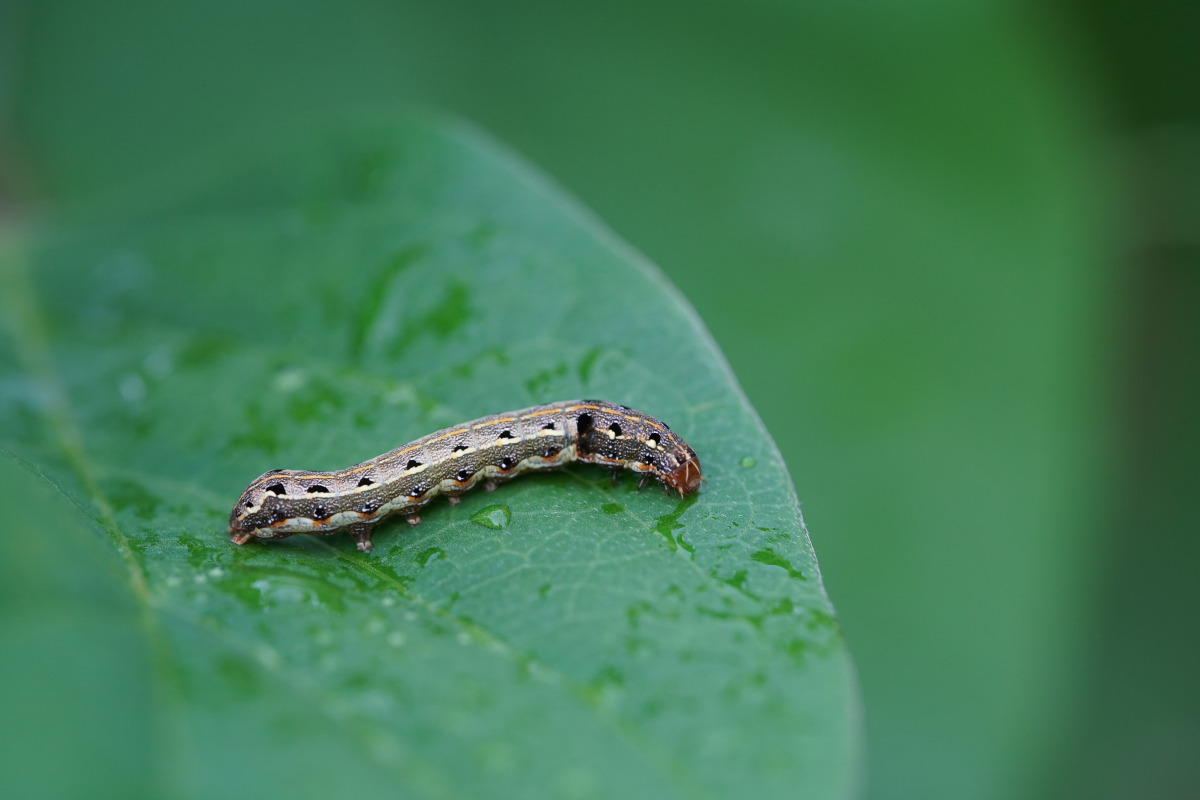
Fall Army Worm Quick Facts
Size
Caterpillars reach 1.25 to 1.5 inches long before pupating into adult moths with a 1.5-inch wingspan.
Color
Larvae vary from light green to dark tan or near-black with pale lengthwise stripes; adults are mottled ash-gray and brown.
How to Identify
Prominent inverted white “Y” marking on the head capsule and four dark spots arranged in a square near the tail end.
Active Season
Active year-round in South Florida, with sharp population spikes occurring during late summer and early autumn.
Indoor or Outdoor
Exclusively outdoor agricultural and turfgrass pests that develop within lawns, pastures, and commercial landscaping.
Day or Night
Caterpillars feed mostly during early morning, late evening, and overnight, sheltering from intense heat during bright daytime hours.
Diet
Turfgrasses such as Bermuda, St. Augustine, and Zoysia, along with corn, forage crops, and various ornamental herbaceous plants.
About Fall Army Worms
Why DIY Fall Army Worm Control Falls Short
Controlling fall armyworms requires precise timing and specialized equipment. Because young larvae remain hidden deep in grass thatch and mature caterpillars consume foliage rapidly, store-bought products often fail to prevent severe turf damage before it occurs.

Lower-Impact Options
Where appropriate, we emphasize targeted turf applications, localized barrier placements, and cultural landscape modifications to protect beneficial soil life while halting caterpillar activity.
The Pest Busterzz Fall Army Worm Treatment Approach
Pest Busterzz delivers targeted outdoor solutions that suppress fall armyworm populations, protect lawn root crowns, and reduce recurring turf damage.
Inspection
We evaluate turf health, measure caterpillar density per square foot, identify developmental stages, and inspect nearby overhangs, fences, and fixtures for egg clusters.
Targeted Treatment
Based on property size and infestation severity, we perform liquid or granular turf applications designed to penetrate thatch, halt caterpillar feeding, and protect surrounding lawn borders.
Monitoring & Follow-Up
We evaluate turf recovery, re-check perimeter thatch lines during high-risk seasons, and adjust treatment protocols if secondary hatches emerge from neighboring properties.
Prevention
We provide lawn maintenance guidance, such as avoiding over-fertilization, adjusting night lighting that attracts flying moths, and maintaining optimal mowing heights to encourage root recovery.
faqs