

Flesh Fly

Pest Busterzz Home Icon

Pest Library

Flesh Fly
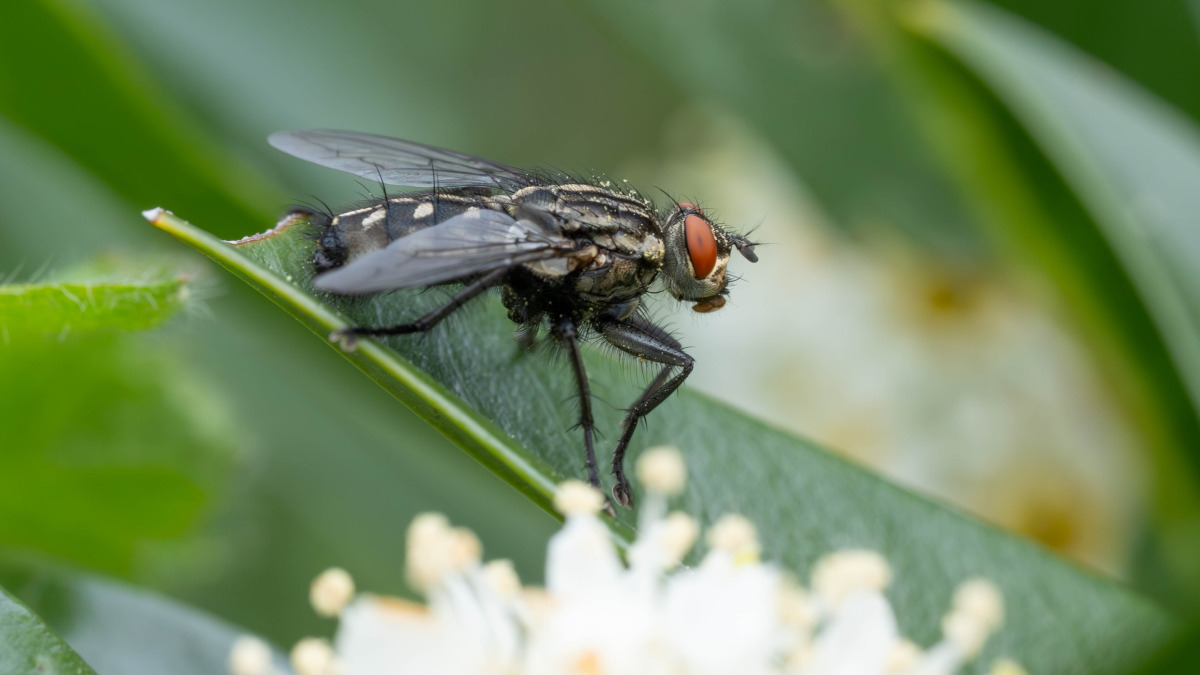
Flesh Fly Quick Facts

Size

Adults typically measure between 0.25 and 0.5 inches long.

Color

Gray body featuring three dark stripes on the thorax and a checkered pattern on the abdomen.

How to Identify

Checkered gray-and-black abdomen, three distinct dark chest stripes, reddish eyes, and a bristly body structure.

Active Season

Active year-round across South Florida, peaking during the warm, wet summer months.

Indoor or Outdoor

Primarily an outdoor fly that enters homes or businesses near breeding sources or exterior lights.

Day or Night

Mostly active during the day, resting on exterior walls and vegetation overnight.

Diet

Larvae feed on animal waste and decaying organic matter; adults feed on liquid sugars like nectar and sap.

About Flesh Flies

Flesh flies belong to the family Sarcophagidae, a widespread group of robust insects recognized by their bristly gray bodies and distinctive checkered abdominal markings. Unlike house flies that deposit eggs, female flesh flies give birth to live larvae, placing them directly onto organic matter to immediately begin feeding.

In South Florida, property owners commonly encounter flesh flies when decaying organic debris, pet waste, or exposed trash accumulates nearby. While they do not bite or cause structural damage, their sudden arrival indoors often signals an overlooked organic source or an animal carcass in a concealed area like a wall void or attic.

Where Are Flesh Flies Commonly Found?

Outdoor Breeding and Resting Sites

Flesh flies thrive outdoors in environments rich in decaying organic material. Frequent outdoor harborages include:

  • Uncovered garbage cans and dumpster enclosures
  • Pet waste left in lawns, yards, or outdoor kennels
  • Compost bins containing decomposing food scraps
  • Small animal carcasses under decks, sheds, or landscape features
  • Moist, decaying mulch beds and dense leaf litter
  • Exterior building walls and fences warmed by direct sunlight

Indoor Encounters

Flesh flies do not naturally establish long-term indoor colonies, but adults frequently slip inside under specific conditions:

  • Attracted to indoor lighting through open doors or torn window screens
  • Gathering near windows while attempting to fly back outdoors
  • Emerging from hidden attics or wall voids where a rodent or bird has died
  • Hovering around indoor compost containers or unwashed trash bins

South Florida Conditions That Support Activity

South Florida’s subtropical climate creates ideal conditions for flesh fly reproduction. Risk factors include:

  • High heat and humidity that accelerate organic decomposition
  • Frequent rain saturated soil, creating moist organic pockets in landscaping
  • Abundant outdoor wildlife, increasing the likelihood of animal waste or carcasses
  • Warm winter temperatures that allow breeding without extended seasonal halts

Flesh Fly Behavior and Attractants

Feeding Habits

Adult flesh flies and their larvae have entirely different dietary requirements:

  • Adult flies feed on carbohydrates like plant nectar, fruit juices, and honeydew
  • Adults also consume liquid nutrients from decaying organic matter and waste
  • Larvae (maggots) feed strictly on decaying animal tissue, carrion, and animal waste

Reproduction and Movement Patterns

Unlike flies that lay unhatched eggs, female flesh flies retain eggs inside their bodies until they hatch internally. They then deposit live larvae directly onto a food source, eliminating the egg incubation phase and allowing larvae to begin feeding immediately. They are strong fliers that travel significant distances following airborne scent cues from decaying waste.

Daily Activity and Light Attraction

Flesh flies are active during the day, frequently basking on sunny exterior walls, screen enclosures, or patio surfaces. At night, they seek quiet shelter on outdoor foliage or beneath eaves. Adults are naturally attracted to bright exterior lighting, which can draw them toward entryways where they easily slip inside.

Flesh Fly Concerns for Property Owners

Nuisance and Hygiene Issues

While flesh flies do not bite, sting, or attack humans or pets, their presence can create significant frustration. Because adults frequently land on animal waste and decaying organic debris before visiting living spaces, they can mechanically transfer bacteria and pathogens onto clean surfaces or food prep areas.

Indication of Underlying Sanitation Problems

A sudden cluster of flesh flies indoors is usually a sign of an undetected issue nearby, such as:

  • A deceased rodent, bird, or small pest trapped in an attic or wall void
  • Accumulated pet waste in hidden yard areas
  • Unsealed trash receptacles or overflowing outdoor waste bins

When Are Flesh Flies Active in South Florida?

In South Florida’s warm climate, flesh flies remain active year-round. However, activity patterns shift depending on weather and environmental factors:

  • Summer Peak: High humidity and intense summer heat accelerate decomposition, leading to rapid larval development and higher fly populations.
  • Rainy Season: Heavy tropical rainfall washes organic material into drainage areas and landscape beds, creating moist breeding pockets.
  • Mild Winters: Unlike cooler climates where flies go dormant, South Florida’s mild winter temperatures allow flesh flies to forage and reproduce continually.

Why DIY Flesh Fly Control Falls Short

Addressing flesh fly activity requires more than just spraying visible adult insects. Do-it-yourself efforts often provide temporary results because they fail to address the underlying breeding source supporting the population.

  • Misidentifying the Breeding Source | Over-the-counter space sprays kill adult flies in the room but do nothing to stop new flies from emerging if the larvae are developing in an unseen attic carcass or outdoor waste bin.
  • Inaccessible Nesting Areas | When larvae develop inside wall voids, under soffits, or within deep crawlspaces, standard consumer sprays cannot safely or effectively reach the breeding site.
  • Incomplete Waste and Sanitation Management | Without addressing local environmental conditions, such as outdoor pet waste or moist organic mulch, adult flies will continue returning to the property.
  • Over-Reliance on Chemical Sprays | Relying solely on chemical applications without physical exclusion, gap sealing, or sanitation corrections leads to recurring infestations over time.
Flesh fly treatment in South Florida

Lower-Impact Options

Whenever appropriate, we prioritize source reduction, targeted trapping, physical exclusion, and sanitation recommendations to minimize unnecessary product use around your property.

The Pest Busterzz Flesh Fly Treatment Approach

Pest Busterzz locates active fly breeding sites, eliminates accessible pest pressures, and provides guidance to prevent flesh flies from returning.

01

Inspection

We evaluate fly activity, locate outdoor organic accumulation sites, inspect structural entry points, and examine voids or attics for potential animal carcass sources.

02

Targeted Treatment

Depending on inspection findings, treatments may involve void applications for hidden breeding areas, targeted exterior treatments on fly resting sites, and selective trapping in high-activity zones.

03

Monitoring & Follow-Up

We evaluate post-treatment activity levels, verify that larval development sources have been addressed, and adjust control measures as required.

04

Prevention

We provide actionable advice on outdoor waste disposal, pet clean-up schedules, screening maintenance, door seal repairs, and light placement to reduce future fly attraction.

Flesh flies are visibly larger than standard house flies, featuring three distinct dark stripes on their thorax and a checkered gray-and-black pattern on their abdomen. House flies are smaller, have four thoracic stripes, and lack the checkered abdominal pattern.

A sudden surge of flesh flies indoors usually indicates that an animal carcass, such as a rodent or bird, is decomposing in a wall void, attic, or crawlspace, or that adult flies are being drawn inside by lights through open doors or screen gaps.

No, flesh flies do not bite people or pets. Adult flies feed strictly on liquid carbohydrates such as nectar, plant sap, and decaying organic juices, while larvae feed on decomposing material.

Yes. Because South Florida maintains mild weather year-round, flesh flies do not experience extended winter dormancy. While populations peak during hot summer months, flies can remain active in winter periods.

Consumer sprays only kill the exposed adult flies you can see. If the larval breeding site inside a wall void or outdoor waste receptacle remains unaddressed, new flies will continue emerging every few days.

Flesh flies do not lay eggs. Female flesh flies deposit live larvae directly onto decaying animal tissue, pet waste, or organic refuse, allowing the maggots to start feeding immediately.

Usually not by itself. Contact sprays primarily affect adult flies that are exposed. They do not eliminate breeding sites or larvae developing inside wall voids, attics, trash bins, or concealed outdoor debris.

Trapping and baiting can help reduce adult populations, but success depends on placement and removing competing odors. Addressing the underlying organic material or carcass is necessary for complete control.

Recurring fly activity indicates that an unaddressed breeding source remains, such as a secondary carcass in a wall void, uncleaned outdoor waste containers, or entry points allowing outdoor flies to re-enter.

You should schedule an inspection if you notice persistent indoor fly activity, suspect an animal carcass in an inaccessible building area, or cannot identify the outdoor source driving the infestation.

Pest Busterzz Home Icon

faqs

Flesh Fly FAQs