

German Cockroach

Pest Busterzz Home Icon

Pest Library

German Cockroach Control in South Florida
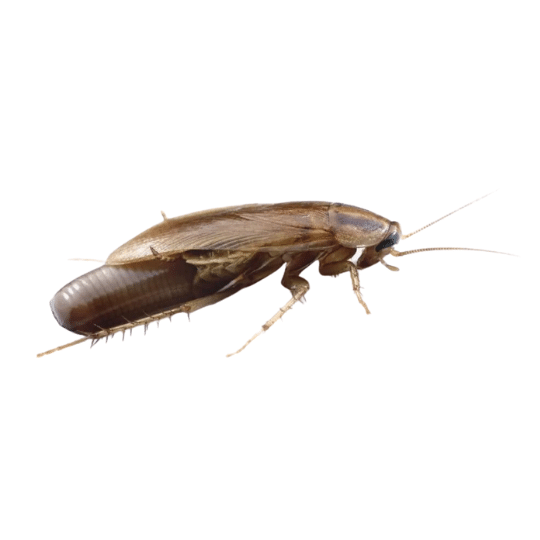
German Cockroach Quick Facts

Size

Approximately 1/2 to 5/8 inch long

Color

Tan to light brown with two dark, parallel stripes behind the head

How to Identify

Small, oval body with long antennae and two dark stripes on the shield directly behind the head

Active Season

Active year-round indoors in South Florida, especially where warmth, moisture, food, and shelter are available

Indoor or Outdoor

Primarily an indoor cockroach found near kitchens, bathrooms, food service areas, and warm equipment

Day or Night

Mostly active at night. Daytime sightings may occur when hiding places are disturbed or populations are crowded.

Diet

Feeds on crumbs, grease, starches, sweets, food residue, pet food, garbage, and many other organic materials.

About German Cockroaches

German cockroaches (Blattella germanica) are small indoor cockroaches recognized by two dark stripes behind the head. They live closely with people and are especially common in kitchens, bathrooms, restaurants, apartments, food-storage areas, and other places that provide dependable warmth, moisture, and food.

Because German cockroaches reproduce quickly and hide in narrow cracks, visible insects may represent only part of the activity. Their droppings, shed skins, and body fragments can contaminate surfaces, and cockroach allergens may trigger allergic reactions or asthma symptoms in sensitive individuals. Effective control depends on identifying harborages, reducing food and moisture, and using a treatment plan matched to the property.

Where Are German Cockroaches Commonly Found?

Primary Indoor Harborages

German cockroaches spend most of their time in tight, protected spaces close to food and water. Common harborages include:

  • Cracks and crevices inside kitchen cabinets
  • Spaces beneath and behind refrigerators
  • Areas around stoves, ovens, and dishwashers
  • Cabinet hinges, drawer tracks, and shelving joints
  • Voids around sinks and plumbing penetrations
  • Warm spaces near motors, compressors, and electrical equipment
  • Bathrooms, laundry rooms, and utility areas
  • Cardboard boxes, paper bags, clutter, and food-storage areas

Their flattened bodies allow adults and nymphs to shelter in gaps only a few millimeters wide, often within a short distance of a dependable food or water source.

High-Risk Commercial Areas

Commercial properties with frequent food handling, deliveries, shared walls, or around-the-clock warmth can provide many hiding and breeding locations, including:

  • Restaurant cook lines and prep stations
  • Break rooms and employee kitchens
  • Grocery, bakery, and food-storage shelving
  • Trash, recycling, and dishwashing areas
  • Vending machines and beverage stations
  • Shared utility chases in apartments and condominiums
  • Cardboard receiving and storage areas
  • Equipment cabinets and warm mechanical spaces

German cockroaches can be moved between properties in grocery bags, boxes, used appliances, furniture, deliveries, and personal belongings. In connected buildings, they may also travel through plumbing, utility, and wall penetrations.

South Florida Conditions That Support Activity

South Florida’s warm climate supports year-round indoor activity, while air-conditioned buildings still provide the stable temperatures German cockroaches prefer. Problems are more likely to persist when a property has:

  • Accessible crumbs, grease, spills, or open food
  • Leaking pipes, condensation, or standing water
  • Unsealed gaps around cabinets, baseboards, and plumbing
  • Clutter that creates undisturbed hiding spaces
  • Overnight pet food or residue beneath appliances
  • Voids around sinks and plumbing penetrations stored against the structure
  • Frequent deliveries or movement of used appliances
  • Shared walls and utility routes between units
  • Inconsistent sanitation in hard-to-reach areas

German Cockroach Behavior and Attractants

Feeding Habits

German cockroaches are opportunistic feeders and may consume:

  • Grease, crumbs, and food residue
  • Starches, sweets, and baked goods
  • Meat, dairy residue, and pet food
  • Garbage and food trapped beneath equipment
  • Soap residue, glue, paper, and other organic material when preferred foods are scarce

Small amounts of residue can support activity, so a kitchen that appears generally clean may still contain enough food beneath appliances, inside cabinet seams, or around equipment to sustain a population.

Breeding Habits

German cockroaches do not build a single nest. Adults and nymphs gather in clusters inside cracks and crevices, often near warmth, food, and moisture. Females carry a purse-shaped egg case until shortly before the young hatch.

Each egg case can contain dozens of eggs, and overlapping generations may be present at the same time. This reproductive pattern helps populations increase quickly when favorable conditions remain available.

Movement and Hiding

German cockroaches usually remain hidden during daylight hours. They commonly move along edges and protected routes such as:

  • Cabinet corners and wall-floor junctions
  • Plumbing and utility lines
  • The undersides of counters and shelves
  • Gaps around appliances and equipment
  • Cracks near sinks, drains, and food preparation areas
  • Shared wall and pipe penetrations
  • Cardboard seams and stored-item voids
  • Dark spaces that remain warm and undisturbed

When disturbed, they run quickly toward cover. Seeing them during the day may indicate crowding, a disrupted harborage, or substantial activity nearby.

Peak Activity

German cockroaches may remain active indoors throughout the year in South Florida. Nighttime activity is usually greatest after kitchens or food-service areas become quiet, although insects may emerge during the day when populations are dense or hiding places are disturbed.

Unlike some larger outdoor cockroaches, German cockroaches do not depend on seasonal flights to spread. They are commonly transported in boxes, bags, appliances, furniture, and deliveries or move between connected rooms and units.

Health, Sanitation, and Property Concerns

Food and Surface Contamination

German cockroaches do not eat structural wood, but they can create sanitation problems by moving between garbage, drains, food residue, stored products, dishes, and preparation surfaces.

Signs that may require attention include:

  • Pepper-like droppings in cabinets or drawers
  • Dark spotting along hinges, corners, or wall edges
  • Shed skins and empty egg cases
  • A stale or musty odor during heavier activity
  • Live nymphs of several sizes
  • Cockroaches around food, dishes, or equipment

Correct identification matters because German cockroaches closely resemble Asian cockroaches. German cockroaches are primarily indoor pests and rarely fly, while Asian cockroaches commonly live outdoors and are strong fliers attracted to light.

Allergens and Indoor Air

Proteins in cockroach droppings, saliva, shed skins, and body parts can cause allergic reactions or trigger asthma symptoms in sensitive individuals. Risk varies by person, but recurring indoor activity should be addressed carefully, especially in homes with children or people who have asthma or known cockroach allergies.

Business and Multi-Unit Concerns

In restaurants, apartments, healthcare settings, and other managed properties, German cockroach activity may spread through deliveries, shared walls, plumbing routes, and equipment. Even localized sightings may warrant inspection because nearby harborages can be difficult to see.

German cockroaches are not known for biting people under ordinary conditions. The more practical concerns are contamination, allergens, rapid reproduction, and the difficulty of reaching every hidden harborage.

When Are German Cockroaches Active in South Florida?

German cockroaches live mainly indoors, so South Florida infestations are not limited to a particular outdoor season. Warm kitchens, bathrooms, utility areas, and food-service spaces can support continuous breeding throughout the year.

Sightings may become more noticeable when:

  • Food or water becomes more accessible
  • A leak or condensation problem develops
  • Appliances or cabinets are moved
  • A neighboring unit is treated or renovated
  • Boxes, groceries, furniture, or used appliances introduce cockroaches
  • Sanitation routines change
  • A growing population outgrows its established hiding places

Storms and seasonal weather may indirectly affect indoor conditions through power interruptions, leaks, increased deliveries, or changes in food storage, but the main drivers are usually indoor access to food, water, warmth, and shelter.

A temporary decline in sightings does not always mean the population is gone. Cockroaches may remain concealed inside cabinets, wall voids, equipment, and other protected areas until conditions or population pressure bring them back into view.

Signs of a German Cockroach Infestation

German cockroaches often remain hidden until a population grows or its shelter is disturbed. Look for small, pepper-like droppings in cabinet corners, drawers, hinges, and areas beneath appliances. Shed skins, empty egg cases, dark smears along travel routes, and a persistent stale odor may also appear. Seeing several sizes of nymphs is especially important because it suggests active breeding nearby. Check warm, narrow areas around refrigerator motors, dishwashers, sinks, plumbing openings, and food-service equipment. Because Asian cockroaches closely resemble German cockroaches, an insect found mainly outdoors or flying toward lights may require professional identification before an indoor treatment plan is chosen.

How DIY German Cockroach Control Might Fall Short

German cockroach control can be difficult because the insects seen in the open may represent only a small portion of a population hidden in cabinets, equipment, cracks, and wall voids. Professional inspection may be the practical next step when sightings recur, nymphs and egg cases are present, daytime activity becomes common, or the problem involves multiple rooms or connected units.

  • Treating Only Visible Cockroaches | Contact sprays may kill exposed insects without reaching egg cases, nymphs, or adults concealed inside narrow harborages.
  • Using Bait Without Proper Placement | Baits work best when placed near active hiding and feeding areas. Poor placement, contamination, competing food, or dried-out bait can reduce performance.
  • Overusing Repellent Sprays | Broad or repeated spraying may scatter activity into new cracks or rooms and can interfere with baiting when products are applied in the same areas.
  • Missing Egg Cases and Hidden Harborages | Females, nymphs, and egg cases can remain inside appliances, cabinets, motors, and structural gaps that surface treatments do not reach.
  • Leaving Food, Water, and Clutter Available | Crumbs, grease, leaks, pet food, cardboard, and crowded storage can continue supporting activity even when insect numbers temporarily decline.
  • Overlooking Connected Areas | In apartments and commercial buildings, cockroaches may move through plumbing and utility routes, making isolated treatment less effective when nearby activity remains unaddressed.
German cockroach treatment in South Florida

Lower-Impact Options

When appropriate, Pest Busterzz may prioritize monitoring, precise bait placement, crack-and-crevice applications, sanitation guidance, and focused treatment of active harborages to reduce unnecessary product use.

The Pest Busterzz German Cockroach Treatment Approach

Pest Busterzz begins with the conditions found at the property rather than assuming every German cockroach problem requires the same treatment plan.

01

Inspection

We confirm the cockroach species, evaluate the level of activity, and inspect cabinets, appliances, plumbing areas, food-storage spaces, equipment, cracks, and other likely harborages.

02

Targeted Treatment

Based on inspection findings, treatment may include targeted baiting, crack-and-crevice applications, localized harborage treatment, monitoring devices, and sanitation or exclusion recommendations. Placement depends on where cockroaches are hiding, feeding, and breeding.

03

Monitoring & Follow-Up

We evaluate activity and treatment response, check monitoring points, and adjust placement or recommendations when newly discovered harborages or contributing conditions are found.

04

Prevention

Recommendations may include repairing leaks, cleaning grease and food residue from hard-to-reach areas, storing food securely, reducing cardboard and clutter, sealing gaps, and checking incoming boxes or used appliances.

Yes. German cockroaches are common indoor pests in Florida homes, apartments, restaurants, and other buildings. Because they live near people and indoor resources, they can remain active throughout the year rather than following a short outdoor season.

Adults are usually about 1/2 to 5/8 inch long, tan to light brown, and marked with two dark parallel stripes directly behind the head. Nymphs are smaller, darker, and wingless but show a similar striped pattern.

The two species look very similar. German cockroaches primarily live indoors and rarely fly, while Asian cockroaches usually live outdoors, fly readily, and are attracted to lights. Location and behavior are often more useful than appearance alone.

Kitchens provide food residue, water, warmth, and many narrow hiding spaces. Inspect beneath appliances, around sinks, inside cabinet corners, and near motors or plumbing rather than assuming the insects are only crossing an open countertop.

Not always, but one indoor sighting can indicate additional activity because German cockroaches spend much of their time hidden. Finding nymphs, droppings, egg cases, or cockroaches during the day makes a nearby breeding population more likely.

German cockroaches are not known for routinely biting people. The more relevant concerns are food and surface contamination, unpleasant odors during heavier activity, and allergens from droppings, saliva, shed skins, and body fragments.

A spray may kill exposed cockroaches but miss insects and egg cases hidden in narrow cracks, appliances, and equipment. Some applications may also scatter activity or interfere with bait. Recurring sightings often require a more complete inspection and targeted plan.

Bait can be useful when it is fresh, appropriately selected, and placed close to active harborages. Competing food, poor sanitation, contamination, and repellent sprays applied nearby can reduce acceptance and overall results.

Recurring activity may mean hidden harborages or egg cases remained, treatment did not reach every affected area, food or water sources are still available, or cockroaches were reintroduced through deliveries, belongings, or connected units.

Consider professional service when you see nymphs or egg cases, notice daytime activity, find cockroaches in multiple rooms, manage a food-service or multi-unit property, or continue seeing activity after sanitation and carefully used consumer products.

Pest Busterzz Home Icon

faqs

German Cockroach FAQs