

Granary Weevil

Pest Busterzz Home Icon

Pest Library

Granary Weevil
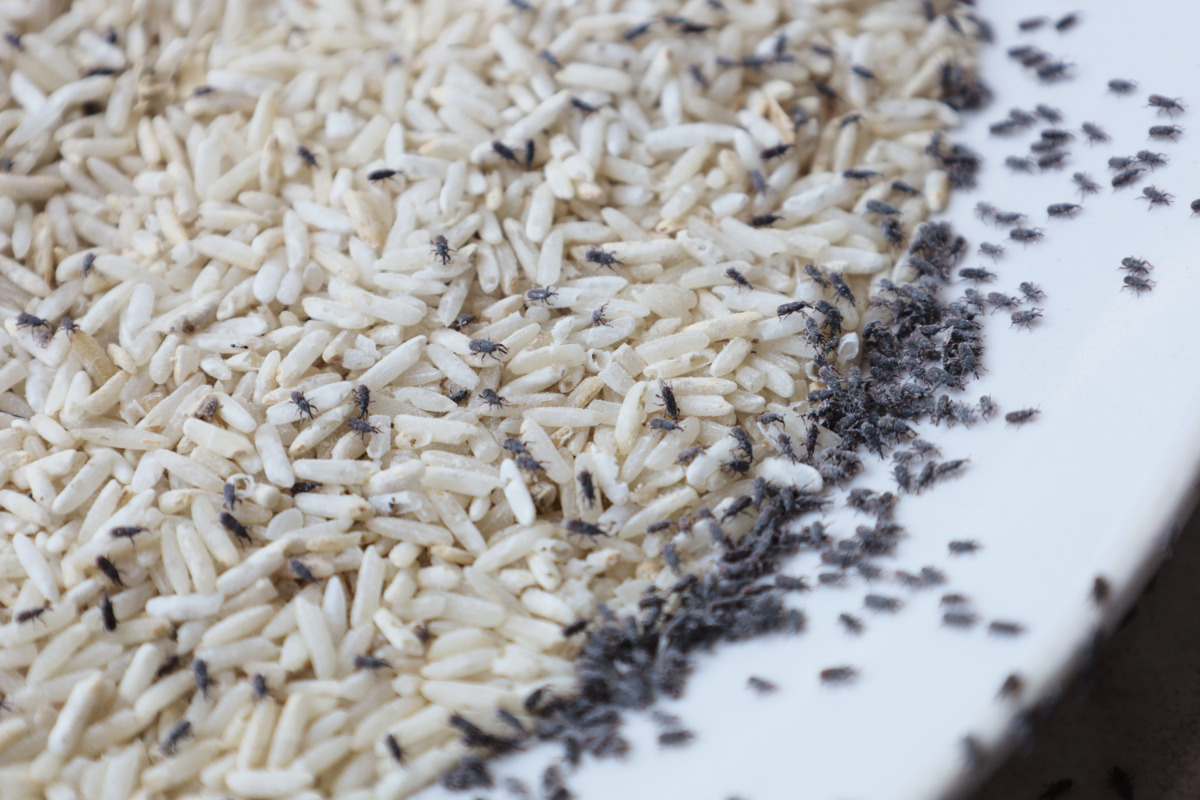
Granary Weevil Quick Facts

Size

Adults typically measure about 1/8 to 3/16 inch long (roughly 3–5 mm), with size influenced by the grain they develop in.

Color

Shiny reddish-brown to nearly black or dark chestnut brown; lacks the pale spots seen on related weevils.

How to Identify

Distinctive elongated snout, cylindrical body, elbowed antennae, and oval pits on the thorax; adults cannot fly and often play dead when disturbed.

Active Season

May remain active year-round in South Florida’s warm indoor conditions.

Indoor or Outdoor

Primarily an indoor stored-product pest found in pantries, kitchens, and food-storage areas; rarely survives outdoors away from stored grain.

Day or Night

Active at various times, often moving through stored products throughout the day when conditions allow.

Diet

Whole cereal grains such as wheat, barley, rye, oats, rice, and corn; may also infest pasta, birdseed, and similar dry goods.

About Granary Weevils

The granary weevil (Sitophilus granarius) is a small beetle specialized for life in stored grain. Homeowners and business owners in South Florida most often notice the shiny, dark adults with their characteristic snout crawling near packages of flour, cereal, rice, or other dry foods. These insects arrive almost exclusively through already-infested products brought into the property. Once established, they can multiply inside whole kernels, reducing the quality and quantity of stored food. The main concern for South Florida properties is contamination and waste of pantry staples rather than structural damage or health risks. Correct identification helps distinguish this flightless species from the more common rice weevil.

Where Are Granary Weevils Commonly Found?

Indoor Storage Areas

Granary weevils live almost exclusively in human-stored grain and dry food products. They do not establish outdoor populations in the landscape the way many other pests do. Typical indoor locations include:

  • Kitchen pantries and cupboards
  • Bulk food bins and sealed or unsealed dry-goods containers
  • Birdseed containers and pet-food storage
  • Decorative dried corn or whole-grain displays
  • Any tightly packed dry goods left undisturbed for weeks or months

Females prefer intact whole kernels large enough to support larval development. Cracks between shelf boards, seams in packaging, and poorly sealed containers give adults places to hide and allow populations to persist even after obvious bags are discarded.

South Florida Conditions That Support Activity

In South Florida, warm kitchen and storage temperatures combined with humidity create favorable conditions for continuous development once an infested item is brought inside. Risk increases when a property has:

  • Long-term storage of whole grains, rice, wheat, or cornmeal
  • Opened packages left in warm, humid pantries
  • Bulk purchases of dry goods that remain unused for extended periods
  • Birdseed or decorative grains stored indoors
  • Limited rotation of pantry stock

Granary Weevil Behavior and Feeding

Feeding and Reproduction

Adult females use their strong snouts to chew a small hole in a grain kernel, deposit a single egg, and seal the opening with a gelatinous plug. The legless, white larva feeds entirely inside the kernel, hollowing it out before pupating and emerging as an adult through a ragged exit hole. Because the immature stages remain hidden, infestations often go unnoticed until adults appear or kernels show the characteristic holes. Adults also feed on grain dust and broken kernels.

Movement and Response to Disturbance

Adults cannot fly, so movement within a building occurs by walking or by being carried in contaminated products. When disturbed, adults commonly tuck their legs and remain motionless. Populations grow steadily in warm, moderately humid conditions typical of South Florida pantries.

How Infestations Begin

These insects arrive almost exclusively inside already-infested packages of whole grain, rice, pasta, or birdseed. Once inside a pantry, they can spread to neighboring containers if packaging is not airtight.

Damage and Concerns

Food Contamination and Loss

Granary weevils primarily damage and contaminate stored food. Larvae and adults reduce whole grains to hollow shells filled with frass, making the product unappetizing or unusable. Heavy activity can lead to noticeable heating and moisture buildup in bulk grain, which may encourage mold.

Health and Structural Risk

These insects do not bite or sting people or pets, and they are not known to transmit human diseases. They do not attack wood, fabrics, or structural materials. The main issues for homeowners, property managers, and food-handling businesses are food loss, the need to discard infested items, and the time required to locate and remove all affected packages. In commercial settings, visible weevils can raise sanitation or regulatory concerns even when the actual health risk is low.

When Are Granary Weevils Active in South Florida?

In South Florida’s subtropical climate, granary weevils can remain active year-round inside heated or air-conditioned buildings where temperatures stay warm enough for development. Reproduction slows in cooler storage conditions but rarely stops completely in typical home or restaurant pantries.

Higher moisture content in grain and temperatures in the 70–90 °F range favor faster life cycles, sometimes completing a generation in about five weeks. Sudden appearance of adults often follows the introduction of a newly purchased bag of rice, wheat, cornmeal, or birdseed that already contained hidden larvae. Outdoor activity is essentially nonexistent because the species has lost the ability to fly and depends entirely on stored products.

Why DIY Granary Weevil Control May Fall Short

Granary weevils can be difficult to eliminate completely because the insects seen on shelves may represent only a fraction of the population still developing inside kernels. Professional service becomes the practical next step when activity returns after cleaning, multiple packages are affected, or identification is uncertain.

  • Discarding Only Visible Packages | Removing the most obviously damaged bags often leaves eggs and larvae inside other whole-grain items that still look normal on the outside.
  • Missing Hidden Adults | Adults can hide in shelf crevices, under paper liners, or in packaging seams and reappear after cleaning.
  • Incomplete Sanitation | Residual grain dust or overlooked containers allow new generations to continue developing.
  • Relying on Contact Sprays Alone | Store-bought sprays may kill visible adults without reaching insects still developing inside kernels.
  • Reinfestation from New Purchases | A subsequent bag of rice, wheat, or birdseed can reintroduce the pest into a cleaned pantry.
granary weevil treatment in South Florida

Lower-Impact Options

When appropriate, Pest Busterzz emphasizes sanitation, exclusion of remaining food sources, and precise placement of materials rather than broad applications, reducing unnecessary product use while addressing the biology of this internal feeder.

The Pest Busterzz Granary Weevil Treatment Approach

Pest Busterzz focuses on accurate identification, locating the source of activity, and correcting the conditions that allow granary weevils to persist in stored products.

01

Inspection

Pest Busterzz technicians identify the weevil species, examine pantry shelves, bulk containers, and nearby storage areas, and look for exit holes, frass, and residual grain that may support continued development.

02

Targeted Treatment

Treatment plans are based on the specific findings and may include removal guidance for infested materials, localized applications to cracks and crevices where adults hide, and recommendations for sealing remaining dry goods. The approach is matched to the level of activity and the types of products present.

03

Monitoring & Follow-Up

Activity is checked after initial steps, results are evaluated, and any newly discovered packages or residual populations are addressed. The need for additional visits depends on the volume of stored products and conditions found on the property.

04

Prevention

Recommendations focus on transferring dry goods into airtight containers, rotating stock so older items are used first, inspecting new purchases, thoroughly vacuuming and wiping shelves, and avoiding long-term storage of opened whole-grain products in warm, humid areas.

Granary weevils are shiny dark brown to black, lack the four pale spots on the wing covers, have oval pits on the thorax, and cannot fly. Rice weevils are usually duller, show light spots, and are capable of flight. Professional confirmation is helpful when numbers are low or specimens are damaged.

They almost always arrive inside an already-infested package of whole grain, rice, pasta, or birdseed. Warm indoor temperatures allow hidden larvae to complete development and emerge as adults days or weeks after the item was purchased.

No. This species is fully adapted to stored products and is not found establishing colonies in yards, trees, or soil. Spread occurs through movement of infested food rather than outdoor flight or migration.

Not necessarily, but it is a strong signal to inspect all whole-grain and dry-food items carefully. Because larvae stay inside kernels, several packages may contain insects even if only a few adults are visible.

They do not attack wood, fabrics, or structural materials, and they do not bite or sting. The concern is limited to contamination and loss of stored food products.

Adults can live several weeks to a few months under some conditions, but populations decline rapidly once all suitable whole-grain sources are removed and residual dust is cleaned.

Thorough removal of infested items combined with deep cleaning often resolves small problems. Recurring activity, bulk commercial storage, or uncertainty about identification makes professional inspection a practical next step.

Schedule an inspection if adults keep appearing after cleaning, if multiple food areas are affected, or if you need help confirming the species and locating hidden sources in a home or business.

Pest Busterzz Home Icon

faqs

Granary Weevil FAQs