
Pest Library
Hunting Billbug
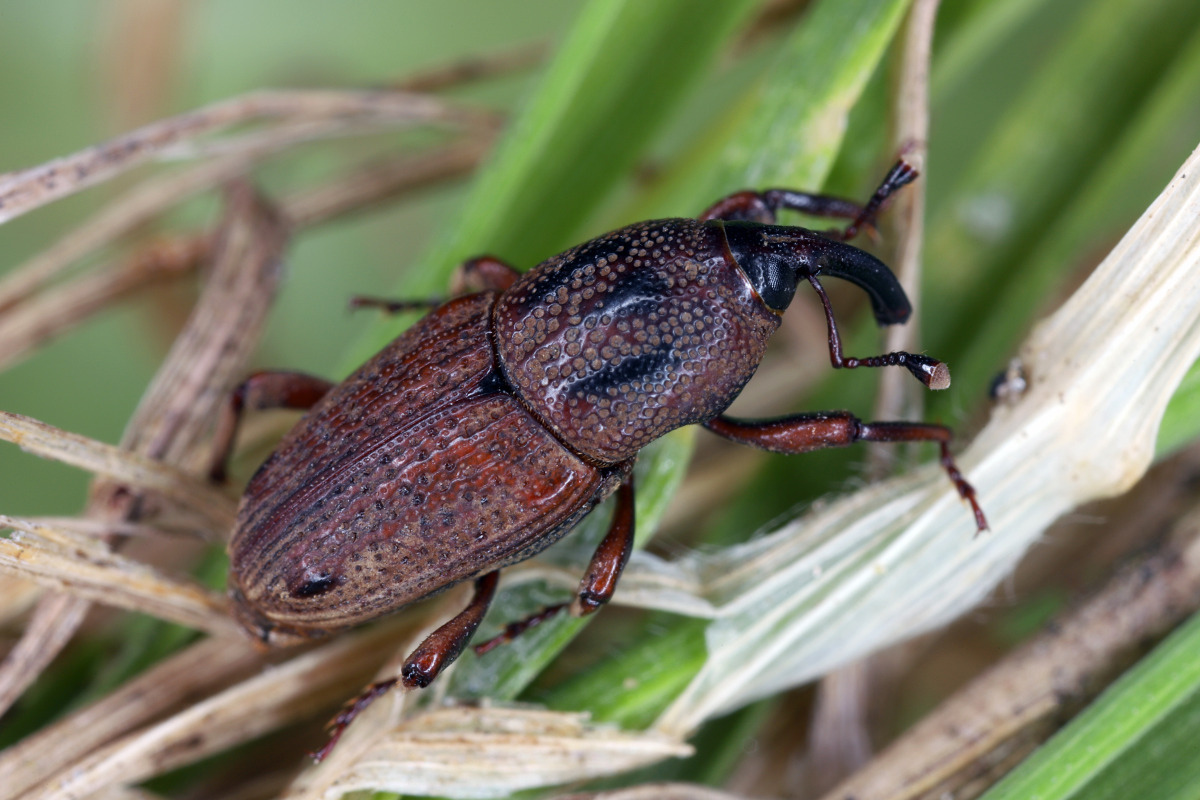
Hunting Billbug Quick Facts
Size
Adults measure 1/4 to 3/8 inch long; larvae reach up to 1/2 inch.
Color
Dark grayish-black to reddish-brown, frequently encrusted with dry soil.
How to Identify
Curved, elongated snout and a Y-shaped smooth line flanked by parenthesis-like markings on the thorax.
Active Season
Active year-round in South Florida, with feeding and reproduction surging from spring through autumn.
Indoor or Outdoor
Primarily an outdoor turfgrass pest that may accidentally wander onto patios, driveways, or lower entryways.
Day or Night
Mostly active at night when adults feed on turf blades; adults hide in thatch and soil crevices during the day.
Diet
Warm-season turfgrasses, with larvae feeding internally on stems, crowns, and roots while adults chew leaf tissue.
About Hunting Billbugs
Recognizing the Signs of Billbug Damage
Confirming Hunting Billbug activity requires evaluating specific physical evidence within the turf structure. Because damaged grass turns brown in expanding patches, property owners often confuse billbugs with fungal disease, drought, or chinch bugs.
A reliable indicator is finding hollowed grass stems filled with fine, sawdust-like droppings called frass, left behind by tunneling larvae. As feeding progresses to the roots, affected grass loses its anchorage. Performing a simple “tug test” by grabbing damaged blades and pulling upward will cause infested turf to lift cleanly off the soil without resistance, resembling an unattached piece of carpet. Additionally, small notched chew marks along lower leaf blades indicate adult nighttime feeding.
Why DIY Hunting Billbug May Fail
Managing Hunting Billbugs independently can prove challenging due to their subterranean habits and protective turf environments. Professional intervention becomes practical when turf damage continues to spread, watering fails to green up brown patches, or treatments fail to reach subterranean larvae.

Lower-Impact Options
When appropriate, we prioritize thatch-penetrating localized applications, cultural watering adjustments, and targeted sub-surface placement to minimize product usage across your lawn.
The Pest Busterzz Hunting Billbug Treatment Approach
Pest Busterzz focuses on evaluating root damage, controlling active billbug generations in the soil, and implementing cultural lawn management to encourage turf recovery.
Inspection
We evaluate affected lawn zones, perform tug tests to check root anchorage, inspect stem crowns for larval frass, and confirm whether adult billbugs or larvae are driving turf damage.
Targeted Treatment
Based on inspection findings, we apply targeted treatments designed to filter through dense thatch into the subterranean root layer, suppressing active larvae while addressing surface-active adults.
Monitoring & Follow-Up
We evaluate lawn response following application, check for newly hatching larval cycles, and adjust our management strategy as seasonal moisture and temperature shifts dictate.
Prevention
Recommendations may include managing lawn thatch through aeration, avoiding over-fertilization, adjusting irrigation schedules to reduce surface dampness, and setting proper mowing heights.
faqs
Hunting Billbug FAQs
Protecting your South Florida property begins with accurate pest identification and a customized management strategy. If brown, rootless turf patches are spreading across your lawn, contact Pest Busterzz today to schedule a thorough lawn inspection and stop billbug damage before costly resodding becomes necessary.