

Pest Library
Lesser Grain Borer
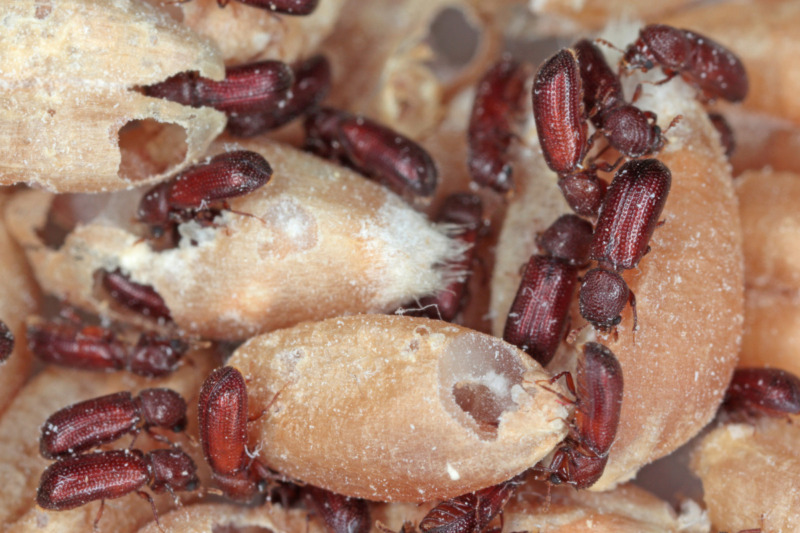
Lesser Grain Borer Quick Facts
Size
Adults measure about 1/13 to 1/8 inch (2–3 mm) long.
Color
Dark brown to black.
How to Identify
Slender, cylindrical body with the head hidden under a rough, pitted shield; wing covers show distinct rows of pits.
Active Season
Year-round in South Florida’s warm climate, with development speeding up in high heat.
Indoor or Outdoor
Primarily indoors in stored food products; strong fliers that may also appear outdoors near grain or packaging.
Day or Night
Active at various times; flight often peaks near sunrise and in the hours before sunset.
Diet
Whole grains such as wheat, corn, rice, and sorghum, plus birdseed, nuts, beans, dried fruit, and certain spices or cereal products.
About Lesser Grain Borers
Why DIY Lesser Grain Borer Control May Fail
Home treatments frequently miss the internal stages of this pest. Professional service becomes the practical next step when activity returns after cleaning, the source cannot be fully identified, or multiple packages and storage areas are involved.

Lower-Impact Options
When appropriate, Pest Busterzz prioritizes precise source elimination, thorough sanitation, secure storage recommendations, and monitoring so that product use remains limited to what the inspection supports.
The Pest Busterzz Lesser Grain Borer Treatment Approach
Pest Busterzz focuses on accurate identification, locating breeding sources, and recommending practical steps that reduce the chance of activity returning.
Inspection
We identify the pest, locate primary food sources, and evaluate the extent of activity. Technicians examine pantry shelves, storage rooms, birdseed or grain containers, and nearby packaging for powder, husks, odor, and live insects.
Targeted Treatment
The plan is based on inspection findings and may include removal or isolation of infested materials, localized treatments in storage areas, sanitation guidance, and exclusion measures to limit further introduction.
Monitoring & Follow-Up
Follow-up visits check whether activity has declined, confirm that remaining food sources are secure, and address any newly discovered pockets of infestation. Timing depends on the conditions found at the property.
Prevention
Store whole grains, birdseed, nuts, and dried goods in tightly sealed glass, metal, or heavy plastic containers. Rotate stock, inspect new packages, keep storage areas clean of spilled grain and dust, and promptly discard or isolate any product showing powder, odor, or damaged kernels.
faqs
Lesser Grain Borer FAQs
“`