

Lubber grasshopper

Pest Busterzz Home Icon

Pest Library

Lubber Grasshopper
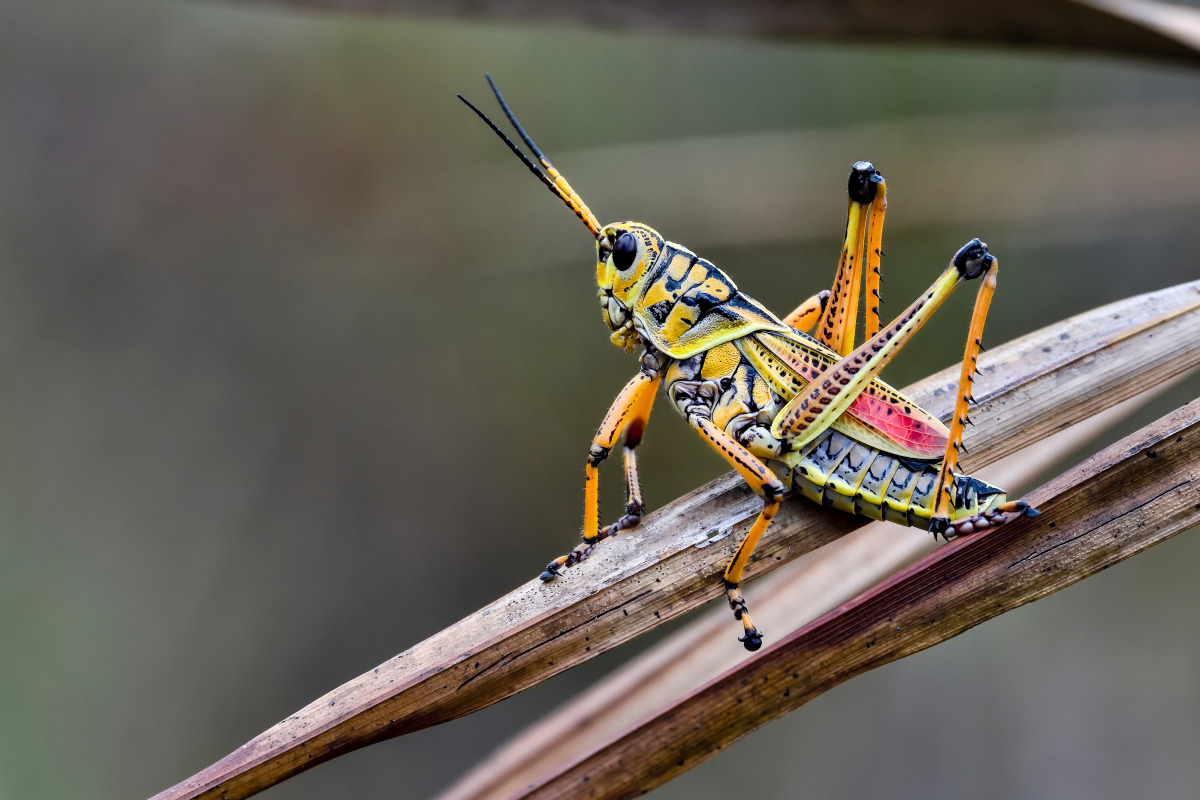
Lubber Grasshopper Quick Facts

Size

Adults typically measure 1¾–3½ inches long; females are usually larger than males

Color

Adults are often yellow or tawny with black accents; nymphs are mostly black with a yellow, orange, or red stripe down the back

How to Identify

Large, heavy-bodied, slow-walking grasshoppers with short wings that cannot fly; strong climbers that often rest on plants

Active Season

Present much of the year in South Florida, with peak numbers often in summer

Indoor or Outdoor

Primarily outdoor; most often found in gardens, landscapes, and nearby vegetation

Day or Night

Active during the day; may climb vegetation at night

Diet

Broadleaf plants, including many ornamentals, vegetables, citrus, and certain weeds

About Lubber Grasshoppers

The eastern lubber grasshopper, Romalea microptera, is a large, native grasshopper common across South Florida. Adults are colorful and heavy-bodied with short wings that prevent flight, while younger stages look quite different—mostly black with a bright stripe. Property owners often notice them walking slowly through gardens, climbing shrubs, or clustered on preferred plants. In residential and commercial landscapes they may appear when moist, weedy areas or dense undergrowth are nearby. The main concern for homeowners and property managers is the foliage damage they can cause to ornamental plantings, vegetable gardens, and citrus when numbers build up.

Where Are Lubber Grasshoppers Commonly Found?

Preferred Outdoor Areas

Eastern lubber grasshoppers favor low, moist sites such as areas near irrigation ditches, drainage swales, ponds, and dense undergrowth in pastures, woods, or hammocks. Typical locations include:

  • Low, wet areas along ditches and ponds
  • Dense undergrowth and weedy edges
  • Pastures, woods, and hammocks
  • Flower beds and ornamental plantings
  • Vegetable gardens and citrus trees
  • Areas with preferred broadleaf plants

Nymphs hatch from eggs laid in the soil and often remain near those sites at first, then disperse into gardens, landscapes, and cultivated areas.

Indoor Presence

These grasshoppers do not typically nest inside structures. Activity remains outdoors unless individuals wander onto porches, walkways, or near doorways while moving between plants.

South Florida Conditions That Support Activity

South Florida properties can provide favorable conditions because of the region’s warmth, humidity, and long growing season. Risk may increase when a property has:

  • Moist or weedy edges near gardens
  • Irrigation that keeps soil and vegetation damp
  • Preferred ornamentals such as amaryllis, crinum, and related plants
  • Vegetable beds or citrus plantings
  • Dense undergrowth or unmowed areas adjoining the landscape

Lubber Grasshopper Behavior and Feeding

Feeding Habits

These grasshoppers feed by chewing irregular holes in leaves or stripping foliage. They often start at plant tips or edges and then shift to nearby plants. Preferred foods include:

  • Amaryllis, crinum, and related ornamental plants
  • Peas, lettuce, kale, beans, and cabbage
  • Certain citrus and other landscape plants
  • A wide range of broadleaf weeds and ornamentals

Movement and Grouping

Eastern lubber grasshoppers move mainly by walking and climbing rather than jumping or flying. Nymphs are highly gregarious and may appear in clusters shortly after hatching. Adults are longer-lived and may be seen mating or laying eggs in suitable soil.

Defensive Behavior

When disturbed, they may spread their short wings, hiss, or release a foul-smelling froth as a defense. They are active by day and frequently climb vegetation, especially as evening approaches.

Peak Activity

Activity often becomes more noticeable after spring hatching and during the warmer summer months when both nymphs and adults are feeding on preferred plants.

Damage and Concerns

Landscape and Garden Damage

The primary issue with eastern lubber grasshoppers is landscape and garden damage. In sufficient numbers they can defoliate or heavily chew preferred ornamentals such as amaryllis, crinum, and related plants, as well as certain vegetables and citrus.

Damage is usually cosmetic or limited to specific plantings rather than structural. They do not infest homes or damage building materials.

Health and Safety

They do not bite or sting in a medically significant way and are not associated with disease transmission. Their bright coloration and defensive secretions discourage many predators, but the insects themselves are mainly a nuisance and plant pest rather than a medical or structural concern.

When Are Lubber Grasshoppers Active in South Florida?

In southern Florida, nymphs or adults can be present through much of the year. Numbers often rise after spring hatching and reach higher levels in summer, especially July and August.

Activity may increase during:

  • Spring hatching periods
  • Warm, humid summer months
  • Periods when preferred plants are actively growing
  • Times when eggs laid the previous year begin to hatch

Eggs overwinter in the soil and hatch when temperatures warm. Sudden increases in visible activity frequently coincide with the emergence of large groups of nymphs or the movement of maturing individuals into gardens and landscapes from nearby moist or weedy habitats.

Why DIY Lubber Grasshopper Control May Fall Short

Hand-picking or simple sprays may reduce visible adults or older nymphs, yet several factors often limit lasting results. Professional service becomes the better next step when numbers are high, plants are already being heavily damaged, or the source of ongoing reinfestation is unclear.

  • Missing the Egg Stage | Eggs remain buried in the soil and continue to hatch later, so removing only the visible insects does not stop the next wave of nymphs.
  • Treating Only Visible Insects | Nymphs can be numerous and widely dispersed by the time they are noticed. Focusing on a few plants while overlooking surrounding habitat allows activity to return.
  • Adults Are Harder to Control | Treatments that work better on young stages become less effective once the grasshoppers mature into large, resilient adults.
  • Reinfestation from Nearby Habitat | Moist or weedy areas surrounding the property can continuously supply new individuals that move into gardens and landscapes.
  • Overlooked Preferred Plants | Activity often concentrates on specific ornamentals and vegetables. Missing those key plants can leave the main feeding sites untreated.
lubber grasshopper treatment in South Florida

Lower-Impact Options

Where suitable, emphasis is placed on physical removal guidance, targeted placement, habitat modification, and monitoring rather than broad applications.

The Pest Busterzz Approach to Lubber Grasshopper Treatment

Pest Busterzz focuses on identifying the grasshoppers present, evaluating the extent of activity, and addressing the conditions that support feeding and reinfestation.

01

Inspection

We identify the grasshoppers present, assess the extent of activity, locate preferred feeding plants, and check nearby moist or vegetated areas that may support hatching and dispersal.

02

Targeted Treatment

The service plan is shaped by what the inspection reveals—activity level, plant types affected, and site conditions. Options may include localized treatment of active areas, habitat adjustment recommendations, and exterior management focused on reducing numbers where they are concentrated.

03

Monitoring & Follow-Up

Follow-up visits evaluate whether activity has declined, watch for new hatchlings or dispersing individuals, and adjust recommendations if conditions change. Timing depends on the life stage found and the property’s surroundings.

04

Prevention

Practical steps include reducing dense undergrowth and excess moisture near garden beds, monitoring preferred plants in spring for early clusters of nymphs, and maintaining tidy landscape edges so new arrivals are easier to notice.

Yes. Eastern lubber grasshoppers are native and common in central and southern Florida. Nymphs or adults can be present through much of the year, with higher numbers often seen in summer.

Adults are large, slow-moving, and have short wings that do not allow flight. Color is typically yellow or tawny with black markings, though darker forms occur. Nymphs look different—mostly black with a bright stripe—and are often seen in groups.

Nymphs start nearly black with a yellow, orange, or red stripe and change appearance as they molt. Many people initially assume they are a different species until the insects mature into the familiar colorful adults.

They are outdoor insects that feed on plants. Individuals may occasionally walk onto patios or near doorways while moving between vegetation, but they do not establish indoors.

A single adult may cause limited chewing. Clusters of nymphs or larger groups of adults, however, can produce noticeable defoliation on preferred plants. Checking nearby moist or weedy areas helps gauge the overall situation.

They do not bite or sting in a medically significant way and are not associated with disease transmission. Their main impact is plant damage. The defensive froth they can release is unpleasant but not a serious health concern under normal contact.

Eggs remain in the soil and hatch later, and new individuals can move in from surrounding habitat. Removing only the visible insects without addressing nearby breeding or feeding sites often allows numbers to rebuild.

If plant damage is becoming extensive, clusters of nymphs appear repeatedly, or the source of ongoing activity is hard to locate, an inspection can identify the contributing conditions and outline practical management options.

Pest Busterzz Home Icon

faqs

Lubber Grasshopper FAQs