
How to Keep Pests Out During a Home Remodel
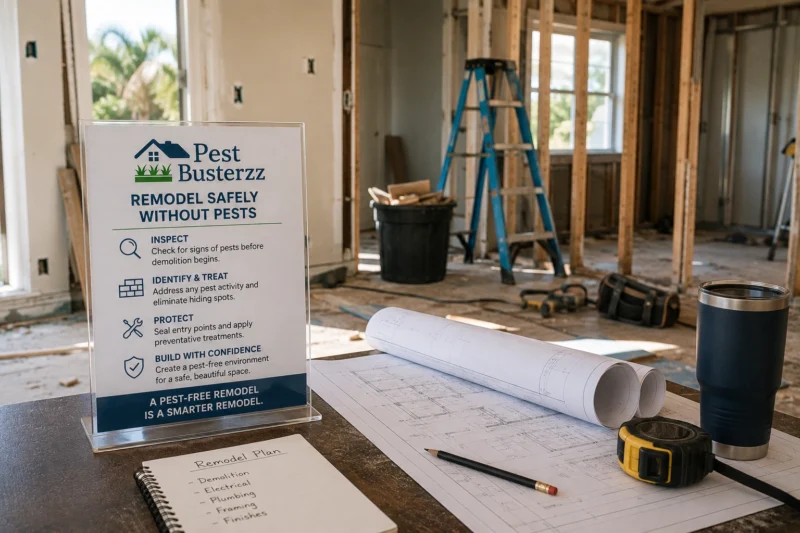
Home remodeling can change a property faster than a normal maintenance routine can keep up with. Walls open, flooring is removed, materials sit in new places, and doors may stay open while crews move in and out. Those changes do not automatically create a pest problem, but they can expose hidden conditions or create new paths into the home.
A practical remodeling plan treats pest prevention as part of site control: inspect before work begins, manage openings and debris while the project is active, keep food and moisture under control, and check the work areas before they are closed up.
Walk the project before work begins
Before demolition or installation, note visible gaps, water staining, leaks, damaged screens, door problems, stored materials, and areas that will become inaccessible after the work. Pay attention to kitchens, bathrooms, utility penetrations, garages, attics, crawl spaces, and exterior walls when those areas are part of the project.
Do not treat a pre-remodel walk-through as a code inspection, structural assessment, or formal clearance. It is a practical opportunity to record conditions and decide what needs a maintenance professional, contractor, or pest professional before the project moves forward.
Control openings as the work progresses
Construction can create temporary openings around doors, windows, pipes, cables, vents, and wall cavities. Keep openings covered or closed when the project allows, and make sure the contractor knows which areas need temporary protection. Never block a required vent, drain, electrical component, or safety system just to keep pests out.
At the end of each work period, check whether materials or tools are leaving an entry point open. If a permanent seal will be installed later, record the location so it is not forgotten when the wall, cabinet, or floor is finished.
Keep debris, food, and materials organized
Remove food waste, drink containers, packaging, and construction debris regularly. Do not let cardboard, wood scraps, insulation, or discarded materials collect in damp corners or against exterior walls. Store materials off wet surfaces and keep them as dry as the project conditions allow.
During a remodel, a home can look disorganized for weeks. Create one place for trash, one place for clean materials, and one place for items that need to be removed. Fewer hiding places make it easier to spot a leak, droppings, gnaw marks, damaged packaging, webbing, or live activity.
Watch moisture and drainage
Plumbing changes, open walls, rain, condensation, and damaged flooring can introduce moisture at exactly the time a home is less protected. Address leaks promptly, keep wet materials from sitting in place, and route drainage or irrigation away from the building when the property setup allows it.
Moisture can damage a project even when no pest is present. If a damp condition keeps returning, ask the contractor or maintenance professional to locate the source rather than covering it with a finish material.
Review the home before closing walls and cabinets
Before an area is sealed, take a final look at accessible corners, utility openings, baseboards, cabinets, and stored materials. Confirm that debris is removed, food and waste are controlled, and planned seals or screens are installed according to the project scope.
If a contractor exposes evidence that may involve termites, rodents, cockroaches, ants, or another pest, document what was found and pause the decision that would hide it until the right professional has reviewed the condition. A photo may help, but do not diagnose a pest or structural problem from a photo alone.
Know when to bring in a pest professional
Ask for help when signs repeat, an opening cannot be inspected safely, a project exposes a hidden nest or damaged material, or a concern involves an area that will soon be inaccessible. Explain the project stage, the location, what was observed, recent moisture or demolition, and the access window.
Pest Busterzz provides South Florida pest-control services. The pest-control information page is a general starting point. If the concern involves a particular category, review termite control, rodent control, cockroach control, or ant control. Use the contact page to request current information about the property and project.
After the remodel is complete
Keep the prevention work going after the last cabinet is installed. Remove leftover packaging, keep food sealed, empty waste regularly, check for plumbing or drainage issues, and review new doors, screens, wall openings, and utility penetrations. If landscaping, grading, or exterior lighting changed, add those conditions to the property’s maintenance review.
A renovation is a useful time to update the home’s records. Note what was changed, where access points were closed, which areas remain difficult to inspect, and who should be contacted if signs return.
Remodeling pest-prevention checklist
- Walk the project and record moisture, gaps, damaged screens, and areas that will be covered.
- Keep temporary openings protected when the work allows.
- Remove food waste, cardboard, and construction debris regularly.
- Store materials dry and away from unnecessary wall or floor contact.
- Address leaks and recurring moisture instead of covering them.
- Review accessible areas before walls, cabinets, and floors are closed.
- Ask a professional to evaluate recurring or unclear evidence.
Frequently asked questions
Does remodeling cause pest infestations?
Not automatically. Remodeling can disturb hidden areas, create temporary openings, and change moisture or waste conditions. Those changes are reasons to inspect and maintain the site, not proof that pests are present.
Should I spray before demolition?
Do not apply a product simply because demolition is planned. The appropriate response depends on the evidence, the product label, the occupants, the project area, and the provider’s recommendations.
What if we find insects after a wall is opened?
Record the location and what was observed, keep people away from an unsafe area, and ask the contractor or a qualified pest professional to review it. Avoid moving materials through clean areas or closing the space before the condition is understood.
Is a pre-remodel pest inspection required?
Requirements vary by project, property, and local rules. Even when an inspection is not required, a pre-work review can help identify conditions that would be harder to assess after the renovation.