

Rice Weevil

Pest Busterzz Home Icon

Pest Library

Rice Weevil Control in South Florida
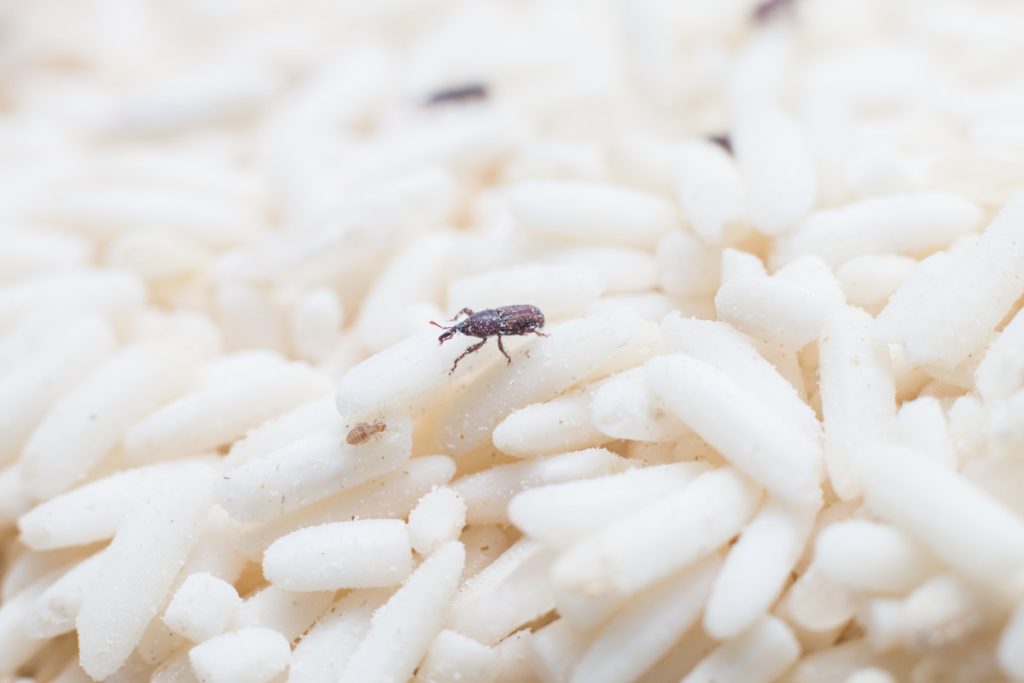
Rice Weevil Quick Facts

Size

About 1/10 to 1/8 inch long

Color

Reddish-brown to nearly black, usually with four lighter spots on the wing covers

How to Identify

Tiny beetle with a long, curved snout; rice and maize weevils can be difficult to distinguish

Active Season

May reproduce year-round indoors when stored grain and warm conditions are available

Indoor or Outdoor

Primarily found indoors in pantries, food-storage areas, warehouses, and other places where grain or seed is stored

Day or Night

Adults may move at different times and are often noticed after stored products or shelving are disturbed.

Diet

Whole grains and seeds, including rice, wheat, corn, oats, barley, rye, birdseed, dried corn, and some beans.

About Rice Weevils

Rice weevils are small stored-product beetles known scientifically as Sitophilus oryzae. Their elongated snout and four faint spots on the wing covers help separate them from many other pantry pests. Both adults and developing larvae damage whole kernels of grain. Females place their eggs inside kernels, allowing the immature stages to remain concealed while feeding.

In South Florida homes and businesses, an infestation often begins when an affected package of rice, grain, birdseed, or another dry product is brought indoors. Warm storage conditions may allow activity to continue throughout the year. Rice weevils do not bite or sting, but they can make stored food unsuitable for use and may spread from one vulnerable product to another.

Where Are Rice Weevils Commonly Found?

Household Storage Areas

Rice weevils live close to the whole grains and seeds they use for food and reproduction. In homes, likely locations include:

  • Pantry shelves and food-storage cabinets
  • Bulk-food containers
  • Garages and utility rooms where birdseed or animal feed is stored
  • Boxes of dried decorative corn or seed-based crafts
  • Shelf seams and corners where loose grain has collected

Commercial Risk Areas

Commercial activity may occur in grocery storage rooms, restaurants, warehouses, food-processing buildings, distribution areas, and facilities that handle grain, seed, or animal feed. Open bags, damaged packaging, spilled kernels, and slow-moving inventory can allow an infestation to persist.

How They Enter

Rice weevils are commonly transported into a property within an infested product rather than entering from an outdoor nest. Adults can then move or fly into nearby packages, particularly when foods are stored in paper, cardboard, thin plastic, or loosely closed containers.

South Florida Conditions That Support Activity

Warm indoor temperatures can support development during any month. Long-term storage, infrequently rotated stock, and unnoticed grain spills may increase the likelihood that a small introduction becomes a recurring household or business problem.

Rice Weevil Behavior and Food Sources

Hidden Development Inside Grain

Rice weevils are internal feeders. A female uses her snout to make a small opening in a whole grain kernel, deposits an egg, and seals the opening. After hatching, the larva feeds and develops inside the kernel. It later pupates there before the new adult chews a round exit hole and emerges.

Preferred Foods

Despite their name, rice weevils are not limited to rice. Products that may support them include:

  • Rice, wheat, corn, oats, barley, and rye
  • Birdseed and sunflower seed
  • Dried corn and seed mixes
  • Some dried beans and animal feeds

Movement and Spread

Adults can fly and may disperse through storage areas or into nearby food packages. They are often first noticed crawling on shelves, gathering around a package, or appearing near windows after leaving the food source.

Why Activity Can Be Hard to Spot

The immature stages remain hidden inside kernels, so affected food may look normal at first. A noticeable group of adults may appear after several beetles complete development and emerge at about the same time.

Stored-Food Damage and Concerns

Product Damage

The primary concern is damage to stored grain and seed. Larvae consume kernels from the inside, while adults may feed on grain and move into other suitable products. Infested food can contain live insects, damaged kernels, shed material, and insect debris, making it unacceptable for household or commercial use.

Business and Inventory Concerns

For restaurants, grocery operations, warehouses, and other South Florida businesses, recurring stored-product pests may contribute to inventory loss, sanitation concerns, customer complaints, and inspection issues. Finding the source promptly is important because removing only visible adults does not address larvae developing inside kernels.

Health and Structural Risk

Rice weevils do not bite or sting, and they are not structural pests. They do not feed on wood, drywall, furniture, or clothing. Their presence also does not necessarily indicate poor housekeeping; infestations often begin in food or feed that was affected before purchase or during storage.

When Are Rice Weevils Active in South Florida?

Rice weevil activity is tied more closely to indoor temperature, stored-food availability, and storage time than to a strict outdoor season. In air-conditioned South Florida homes and commercial buildings, they may remain active during any month when suitable grain products are available.

Activity may become more noticeable when:

  • Grain or seed is stored for long periods
  • Warm storerooms or garages speed development
  • Several adults emerge from kernels at about the same time
  • A grocery purchase, bulk delivery, or feed shipment introduces affected products
  • Adults spread from an older package into nearby food

Outdoor rainfall and seasonal humidity are generally less important than the temperature and food conditions inside the storage area. Adults may continue appearing after one package is discarded when other affected products, loose kernels, or spilled material remain nearby.

How DIY Rice Weevil Control May Fall Short

Removing an obviously infested bag may solve a limited problem, but established rice weevil activity can require a more thorough investigation. Professional inspection becomes a practical next step when adults repeatedly return, several products may be involved, the source cannot be found, or activity occurs in a commercial food-storage area.

  • Treating Only the Visible Adults | Adults crawling on a shelf are only part of the problem. Eggs, larvae, and pupae remain concealed inside grain kernels and are not reached by surface cleaning alone.
  • Assuming Rice Is the Only Source | The infestation may originate in corn, wheat, oats, birdseed, dried seed, beans, or animal feed rather than the first package where adults are noticed.
  • Relying on General-Purpose Sprays | Sprays do not remove infested food and may be inappropriate around food-storage areas. Any treatment must match the pest, location, and product label.
  • Missing Nearby Packages | Adults can move or fly into other suitable foods. Removing one damaged bag may provide temporary relief while another product continues producing beetles.
  • Overlooking Spilled Grain | Loose kernels beneath shelving, behind equipment, or inside cabinet seams can be missed during ordinary cleaning and may contribute to recurring activity.
  • Misidentifying the Beetle | Rice weevils closely resemble maize weevils and may be confused with other pantry pests. Accurate identification helps direct the inspection toward the correct food sources and response.
rice weevil treatment in South Florida

Lower-Impact Options

When appropriate, Pest Busterzz may emphasize accurate identification, source removal, sanitation, monitoring, storage improvements, and precise treatment placement to reduce unnecessary product use around food-storage areas.

The Pest Busterzz Approach to Rice Weevil Treatment

Pest Busterzz focuses on identifying the stored-product pest, locating affected food or feed, and addressing the storage conditions that may allow rice weevil activity to continue.

01

Inspection

We confirm the pest and inspect grain, seed, animal feed, pantry shelves, bulk containers, stock areas, damaged packaging, shelf seams, and places where loose kernels or food residue may be present.

02

Targeted Treatment

Based on the inspection, recommendations may include removing affected products, improving sanitation and storage, using monitoring devices, and applying precise crack-and-crevice treatment in appropriate non-food areas. The plan depends on the property, activity level, and findings.

03

Monitoring & Follow-Up

We monitor for continuing adult activity, evaluate results, adjust the plan when necessary, and inspect newly identified products or storage areas. Follow-up timing depends on the extent of the infestation and conditions found.

04

Prevention

Recommendations may include storing grain and seed in durable containers with tight-fitting lids, rotating older stock, inspecting bulk purchases, cleaning spills promptly, and avoiding open bags in cabinets, garages, or storage rooms.

Rice weevils can be encountered in South Florida wherever susceptible grain, seed, birdseed, or animal feed is stored. Indoor warmth allows them to reproduce during any month, so activity is not limited to a short outdoor season.

No. Rice weevils may infest wheat, corn, oats, barley, rye, birdseed, dried corn, sunflower seed, some beans, and animal feed. The product containing the most visible adults may not be the original source.

Adults are tiny reddish-brown to dark beetles with a noticeable projecting snout and usually four lighter spots on the wing covers. Rice and maize weevils are extremely similar, so professional identification may be needed.

Adults may leave an infested product after completing development inside grain kernels. They can crawl or fly onto shelves, counters, or windows. The breeding source is usually a stored grain, seed, or feed product rather than a wall or structural void.

One adult may have escaped from a single affected package, but nearby whole-grain foods and seed products should still be checked. Repeated sightings, exit holes, damaged kernels, or multiple adults are stronger signs of active development.

No. Rice weevils are stored-food pests rather than biting or structural insects. They do not feed on wood, drywall, furniture, or clothing. The concern is the grain, seed, or feed they infest.

Not necessarily. Visible adults are only part of the infestation because immature stages develop inside kernels. Control depends on locating affected products, removing food sources, cleaning spills, and using treatment only where appropriate and permitted.

Yes. They may remain active year-round inside South Florida homes and businesses when buildings stay warm and suitable food is available. Warm storerooms and products kept for long periods may support faster population growth.

Recurring adults may mean another package is affected, loose grain remains beneath shelving, or beetles have spread into nearby products. Because larvae are hidden inside kernels, the full source may not be obvious during a quick pantry check.

Schedule an inspection when adults continue appearing after suspect products are removed, several packages may be involved, the source cannot be located, or activity occurs in a restaurant, warehouse, store, or other commercial food-storage setting.

Pest Busterzz Home Icon

faqs

Rice Weevil FAQs