

Scale Insects

Pest Busterzz Home Icon

Pest Library

Scale Insects
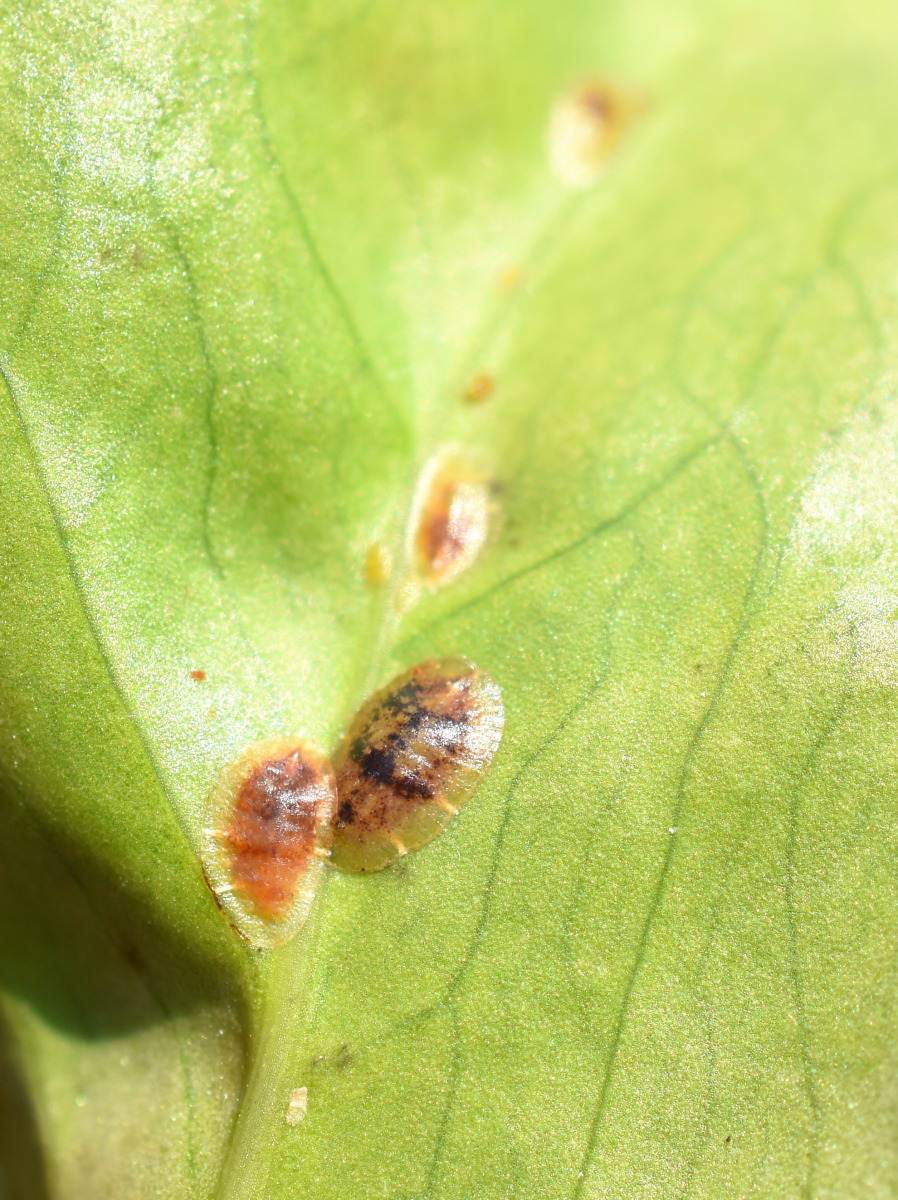
Scale Insects Quick Facts

Size

Adults typically range from about 1/16 to 1/2 inch long, depending on the species (armored scales tend to be smaller; soft scales larger).

Color

Highly variable—white, gray, brown, reddish, pinkish, yellow, or nearly black; many appear as waxy bumps, shells, or cottony patches on plant surfaces.

How to Identify

Immobile, shell-like or waxy coverings attached to leaves, stems, or twigs that resemble bumps, oyster shells, or small domes; soft scales may feel softer when pressed, while armored scales have a detachable cover.

Active Season

Year-round in South Florida, with continuous or overlapping generations; crawler (mobile young) activity often increases with new plant growth.

Indoor or Outdoor

Primarily outdoor on landscape plants, trees, shrubs, and palms; also common on indoor houseplants and greenhouse plants.

Day or Night

Mostly stationary once settled; the brief crawler stage moves during the day as it searches for feeding sites.

Diet

Plant sap drawn from leaves, stems, twigs, fruit, or roots through piercing-sucking mouthparts.

About Scale Insects

Scale insects are small sap-feeding pests belonging to the order Hemiptera. Hundreds of species occur in Florida, with armored scales (Diaspididae) and soft scales (Coccidae) among the most frequently encountered groups around South Florida homes and businesses. Once settled, most females remain fixed in place under a protective waxy covering that can make them look more like plant growths or bark irregularities than insects. They commonly appear on ornamentals, citrus, palms, hollies, crotons, and many other landscape plants that thrive in the region’s warm climate. Property owners usually notice them because of yellowing foliage, sticky residue, black sooty mold, or weakened plants rather than because of direct contact with the insects themselves.

Scale insects live on the above-ground parts of host plants and, in some cases, on roots. Soft scales and armored scales settle on leaves (often undersides or along midribs), stems, twigs, branches, trunks, and fruit. In South Florida landscapes they are frequently found on citrus, avocado, holly, crape myrtle, palms, crotons, Indian hawthorn, oaks, and many other ornamentals. Indoor infestations usually begin on houseplants brought indoors or on plants kept near windows or in humid rooms. High humidity, dense foliage, and stressed or over-fertilized plants create favorable conditions. Crawlers can move short distances on their own or be carried by wind, birds, ants, or people moving infested plant material.

Adult females of most species are sedentary after the crawler stage and feed continuously by inserting thread-like mouthparts into plant tissue. Soft scales feed primarily on phloem sap and excrete large amounts of honeydew; armored scales feed on cell contents and produce little or no honeydew. Eggs are typically laid under the female’s covering or in a cottony mass. Newly hatched crawlers are the only mobile stage for most species; they walk short distances or are dispersed by wind before settling permanently and secreting their protective cover. Many species reproduce without males (parthenogenesis). Ants are often attracted to the honeydew of soft scales and may protect the scales from natural enemies. Populations can build quietly because the insects blend with plant surfaces and remain still.

Scale insects primarily damage plants rather than people or structures. Heavy feeding can cause yellowing or stippled leaves, premature leaf drop, reduced vigor, branch dieback, and, in severe cases on susceptible plants, plant death. Soft scales produce sticky honeydew that coats leaves, sidewalks, cars, and outdoor furniture; the honeydew supports growth of black sooty mold that further reduces photosynthesis and creates an unsightly appearance. Armored scales do not produce honeydew but can still weaken plants through direct feeding. Scale insects do not bite or sting humans or pets and are not known to transmit diseases to people. The main concerns for South Florida homeowners and property managers are landscape aesthetics, plant health, and the secondary mess from honeydew and sooty mold.

In South Florida’s subtropical climate, many scale species remain active year-round with continuous or overlapping generations. Crawler emergence often peaks when plants flush new growth, which can occur multiple times a year depending on rainfall, irrigation, and temperature. Warm, humid conditions favor population growth. Populations may increase after mild winters or when natural enemies are disrupted. Indoor plants can support activity any time of year if temperatures and humidity remain suitable. Sudden increases outdoors are sometimes linked to the introduction of new plants or to favorable weather that allows crawlers to spread.

Why DIY Scale Insects Control May Fail

Home treatments often target only the visible adult scales while missing the protected eggs and crawlers under coverings or in hard-to-reach places on large trees and dense shrubs. Contact sprays may not penetrate the waxy armor of settled stages, and incomplete coverage leaves populations ready to rebound. Removing honeydew or sooty mold without addressing the scales that produce it provides only temporary cosmetic improvement. Reinfestation from nearby landscape plants, wind-blown crawlers, or newly purchased plants is common. When plants are already stressed or when the infestation is widespread on mature trees and palms, repeated DIY applications become impractical and may not reach the hidden life stages that sustain the problem.

  • Missing Protected Life Stages | Treating only the visible adult scales often leaves eggs and crawlers under the waxy coverings untouched, allowing populations to rebound.
  • Incomplete Coverage on Large Plants | Contact products frequently fail to reach scales on the undersides of leaves, high branches, or dense canopies of mature trees and palms.
  • Waxy Armor Blocks Many Sprays | Settled armored and soft scales are shielded by their coverings, so many over-the-counter contact sprays have limited effect on the insects underneath.
  • Reinfestation from Surrounding Plants | Crawlers can move or be carried from untreated neighboring landscape plants, newly purchased ornamentals, or nearby trees, restarting the problem.
  • Addressing Only Symptoms | Cleaning honeydew or sooty mold without treating the living scales that produce them provides only temporary cosmetic relief.
scale insects treatment in South Florida

Lower-Impact Options

When conditions allow, Pest Busterzz emphasizes precise timing, thorough coverage of crawler stages, cultural practices, and selective use of materials that minimize unnecessary applications while still protecting landscape value.

The Pest Busterzz Scale Insects Treatment Approach

Pest Busterzz focuses on identifying the scale group present, treating the vulnerable life stages, and reducing the plant and landscape conditions that allow activity to return.

01

Inspection

Pest Busterzz technicians examine landscape and indoor plants for the insects themselves, crawler activity, honeydew, sooty mold, and plant symptoms. They identify whether soft or armored scales are present, assess the extent of infestation, note favored host plants, and evaluate environmental conditions that support the population.

02

Targeted Treatment

Treatment plans are based on the species group, plant type, severity, and location. Approaches may include carefully timed applications that target the vulnerable crawler stage, horticultural oils or other contact materials for accessible stages, systemic options when appropriate for the plant and situation, pruning of heavily infested branches, and habitat adjustments. The specific combination is selected after the inspection rather than applied as a one-size-fits-all method.

03

Monitoring & Follow-Up

Follow-up visits check for continued crawler activity, evaluate treatment results, and address any newly discovered hotspots. Timing depends on the species’ life cycle and the conditions found at the property; additional visits may be scheduled when overlapping generations are present.

04

Prevention

Recommendations focus on inspecting new plants before installation, improving air circulation through selective pruning, avoiding excess fertilizer that encourages soft, vulnerable growth, managing irrigation to reduce plant stress, and removing heavily infested material when practical. Keeping surrounding plants healthy and free of large populations reduces the chance of spread.

Scale insects often look like small, raised shells, waxy patches, or cottony spots stuck to leaves, stems, or twigs. Soft scales may feel soft when pressed; armored scales have a cover that can be flicked off. Sticky leaves or black sooty mold frequently accompany soft scales. A close look with a magnifying glass or professional inspection confirms the identification.

Yes. They commonly infest houseplants and can be brought indoors on new plants. Warm, humid indoor conditions allow populations to persist year-round. Outdoor landscape plants remain the more frequent source of large infestations.

Soft scales excrete honeydew, a sugary liquid that coats leaves and surfaces below. Black sooty mold grows on the honeydew, creating an unsightly coating that can reduce photosynthesis. Armored scales do not produce this sticky material.

Not necessarily. Populations often start on one or a few plants and build gradually. Early detection on preferred hosts such as citrus, hollies, palms, or crotons allows more limited treatment before the problem spreads.

No. Scale insects feed only on plant sap and do not bite or sting humans or animals. Their impact is limited to plant health and landscape appearance.

Settled adults and eggs under protective coverings are hard to reach with many contact sprays. Crawlers can also move in from untreated neighboring plants. Incomplete coverage or treatment applied when the wrong life stage is present often allows populations to recover.

Activity continues year-round, but crawler stages often become more noticeable when plants produce new growth. Warm temperatures and humidity support ongoing generations without the long winter pause seen in cooler climates.

Consider professional help when infestations cover large trees or many plants, when sooty mold and honeydew become a persistent nuisance, when DIY efforts fail to reduce the population, or when valuable landscape plants show decline. An inspection identifies the scale group and the most practical management path.

Pest Busterzz Home Icon

faqs

Scale Insects FAQs