

Pest Library
Silverfish
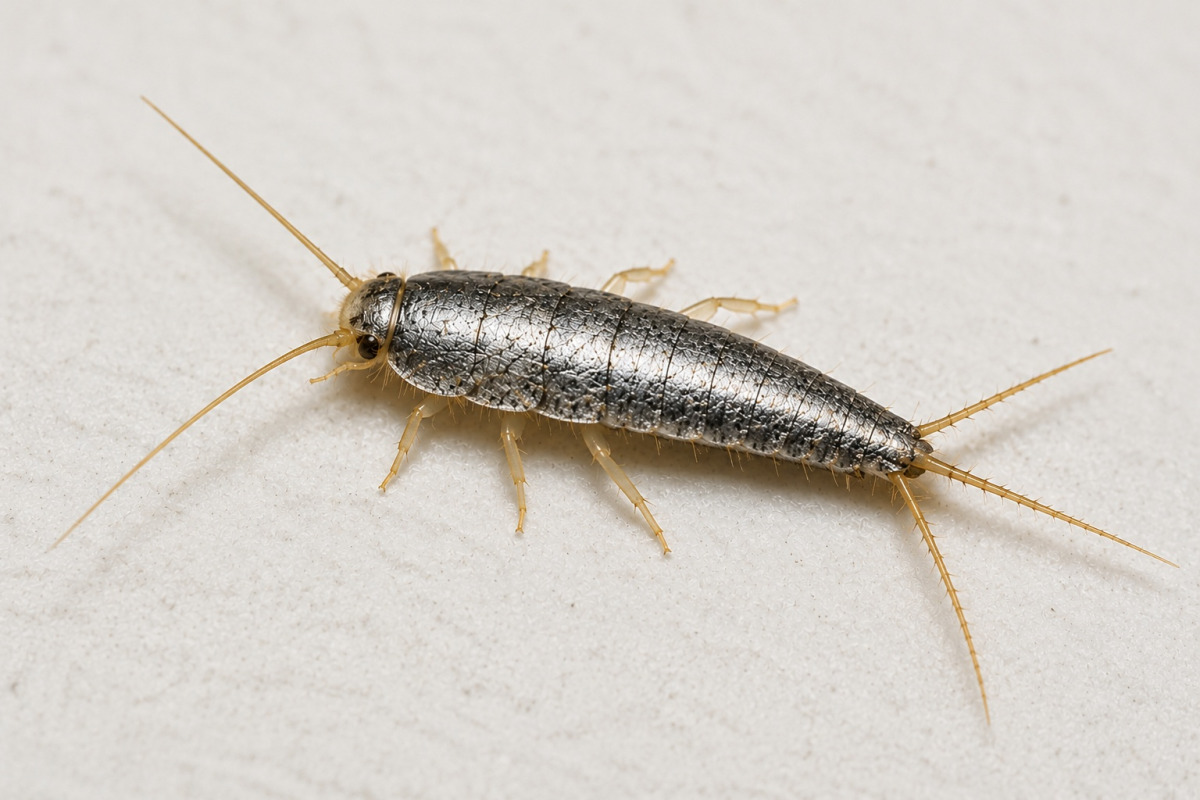
Silverfish Quick Facts
Size
Adults typically measure 0.5 to 0.75 inches long, excluding their tail appendages.
Color
Silvery-gray or metallic sheen, covered in delicate overlapping scales.
How to Identify
Wingless, teardrop-shaped body with long antennae and three distinct thread-like tails at the rear.
Active Season
Year-round in South Florida due to consistent indoor climate control and elevated ambient humidity.
Indoor or Outdoor
Found both indoors and outdoors, but most frequently noticed in humid interior spaces.
Day or Night
Mostly active at night; they move rapidly in a fish-like, wriggling motion when startled.
Diet
Starch-heavy materials, including paper, bookbindings, wallpaper paste, cardboard, fabrics, and dry pantry items.
About Silverfish
Why DIY Silverfish Control Falls Short
Over-the-counter sprays and glue traps may catch a few visible silverfish, but do-it-yourself efforts rarely resolve an underlying infestation.

Lower-Impact Options
By focusing on targeted bait placement, void treatments, structural sealing, and moisture management, Pest Busterzz minimizes the need for high-volume sprays inside living areas, prioritizing effective yet responsible application methods.
The Pest Busterzz Silverfish Treatment Approach
Pest Busterzz focuses on identifying the root causes of silverfish activity, targeted hidden harboring spots, and guiding environmental modifications to keep pests from returning.
Inspection
Pest Busterzz technicians inspect high-humidity areas, examine attics and wall voids, check foundation entry points, and search for early indicators of feeding damage or moisture build-up.
Targeted Treatment
Based on inspection findings, treatment may include precise micro-dusting in wall voids, targeted bait applications, crack-and-crevice treatments, and perimeter adjustments designed to break the silverfish life cycle without unnecessary chemical broadcast.
Monitoring & Follow-Up
Pest Busterzz places specialized monitoring stations in key areas to track insect activity over time. Follow-up visits ensure active populations decrease and allow for plan adjustments if difficult micro-environments are identified.
Prevention
Long-term relief relies on physical modifications. Technicians provide clear recommendations on reducing indoor humidity, sealing structural gaps along baseboards and pipes, improving attic ventilation, and adjusting landscape mulch away from the foundation.
faqs