

Pest Library
Thrips
Thrips Quick Facts
Size
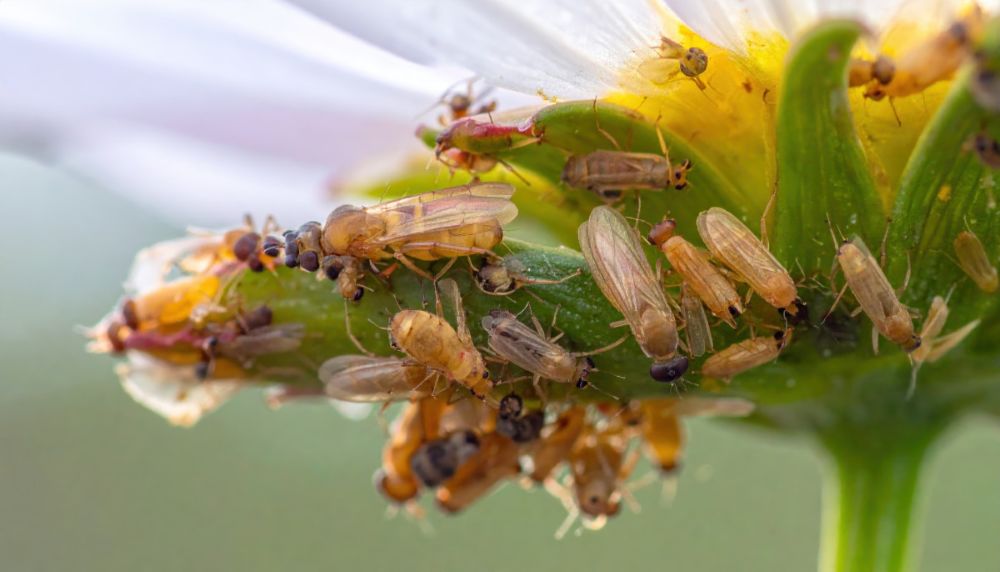
Adults typically measure 1/16 to 1/8 inch long (about 1–2 mm); some species reach slightly larger
Color
Adults range from pale yellow or golden to brown or nearly black; immatures are usually lighter yellow or translucent
How to Identify
Slender, elongated bodies resembling tiny grains of rice or cigars, with narrow fringed wings on adults; larvae are wingless. Shake plant parts over white paper to spot them more easily
Active Season
Year-round in South Florida’s warm climate, with populations often building rapidly during periods of consistent heat and humidity
Indoor or Outdoor
Primarily outdoor on landscape plants, gardens, and ornamentals; also appear on indoor houseplants and in protected growing spaces
Day or Night
Mostly active during daylight hours when feeding on plant tissues, though they remain present on hosts at other times
Diet
Plant sap extracted from leaves, buds, flowers, shoots, and sometimes young fruit through piercing-sucking mouthparts
About Thrips
Why DIY Thrips Control May Fall Short
Home treatments often miss critical parts of the thrips life cycle. Professional service becomes the more practical next step when damage continues despite repeated efforts, valued landscape plants show progressive decline, or identification is uncertain.

Lower-Impact Options
When suitable, Pest Busterzz emphasizes precise placement, monitoring, and cultural adjustments that support natural enemies and reduce the need for broader applications.
The Pest Busterzz Thrips Treatment Approach
Pest Busterzz focuses on identifying the thrips present, evaluating the extent of activity, and addressing the plant and environmental conditions that support populations.
Inspection
Technicians examine affected plants, note the pattern and severity of damage, identify the thrips present when possible, and evaluate surrounding vegetation, soil conditions, and potential sources of new plant material.
Targeted Treatment
Treatment recommendations are based on the specific findings, plant types, and activity level observed. Options may include localized applications to infested foliage and buds, measures directed at soil stages where appropriate, exclusion practices for indoor plants, and habitat adjustments that reduce favorable conditions.
Monitoring & Follow-Up
Follow-up visits check for continued activity, evaluate plant recovery, and adjust the approach if new hotspots appear. Timing depends on the life cycle of the thrips involved and the conditions present on the property.
Prevention
Recommendations may include removing heavily damaged plant material, controlling weeds that serve as alternate hosts, avoiding over-fertilization that encourages overly tender growth, inspecting new plants before introducing them, and maintaining good airflow around dense plantings.
faqs