
Pest Library
Eastern Subterranean Termite Control in South Florida
Eastern Subterranean Termite Quick Facts
Size
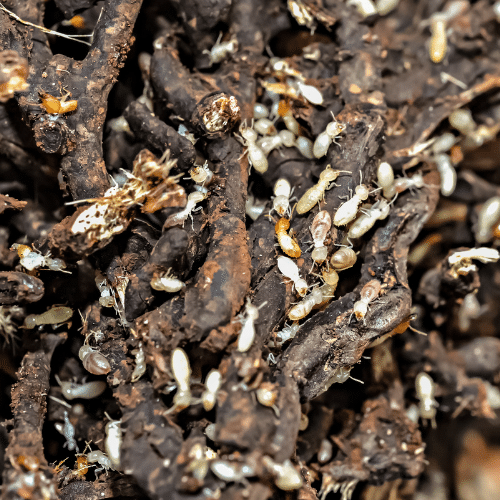
Workers are about 1/8 inch long; winged swarmers are approximately 3/8 inch including their wings
Color
Workers are creamy white, soldiers have darker brown heads, and swarmers are dark brown to nearly black
How to Identify
Look for pencil-width mud tubes, discarded equal-length wings, and wood that sounds hollow or appears blistered
Active Season
Active year-round in South Florida, with swarming often increasing during warm, humid spring weather after rain
Indoor or Outdoor
Colonies live in soil outdoors but may forage into homes and businesses through foundations, joints, and utility openings
Day or Night
Workers usually remain hidden in soil, wood, or mud tubes; winged swarmers often emerge during the day after warm rain.
Diet
They feed on cellulose found in wood, paper, cardboard, and other plant-based materials.
About Eastern Subterranean Termites
Why DIY Eastern Subterranean Termite Control May Fall Short
DIY efforts may address a visible tube or small area without reaching the underground colony or every active entry point. Professional inspection becomes the more practical next step when mud tubes return, swarmers appear indoors, damage is suspected, or the insect cannot be confidently identified.

Lower-Impact Options
When appropriate, Pest Busterzz may use monitoring, precisely placed baiting or localized treatment, moisture recommendations, and targeted exterior management to reduce unnecessary product use.
The Pest Busterzz Eastern Subterranean Termite Treatment Approach
Pest Busterzz begins with a property-specific inspection and develops recommendations based on the termite species, construction, activity level, and conditions found.
Inspection
We confirm the termite species, look for mud tubes and damaged wood, evaluate moisture conditions, and inspect foundations, slabs, crawl spaces, utility penetrations, and other possible entry areas.
Targeted Treatment
Based on the inspection, the plan may include termite baiting, localized treatment, soil or exterior management, and attention to active entry points. The appropriate approach depends on the structure and evidence found.
Monitoring & Follow-Up
We check activity, evaluate results, and adjust the plan when necessary. Follow-up timing depends on the treatment selected, construction, and conditions at the property.
Prevention
Recommendations may include correcting drainage and leaks, reducing wood-to-soil contact, moving cellulose debris away from the foundation, maintaining inspection access, and addressing structural gaps.
faqs
Eastern Subterranean Termite FAQs
Schedule an Eastern Subterranean Termite Inspection
If you have noticed mud tubes, discarded wings, swarmers, or unexplained wood damage at your South Florida home or business, Pest Busterzz can provide proper identification and recommendations based on the inspection findings. The plan may also include practical steps for reducing moisture, wood-to-soil contact, and other conditions that can allow activity to return.