

Asian Subterranean Termite

Pest Busterzz Home Icon

Pest Library

Asian Subterranean Termite
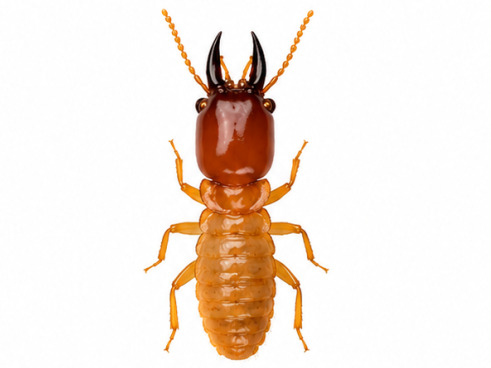
Asian Subterranean Termite Quick Facts

Size:

Swarmers are roughly 1/2 inch long including wings, while workers and soldiers are smaller, around 1/4 inch long.

Color:

Swarmers are dark brown to blackish, whereas workers and soldiers are cream-colored with light brown heads.

How to identify:

Look for swarming winged adults with two pairs of equal-sized wings, straight antennae, and soldiers with smooth oval heads that lack teeth on their teardrop-shaped mandibles.

Active season:

Swarming typically peaks in South Florida during late winter through spring (February to May), though colony activity underground continues year-round.

Indoor or outdoor:

Operates primarily underground and within damp soil, but will readily construct shelter tubes to forage inside homes, commercial structures, and living trees.

Day or night:

Swarmers are mostly active at night, frequently taking flight in large numbers at dusk or early evening while drawn toward exterior lights and window illumination.

Diet:

Cellulose-based materials, primarily softwoods, structural timber, paper, cardboard, landscape mulch, and living woody plants.

About Asian Subterranean Termites

The Asian subterranean termite (Coptotermes gestroi) is an invasive wood-destroying pest established across South Florida’s tropical and subtropical neighborhoods. Known for building vast underground colonies housing millions of individual termites, this species can inflict severe structural damage if left undetected. Property owners often recognize their presence during springtime evening swarms or after discovering mud shelter tubes along foundation walls. Because subterranean workers continuously forage for cellulose materials, catching early signs of activity is crucial to keeping homes and commercial buildings safe. Pest Busterzz offers comprehensive inspections to evaluate high-risk entry points and manage activity before colonies expand into living spaces.

Where Are Asian Subterranean Termites Commonly Found?

Outdoor Nesting Areas

Asian subterranean termites rely heavily on soil moisture to survive. Typical outdoor habitat locations include:

  • Damp soil beneath foundation slabs and patios
  • Living shade trees, tree stumps, and root systems
  • Thick layers of landscape mulch or pine straw
  • Wooden landscape timbers and retaining walls
  • Fence posts set directly in wet soil
  • Buried wood debris and decaying roots

Indoor Hiding Places

To access indoor food sources without drying out, worker termites construct protective mud tubes over concrete, masonry, and metal. Common indoor foraging locations include:

  • Structural wall framing and wood studs
  • Subflooring, joists, and wood baseboards
  • Window frames and door casings near damp soil
  • Paper-backed drywall and cardboard storage boxes
  • Areas around plumbing penetrations and bath traps
  • Moisture-rich roof voids and attic framing near leaks

South Florida Conditions That Support Activity

South Florida provides ideal conditions for subterranean termite colonies due to persistent warmth and abundant humidity. Infestations are more likely on properties with:

  • Direct wood-to-soil contact on deck posts, door frames, or fences
  • Air conditioning condensation lines dripping near the foundation
  • Landscape mulch piled high against exterior siding or stucco
  • Poor ground drainage or over-irrigated garden beds
  • Unsealed slab cracks and plumbing gaps

Asian Subterranean Termite Behavior

Feeding and Foraging Patterns

Asian subterranean termites operate within highly structured colonies divided into workers, soldiers, and reproductives. Blind worker termites forage continuously, seeking cellulose from wood structures, tree trunks, paper, and landscape lumber. They consume soft springwood first, often leaving thin outer layers of wood or paint intact to hide their feeding channels.

Colony Defense and Communication

When mud tubes or galleries are breached, soldier termites quickly move to defend the opening. A unique behavioral trait of Asian subterranean termite soldiers is their ability to secrete a sticky, milky-white fluid from a pore on their forehead (fontanelle) when threatened. They also bang their heads against gallery walls to sound alarm vibrations throughout the nest.

Swarming and Dispersal Flight

During late winter and spring, mature colonies release thousands of winged reproductive swarmers (alates). In South Florida, these flights typically take place at dusk or early evening on warm, humid nights. Swarmers are weak fliers drawn to porch lights, interior lamps, and windows. After a short flight, they shed their wings, pair off, and burrow into moist soil or soft wood to establish new colonies.

Property Risks and Concerns

Structural Damage Risks

Asian subterranean termites pose a primary concern to structural lumber. Because a single colony can contain millions of hungry workers, feeding occurs at an accelerated pace compared to native termite species. Over time, unchecked infestations can compromise structural elements such as:

  • Wall studs and structural framing
  • Floor joists and subflooring
  • Door headers and window framing
  • Roof trusses and fascia boards

Impact on Landscapes and Trees

Unlike species that only target dead wood, Asian subterranean termites frequently attack living trees in South Florida. They hollow out tree trunks and major limbs from the inside, structural weakening that can cause branches to fall during storms.

Health and Pet Safety

Asian subterranean termites are strictly structural and agricultural pests. They do not bite humans or pets, carry diseases, or trigger asthma and allergies. Property owners can focus entirely on structural evaluation without worrying about direct health risks.

South Florida Seasonal Activity Patterns

In South Florida’s warm climate, subterranean termite workers remain active underground year-round. However, outdoor visibility and reproductive activity shift with environmental triggers:

  • Peak Swarming Months: Dispersal flights typically occur from late February through May.
  • Evening Weather Triggers: Warm, calm, and humid evenings following rainfall events frequently prompt major swarms.
  • Summer Rain Activity: High soil moisture during summer rainfall accelerates tube-building around foundations.
  • Winter Behavior: Brief cold fronts may cause workers to retreat slightly deeper into the soil or toward climate-controlled building foundations.

Asian Subterranean Termites vs. Formosan Subterranean Termites

South Florida is one of the few regions in the world where the ranges of the Asian subterranean termite (Coptotermes gestroi) and Formosan subterranean termite (Coptotermes formosanus) overlap. While both invasive species belong to the same genus and cause significant structural damage, key differences exist:

Swarming Schedule: Asian subterranean termites typically swarm earlier in the year, starting as early as February, whereas Formosan termites usually peak later in spring (May and June).

Coloration: Asian swarming adults generally feature a darker brown body color compared to the lighter, yellowish-brown appearance of Formosan swarmers.

Hairs on Wings: Under magnification, Asian subterranean termite wings feature fine microscopic hairs, helping professional entomologists distinguish between species.

Why DIY Asian Subterranean Termite Control Fails

Managing an Asian subterranean termite infestation requires specialized techniques. Store-bought products and do-it-yourself attempts rarely achieve complete colony elimination for several key reasons:
  • Hidden Central Nests | Spraying visible mud tubes or swarmers on a wall does not reach the primary nest or egg-laying queen located deep underground.
  • Repellent Sprays Split Trails | Over-the-counter chemical sprays often act as repellents, causing foraging workers to avoid treated areas and find alternative entry points into the home.
  • Inadequate Soil Barriers | Establishing an effective termiticide barrier requires specialized trenching, rodding, or monitored baiting equipment surrounding the perimeter slab.
  • Species Misidentification | Confusing subterranean termite swarmers with swarming ants leads to improper product choices while structural wood damage continues silently behind walls.
  • Unaddressed Moisture Issues | DIY sprays do not correct plumbing leaks, condensation issues, or poor drainage conditions that continuously attract termite colonies.
Asian subterranean termite treatment in South Florida

Lower-Impact Options

Where appropriate, Pest Busterzz prioritizes perimeter baiting stations and non-repellent treatments directly where termites forage to eliminate nests while minimizing unnecessary chemical use inside your home.

The Pest Busterzz Asian Subterranean Termite Treatment Approach

Pest Busterzz delivers comprehensive subterranean termite management solutions tailored to the unique construction styles and environmental conditions of South Florida properties.

01

Inspection

We evaluate foundation lines, crawl spaces, plumbing penetrations, and surrounding landscape features to identify active mud tubes, hollowed wood, and environmental moisture sources supporting colony growth.

02

Targeted Treatment

Treatment plans are customized based on inspection findings. Strategies may include installing monitored baiting systems around the foundation or applying non-repellent termiticides that foraging workers carry back to eliminate the central underground colony.

03

Monitoring & Follow-Up

We routinely monitor installed baiting stations, evaluate ongoing activity levels, and verify that exterior protective barriers remain effective against surrounding neighborhood pressure.

04

Prevention

Our team provides actionable property tips, such as eliminating wood-to-soil contact, pulling mulch back from foundations, diverting air conditioner condensation drip lines, and sealing slab penetrations.

Asian subterranean termite swarmers have straight, bead-like antennae, broad waists, and four translucent wings of equal length. Swarming ants have elbowed antennae, distinctly pinched waists, and front wings that are larger than their hind wings.

Look for pencil-thin mud tubes on concrete foundations, discarded wings piled near windowsills or lamps after evening flights, soft or blistered paint over drywall, and wood trim that sounds hollow when tapped.

No. Asian subterranean termites do not bite humans or pets, nor do they carry pathogens or trigger medical allergies. They are strictly wood-destroying pests that focus on cellulose materials.

South Florida’s warm climate, sandy soil, high moisture, and frequent rainfall create optimal breeding conditions. Lush landscaping and high water tables allow large underground colonies to thrive year-round.

Not necessarily. Shed wings indicate swarmers landed nearby, often attracted to porch lights or windows. However, it serves as a strong warning sign that a mature colony is active nearby, warranting a professional evaluation.

Topical sprays generally kill only visible workers on contact. They fail to eliminate the underground queen or central nest, and repellent sprays can cause foraging workers to disperse and re-enter through untreated areas.

Yes. While mulch provides cellulose, it primarily attracts termites by trapping moisture in the underlying soil. Maintaining a buffer between mulch beds and your concrete foundation helps deter subterranean foraging.

Schedule an inspection immediately if you notice swarmers, mud tubes, unexplained hollow-sounding wood, or during routine annual maintenance to ensure exterior defensive barriers remain fully intact.

Pest Busterzz Home Icon

faqs

Asian Subterranean Termite FAQs