

Pest Library
Rice Weevil Control in South Florida
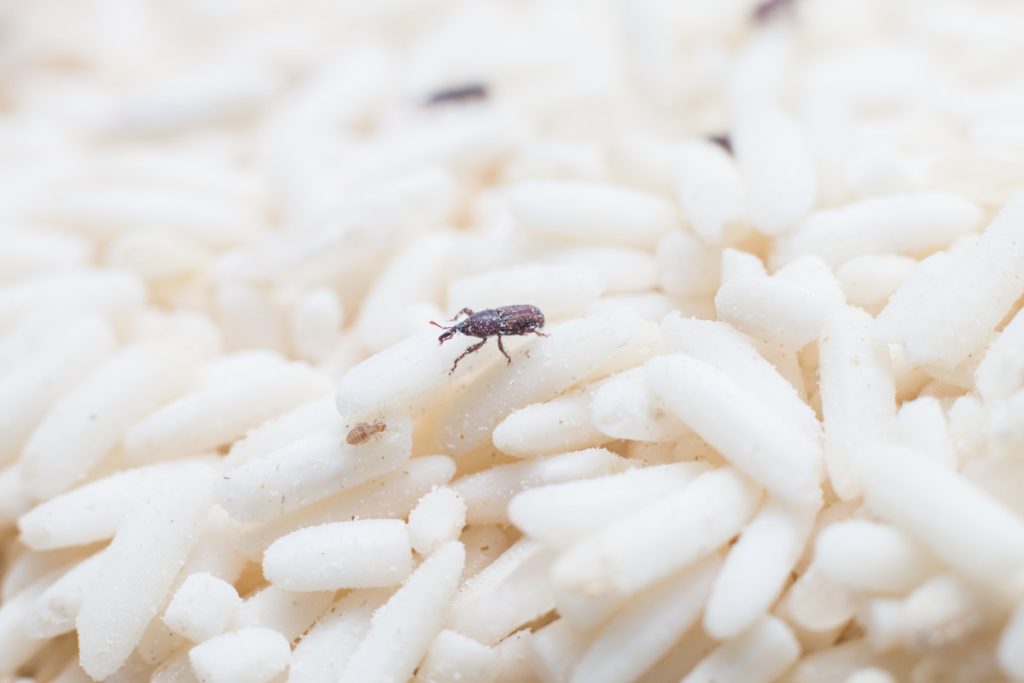
Rice Weevil Quick Facts
Size
About 1/10 to 1/8 inch long
Color
Reddish-brown to nearly black, usually with four lighter spots on the wing covers
How to Identify
Tiny beetle with a long, curved snout; rice and maize weevils can be difficult to distinguish
Active Season
May reproduce year-round indoors when stored grain and warm conditions are available
Indoor or Outdoor
Primarily found indoors in pantries, food-storage areas, warehouses, and other places where grain or seed is stored
Day or Night
Adults may move at different times and are often noticed after stored products or shelving are disturbed.
Diet
Whole grains and seeds, including rice, wheat, corn, oats, barley, rye, birdseed, dried corn, and some beans.
About Rice Weevils
How DIY Rice Weevil Control May Fall Short
Removing an obviously infested bag may solve a limited problem, but established rice weevil activity can require a more thorough investigation. Professional inspection becomes a practical next step when adults repeatedly return, several products may be involved, the source cannot be found, or activity occurs in a commercial food-storage area.

Lower-Impact Options
When appropriate, Pest Busterzz may emphasize accurate identification, source removal, sanitation, monitoring, storage improvements, and precise treatment placement to reduce unnecessary product use around food-storage areas.
The Pest Busterzz Approach to Rice Weevil Treatment
Pest Busterzz focuses on identifying the stored-product pest, locating affected food or feed, and addressing the storage conditions that may allow rice weevil activity to continue.
Inspection
We confirm the pest and inspect grain, seed, animal feed, pantry shelves, bulk containers, stock areas, damaged packaging, shelf seams, and places where loose kernels or food residue may be present.
Targeted Treatment
Based on the inspection, recommendations may include removing affected products, improving sanitation and storage, using monitoring devices, and applying precise crack-and-crevice treatment in appropriate non-food areas. The plan depends on the property, activity level, and findings.
Monitoring & Follow-Up
We monitor for continuing adult activity, evaluate results, adjust the plan when necessary, and inspect newly identified products or storage areas. Follow-up timing depends on the extent of the infestation and conditions found.
Prevention
Recommendations may include storing grain and seed in durable containers with tight-fitting lids, rotating older stock, inspecting bulk purchases, cleaning spills promptly, and avoiding open bags in cabinets, garages, or storage rooms.
faqs