
Roaches in Refrigerator? Check the Garage Fridge Before Thanksgiving
Roaches in refrigerator? Most of the time they aren’t living in the cold part. They’re living around it, in the warm motor compartment, the drip pan, the door gasket and the gap under and behind the unit. Pull the fridge out, look with a flashlight, clean what you can reach, put gel bait in the cracks nearby and call a pro if you find babies or egg cases.
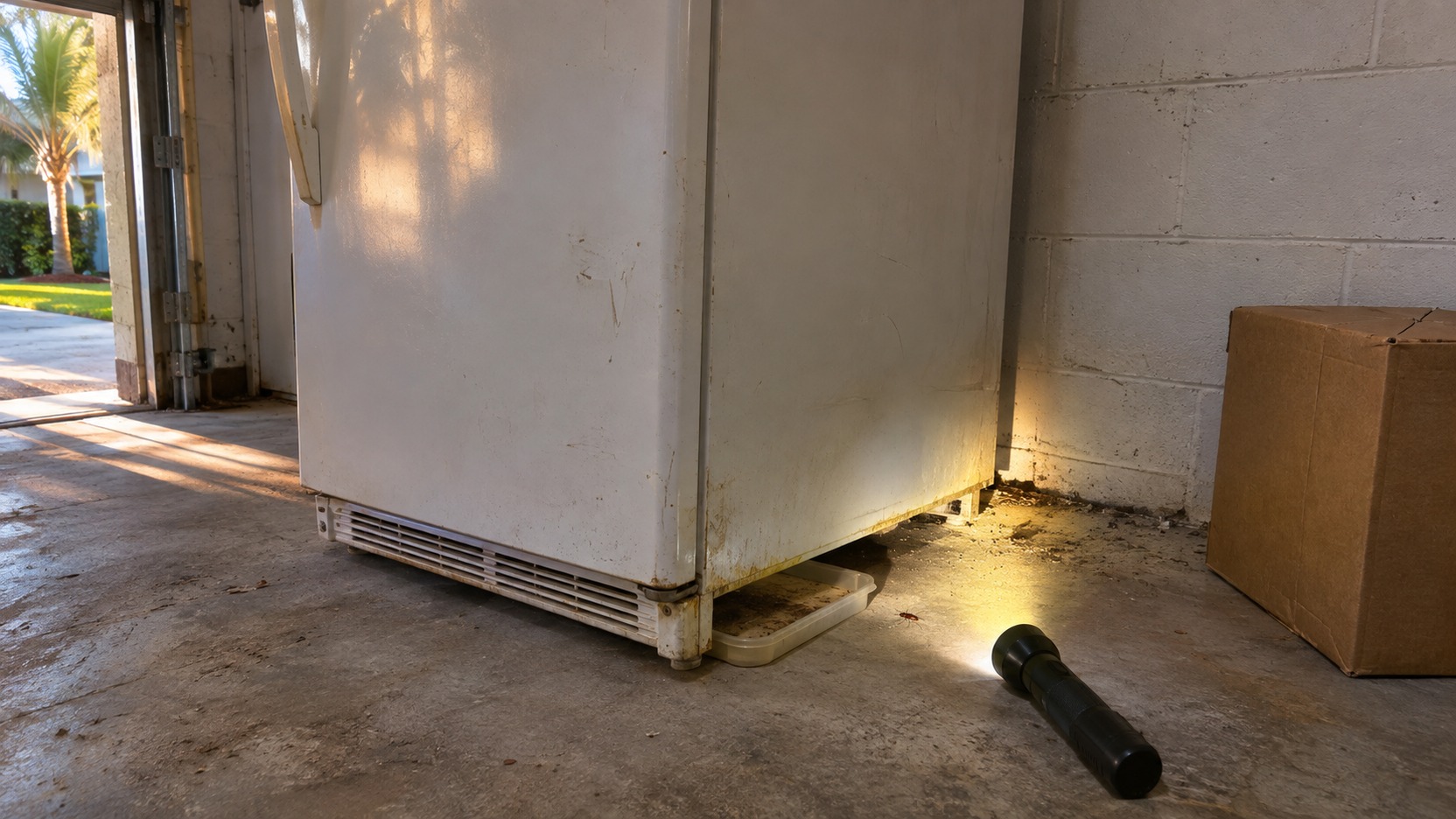
In South Florida the fridge most likely to have this problem is the one in the garage. Next week a lot of us will restock that second fridge for guests with drinks, pies and extra groceries. Check it first. It takes a flashlight and a helper, not a weekend.
Why roaches get into a refrigerator
A working refrigerator has warm, damp spots that nobody cleans. The motor compartment gives off steady heat. A drip pan or defrost drain can hold water. Crumbs, grease and spills collect behind and under the unit. Roaches rest in dark, tight spaces during the day and come out at night, and the gap around an appliance is exactly that. The National Pesticide Information Center says cracks 3/8 inch or smaller are enough for roaches to hide in.
The cold compartment is a different story. It’s a poor place for roaches to live, so they usually visit it for food, through a worn door gasket or a gap, and retreat to the warm side. That’s why you often find droppings on a gasket or a shelf edge while the real home is the motor area.
Why a garage or second fridge is the usual suspect
UF/IFAS says the big roaches we call palmetto bugs (American, Australian, brown and smokybrown roaches) are generally outdoor roaches that usually develop in garages, sewers, attics and storerooms and then come into the house. A garage fridge sits in the middle of that. The garage door stands open while you unload groceries, and a worn bottom seal can leave a gap even with the door down. A cardboard drink tray wedged against a damp wall gives a roach cover right up to the base of the fridge. That fridge also gets less cleaning than the kitchen one, and it’s full of drinks and leftovers.
If you’re not sure which roach you’re looking at, our palmetto bug vs cockroach guide can help you tell them apart. Our posts on garage pest prevention and managing pests in garages cover the rest of the room.
Signs of roaches in a refrigerator
- Dark specks like ground pepper on the gasket folds, shelf edges or the floor under the unit.
- Shed skins, small dead roaches or tiny roaches of different sizes.
- A small, dark, ridged capsule (an egg case) tucked along the back, the drip pan or the base.
- A roach or two on the floor near the fridge at night, even when the kitchen is clean.
- A musty smell that doesn’t match any food.
How to check a refrigerator for roaches: 8 steps
- Look before you clean. Go to the fridge after dark, turn the light off for a minute, then switch on a flashlight and watch the base, the sides and the wall behind it. If something moves, watch where it goes and note a landmark, like “back foot by the water line.” That detail is easy to lose once you start moving boxes.
- Read the manual and unplug the fridge only if it allows. If you can’t disconnect it the way the manual says, stick to a flashlight check around the base. Move the food into a cooler with ice. Throw out anything unsealed, anything with droppings on it and any chewed packaging. Look under jars and in the corners of the door bins, where a sticky patch is easy to miss. Wipe sealed cans and jars before they go back.
- Pull the fridge out with a helper. One person eases it away from the wall while the other watches the power cord and the ice maker water line, if you have one. Stop before either pulls tight. A built-in or wedged-in unit is a job for an appliance tech.
- Inspect the motor area from the outside. Shine the flashlight through the grille, then check the back, the base, the kick plate and the drip pan. Don’t pry open a sealed panel. If roaches are inside the machinery, that’s a call for a pro.
- Vacuum, don’t sweep. Run a crevice tool along the baseboard, around the fridge feet and under the edge of the kick plate, and get the pocket behind each front foot where sweeping pushes crumbs. Keep the tool clear of standing water, the motor grille and wiring. Seal the vacuum bag or canister contents in a bag and take it to the outside trash.
- Wash what you can reach. Empty and wash the drip pan if it comes out, scrub the gasket folds with an old toothbrush and hot soapy water, and clean the floor and wall behind the unit. UF/IFAS says roach droppings carry a scent that attracts more roaches, so scrubbing matters. Let everything dry and keep water away from electrical parts.
- Bait the cracks, not the fridge. Read the gel bait label for where it can go, dot size and spacing. Put small dots in cracks along the wall and floor edges near the fridge, where kids and pets can’t reach them. Keep bait off food surfaces and out of the motor and any electrical parts. Skip bug bombs and sprays.
- Seal and restock. Caulk gaps where pipes and cabinets meet the wall. Look for daylight under the closed garage door and replace worn weatherstripping. Don’t block the fridge’s vents, and leave the clearance the manual calls for when it goes back. Restock in sealed containers once the fridge is back to food storage temperature, and keep cardboard away from it. Date a few sticky monitors and set them along the wall where you can check them each morning without moving the fridge.
Garage fridge roach checklist
Save this to your phone before you shop for Thanksgiving.
- [ ] Flashlight check after dark: base, sides and wall behind the fridge
- [ ] Manual read, fridge unplugged only if the manual allows it
- [ ] Unsealed food, food with droppings and chewed packaging thrown out
- [ ] Door gasket folds scrubbed
- [ ] Drip pan and kick plate area checked and cleaned
- [ ] Back and base vacuumed, bag taken to the outside trash
- [ ] Floor and wall behind the unit washed with hot soapy water
- [ ] Gel bait dots placed in nearby cracks, none on food surfaces or in the motor
- [ ] Gaps sealed, garage door weatherstripping checked, vents left open
- [ ] Fridge back to food storage temperature before restocking
- [ ] Groceries in sealed containers, cardboard left out of the garage
- [ ] Dated sticky monitors along the wall, checked each morning
What not to do
- Don’t set off a bug bomb. It pushes roaches deeper into cracks and into other rooms, and spraying near a motor or wiring is a bad idea.
- Don’t spray the inside of the fridge or the motor. Chemicals don’t belong near food or wiring.
- Don’t open sealed panels unless your manual says an owner can.
- Don’t leave empty bait stations sitting out. UF/IFAS says empty stations give roaches extra places to hide, so replace them.
- Don’t clean once and stop. Droppings and food residue bring roaches back to the same spot.
When roaches in a refrigerator need a pest pro
Call when you see:
- Tiny roaches and big roaches together, or an egg case. That points to breeding nearby.
- Roaches in daylight.
- Activity inside the motor area or the walls behind the unit.
- Roaches in more than one room, or in the kitchen fridge as well as the garage one.
- Roaches that keep showing up after you cleaned and baited.
When you call, give locations. “Small roaches behind the garage fridge and one under the kitchen sink” tells the technician where to start. A photo from your flashlight check or a dated sticky monitor helps identify the roach.
A pro can identify the roach, find the real source and treat the cracks you can’t reach. If pests come back between scheduled visits, re-treatment is free at no extra charge. For a wider look at why roaches keep returning in this area, read our post on why cockroaches keep coming back in South Florida homes. Our posts on rainy season roaches and dark corners that hide roaches explain where else to look, and the guest room check and Thanksgiving flour check help the rest of the house get ready for company.
Roaches in refrigerator FAQs
Can roaches live inside a refrigerator?
Rarely for long. The cold compartment is a poor home for them. They live around it, in the warm motor area, the drip pan, the gasket folds and the gap under and behind the unit, and slip in for food.
Why are there roaches in my refrigerator motor?
The motor compartment is warm, dark and tucked against a wall, and a drip pan nearby adds moisture. Crumbs and grease add food. That mix is a shelter roaches like, especially in a garage fridge.
Should I use a bug bomb or spray around my fridge?
No. Bombs and sprays push roaches deeper into cracks and into other rooms, and spray near a fridge motor or wiring is a bad idea. Use gel bait dots in cracks nearby, never on food surfaces or inside the motor.
Should I throw out food from a fridge that had roaches?
Toss anything unsealed, anything with droppings on it and any chewed packaging. Wash and dry sealed cans and bottles, tops included, before they go back in, and get the cardboard case out of the garage. If you’re unsure about an item, throw it out.
When should I call a pest pro about roaches in a refrigerator?
Call if you see babies, egg cases, roaches in daylight, or activity inside the motor area you can’t reach. Call too if roaches keep showing up after you clean. A pro can find where they’re coming from.
Book a roach inspection before the holidays
Found roaches around your fridge, or not sure what you’re looking at? Contact Pest Busterzz and tell us where you’re seeing them. We serve homes across Miami-Dade, Broward and Palm Beach counties and will find where they’re coming from before your guests arrive.